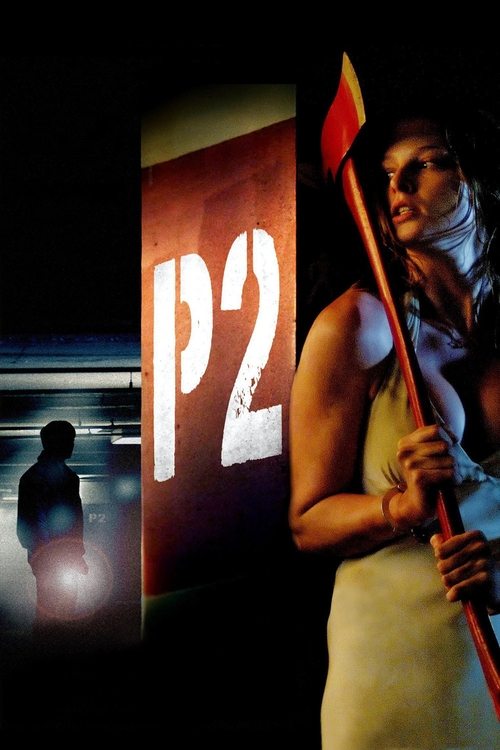
P2 (2007)
Directed by Franck Khalfoun
No — P2 is not woke, scoring 2 out of 100 on our wokeness meter.
P2 presents a tightly wound exercise in the contemporary psychological thriller form.
Consciousness Markers
The cast includes several minority actors in minor roles, but the film makes no deliberate effort at inclusive or representative casting.
No LGBTQ+ characters, themes, or subtext are present.
The film features a female protagonist who fights back, but it does not advance or engage with feminist themes or agendas.
Race is not a theme, and no racial commentary or consciousness is present.
No environmental or climate-related themes appear.
The film does not critique capitalism, wealth inequality, or class structures.
No body positivity themes or messaging are present.
The villain is described as psychopathic and socially awkward, but the film does not frame this as neurodivergence or explore neurodiversity.
The film is a contemporary horror story with no historical revisionism.
The film is a straightforward thriller and does not lecture or preach on social issues.
Why it received this score
P2 presents a tightly wound exercise in the contemporary psychological thriller form. We find a standard scenario: a professional woman trapped in an isolated space with an unstable male antagonist. The film operates strictly within the established boundaries of the suspense genre, presenting no deviation from its expected conventions. It eschews any form of expansive social commentary, choosing instead to focus on the mechanics of entrapment and survival. The narrative avoids the heavy-handed pronouncements of modern progressive sensibilities. This is a study of situational terror, pure and unadulterated.
What results is a relentless, claustrophobic environment that relies on the escalating tension between the protagonist and her captor. The security guard, Thomas, serves as a pure personification of obsessive fixation, a figure whose psychopathic tendencies drive the plot forward. The film achieves its impact through visceral action rather than through ideological exploration. We observe the mechanics of a chase, a fight, and an eventual, explosive confrontation. The film is not interested in reimagining societal structures; it simply deals with the violent reality of a terrible situation. The ending is a stark, kinetic conclusion to the ordeal.
It is a film that understands its own parameters. It doesn't attempt to engage with the broader cultural landscape or critique the existing order. Instead, it provides a highly competent, if grim, experience of isolation and threat. For viewers seeking nuanced discourse on social equity or representation, this offering will be profoundly unsatisfying. It is a straightforward piece of dramatic escapism, demanding nothing from its audience except attention to the unfolding chaos.
Analysis generated by our Consciousness Algorithm


Synopsis
A businesswoman finds herself locked with a unhinged security guard in a parking garage after getting stuck working late on Christmas Eve.
Questions about P2
Is P2 woke?
No — P2 is not woke, scoring 2 out of 100 on our wokeness meter. That earns it a verdict of Ultra Based.
Does P2 have any woke elements?
No. All 10 markers score zero.
How does P2 compare to other 2007 movies?
It ranks #164 of the 201 films from 2007 we've scored; their average is 12. The wokest is Like Stars on Earth (92).
How is the Woke Score calculated?
An AI-assisted process researches the film and its reception, scores it 0–100 on ten markers, then combines those into one 0–100 Woke Score. It measures a specific set of 2020s cultural themes, not film quality.