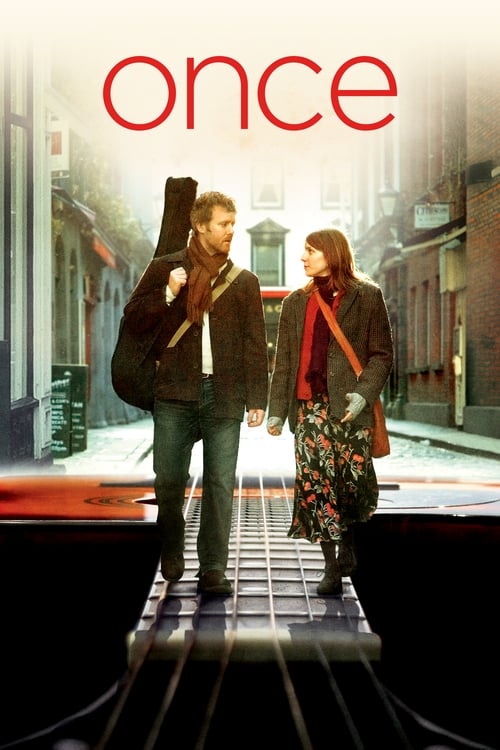
Once (2007)
Directed by John Carney
No — Once is not woke, scoring 7 out of 100 on our wokeness meter.
Once arrives from 2007, a €112,000 Irish romance about a Dublin busker and a Czech flower seller who make music together and then, with admirable discipline, do not end up together.
Consciousness Markers
The female lead is a Czech immigrant, and the film casts a genuine Czech musician (Markéta Irglová) in the role, but this diversity is organic to the story of Dublin's immigrant community rather than a self-conscious representational gesture.
The Girl is an independent, self-possessed character with her own artistic voice and agency, but the film frames this as romance and character, never as a feminist thesis.
The film quietly observes struggling working-class musicians left behind by Ireland's economic boom, but it never editorializes against wealth or capitalism.
Critics specifically praised Carney for making his points 'without ever labouring it'; the film is deliberately understated and never preaches.
No LGBTQ+ characters, themes, or subtext appear anywhere in the film.
The immigrant angle is about nationality and displacement, not race; there is no racial consciousness or commentary in the film.
No environmental or climate themes are present.
No body positivity themes or messaging.
No neurodivergence themes or characters.
No historical revisionism; the film is a contemporary, apolitical romance.
Why it received this score
Once arrives from 2007, a €112,000 Irish romance about a Dublin busker and a Czech flower seller who make music together and then, with admirable discipline, do not end up together. John Carney shot it in seventeen days with a long lens and no permits, which accounts for the texture of the street scenes: real people, unaware they are in a film, walking past two people falling in love. The Girl is a genuine Czech immigrant played by a genuine Czech musician, and the film treats her displacement as a fact of Dublin life instead of a talking point. That is the entire extent of its representational ambition, and it is enough.
The film's social consciousness is present but quiet. The Girl has her own artistic voice, her own piano, her own opinions about the songs, and she declines to be a muse. The camera watches a city where the boom has moved on and left the buskers behind, though it never stops to lecture about the arrangement. There is no racial commentary, no LGBTQ subplot, no environmental anxiety, no body-positivity messaging, and no neurodivergent arc. The immigrant question here is about nationality and homesickness, not identity politics. Anyone hoping for a thesis will find only a woman selling flowers in the rain.
Carney understands something most films of this type forget: a point made gently lands harder than a point made loudly. Critics noted that he makes his observations without labouring them, which is the highest compliment available to a film with something to say. It won an Academy Award for a song and deserved it. It is a small, unassuming, generous piece of work, and it has no interest in instructing anybody.
Analysis generated by our Consciousness Algorithm


Synopsis
A vacuum repairman moonlights as a street musician and hopes for his big break. One day a Czech immigrant, who earns a living selling flowers, approaches him with the news that she is also an aspiring singer-songwriter. The pair decide to collaborate, and the songs that they compose reflect the story of their blossoming love.
Questions about Once
Is Once woke?
No — Once is not woke, scoring 7 out of 100 on our wokeness meter. That earns it a verdict of Ultra Based.
Does Once have any woke elements?
Very few. None of the 10 markers reaches 30, the level where a marker counts as present; the highest is Representation Casting at 15.
How does Once compare to other 2007 movies?
It ranks #108 of the 201 films from 2007 we've scored; their average is 12. The wokest is Like Stars on Earth (92).
How is the Woke Score calculated?
An AI-assisted process researches the film and its reception, scores it 0–100 on ten markers, then combines those into one 0–100 Woke Score. It measures a specific set of 2020s cultural themes, not film quality.