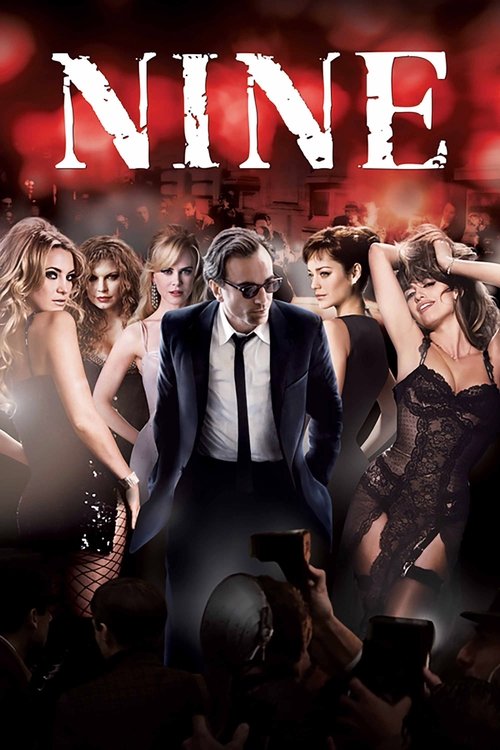
Nine (2009)
Directed by Rob Marshall
No — Nine is not woke, scoring 8 out of 100 on our wokeness meter.
Rob Marshall's Nine assembles an extraordinary roster of women and then studies them the way a jeweler studies inventory.
Consciousness Markers
Women dominate the cast and several assert agency, but the film is filtered through a narcissistic male gaze and does not advance a feminist argument.
The ensemble is female-heavy and internationally cast, but almost entirely white European/American; there is no meaningful racial or ethnic diversity.
No LGBTQ+ characters, themes, or subtext are present.
The film has no engagement with race or racial politics.
No climate or environmental themes appear.
The conflict is artistic and personal; there is no critique of capitalism or wealth.
No body-positive themes are present; female bodies are presented through a conventional male-gaze lens.
No neurodivergent characters or themes are depicted.
The 1960s setting is fictional and nostalgic rather than historically revisionist.
The film is a stylized musical drama with no preachy or lecture-like social messaging.
Why it received this score
Rob Marshall's Nine assembles an extraordinary roster of women and then studies them the way a jeweler studies inventory. Marion Cotillard, Penélope Cruz, Nicole Kidman, Judi Dench, Sophia Loren, Kate Hudson, and Fergie orbit Daniel Day-Lewis's blocked Italian director, each allotted a song and a costume. The cast is female to a degree rare in a studio musical, and a few of these performers push against their assignments, Cotillard especially, carving real grief out of a thankless wife. The camera, though, keeps returning to the same admiring male vantage, arranging each actress as a pose or a provocation. Women are everywhere in this film. Questions about them are not.
On the era's social questions, the film is silent. Race never enters the frame. The Italian setting of 1965 is fond scenery, not history under review. No economic argument is made, no environmental conscience surfaces, and disability, neurodivergence, and the politics of the body go unmentioned, though the body receives a great deal of unexamined attention. The story is driven by one man's appetite and the wreckage it leaves. His women sing of love and disappointment. Nobody lectures.
As cinema, Nine is polished and empty, a verdict the reviews reached quickly and the years have not disturbed. Marshall brought discipline from Chicago and left conviction at home. The numbers are staged cleanly. The screenplay sighs. Day-Lewis, an actor of frightening commitment, plays a narcissist with such conviction that the film never finds a reason to disagree with him, and its closing forgiveness lands as a shrug. The women get their moments. The man gets his ending.
Analysis generated by our Consciousness Algorithm


Synopsis
Arrogant, self-centered movie director Guido Contini finds himself struggling to find meaning, purpose, and a script for his latest film endeavor. With only a week left before shooting begins, he desperately searches for answers and inspiration from his wife, his mistress, his muse, and his mother.
Questions about Nine
Is Nine woke?
No — Nine is not woke, scoring 8 out of 100 on our wokeness meter. That earns it a verdict of Ultra Based.
Does Nine have any woke elements?
Very few. None of the 10 markers reaches 30, the level where a marker counts as present; the highest is Feminist Agenda at 20.
How does Nine compare to other 2009 movies?
It ranks #123 of the 230 films from 2009 we've scored; their average is 14. The wokest is Home (79).
How is the Woke Score calculated?
An AI-assisted process researches the film and its reception, scores it 0–100 on ten markers, then combines those into one 0–100 Woke Score. It measures a specific set of 2020s cultural themes, not film quality.