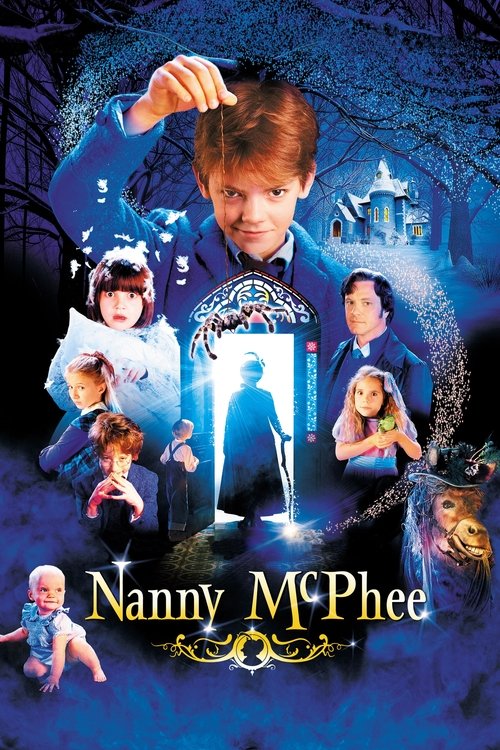
Nanny McPhee (2005)
Directed by Kirk Jones
No — Nanny McPhee is not woke, scoring 6 out of 100 on our wokeness meter.
Nanny McPhee arrives in 2005 with a wart, a walking stick, and a screenplay by Emma Thompson, and it conducts itself with the tidy conscience of a Victorian nursery manual.
Consciousness Markers
There are capable female figures (Nanny McPhee, Evangeline, Lady Adelaide), and Evangeline aspires to education, but the plot resolves through marriage and traditional domestic order rather than any feminist argument.
The film delivers moral lessons about family and responsibility, but through whimsical story beats rather than modern sermonizing.
There is a mild class-mobility thread in the scullery maid Evangeline rising to marry the master, and Lady Adelaide's financial leverage is resented, but this is gentle social comedy rather than an eat-the-rich polemic.
The cast is a uniformly white British ensemble with no diverse casting choices made for representation purposes.
No LGBTQ+ characters, themes, or subtext appear anywhere in the film.
No engagement with race or racial themes; the Victorian setting is entirely white and the film makes no comment on it.
The magical snow in August is a fairy-tale device, not an environmental statement.
Nanny McPhee's warts and snaggletooth vanish as the children improve, framing ugliness as a defect to be cured rather than celebrating diverse bodies.
No neurodivergent characters or themes are present.
The Victorian setting is a fantasy backdrop drawn from source novels, not a revisionist re-reading of history.
Why it received this score
Nanny McPhee arrives in 2005 with a wart, a walking stick, and a screenplay by Emma Thompson, and it conducts itself with the tidy conscience of a Victorian nursery manual. Seven children have driven off seventeen nannies. A widowed undertaker needs order. The remedy is magic, manners, and a few hard lessons about responsibility. None of this constitutes a cultural insurgency. The film instructs, but it instructs the way a governess instructs: firmly, briefly, and with a spoonful of jam.
The casting is a uniformly white British affair, and the film never pauses to remark on it. The Victorian setting is a storybook backdrop, not a site of historical revision. Race, climate, neurodivergence, and any question of queerness are absent as themes, and their absence is not conspicuous because the film has no interest in them. The body politics are, if anything, retrograde: Nanny McPhee's warts and snaggletooth disappear as the children improve, which frames physical defect as a symptom to be cured by good behavior. A modern sensitivity reader would have notes. The film does not care.
There is a mild class thread in Evangeline, the illiterate scullery maid who dreams of education and ends up marrying the master. This is gentle social comedy, not a redistributionist manifesto, and the wedding resolves the plot in the traditional domestic order. Capable women populate the film, but they are not making an argument. The moral lessons arrive through whimsy, not sermonizing. The most radical gesture on offer is a pastry fight at a wedding. We classify it accordingly: a charming, well-tailored artifact of an earlier dispensation, with no designs on the current cultural conversation.
Analysis generated by our Consciousness Algorithm


Synopsis
Widower Cedric Brown hires Nanny McPhee to care for his seven rambunctious children, who have chased away all previous nannies. Taunted by Simon and his siblings, Nanny McPhee uses mystical powers to instill discipline. And when the children's great-aunt and benefactor, Lady Adelaide Stitch, threatens to separate the kids, the family pulls together under the guidance of Nanny McPhee.
Questions about Nanny McPhee
Is Nanny McPhee woke?
No — Nanny McPhee is not woke, scoring 6 out of 100 on our wokeness meter. That earns it a verdict of Ultra Based.
Does Nanny McPhee have any woke elements?
Very few. None of the 10 markers reaches 30, the level where a marker counts as present; the highest is Feminist Agenda at 10.
How does Nanny McPhee compare to other 2005 movies?
It ranks #112 of the 181 films from 2005 we've scored; their average is 13. The wokest is The Constant Gardener (72).
How is the Woke Score calculated?
An AI-assisted process researches the film and its reception, scores it 0–100 on ten markers, then combines those into one 0–100 Woke Score. It measures a specific set of 2020s cultural themes, not film quality.