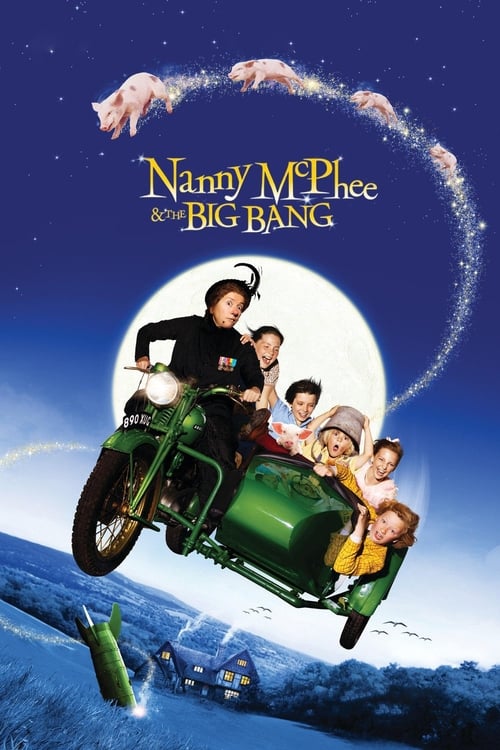
Nanny McPhee and the Big Bang (2010)
Directed by Susanna White
No — Nanny McPhee and the Big Bang is not woke, scoring 6 out of 100 on our wokeness meter.
Nanny McPhee and the Big Bang arrives from 2010, a period fantasy comedy set on an English farm during the Second World War.
Consciousness Markers
A woman director (Susanna White) and a capable mother holding the farm together while her husband is at war, plus female assassins and a female casino owner, give a mild female-agency flavor, but it is period family fare rather than a feminist statement.
The film is built around Nanny McPhee's 'five lessons,' but these are timeless manners-and-family morals rather than modern social-justice sermonizing.
The snobbish city cousins, the pompous Lord Gray, and the casino-debt subplot gesture faintly at rich-versus-honest-farmers, but the wealthy characters are redeemed rather than indicted.
The cast is overwhelmingly white British, with Nonso Anozie in a minor supporting role as a War Office guard; there is no deliberate diversity-casting agenda at work.
No LGBTQ+ characters, themes, or subtext appear anywhere in the film.
Race is never a subject of the film; the rural WWII English setting and cast offer no racial commentary.
No environmental or climate themes; the barley harvest and bomb crater are plot devices, not ecological messaging.
No body-image or body-acceptance themes are present.
No neurodivergent characters or themes are depicted.
The WWII home-front setting is conventional period backdrop, not a revisionist reframing of history.
Why it received this score
Nanny McPhee and the Big Bang arrives from 2010, a period fantasy comedy set on an English farm during the Second World War. Emma Thompson's wart-nosed governess materializes at the door of a harried mother, tames three boisterous children and two evacuated rich cousins, and presides over a harvest, a piglet chase, and the defusing of an unexploded German bomb. Susanna White directs with the brisk competence of a BBC Sunday afternoon. It is charming. It is British. It is a sequel to a nanny film, and it knows it.
The social inventory is thin. The cast is a solid wall of white British character actors, with Nonso Anozie briefly manning a War Office desk, and no agenda attaches to his presence. There is no LGBTQ+ content, no racial commentary, no environmental sermon, no body-acceptance arc, no neurodivergent character. Race, climate, and the anxious interiority of the modern self are simply not on the menu. A woman directs the picture, and a capable mother holds the farm together while her husband is at war, which lends a faint current of female competence without amounting to a statement. The snobbish city cousins and the pompous Lord Gray hint at rich-versus-honest-farmer friction, but the wealthy are redeemed in the third act and the grievance evaporates.
Nanny McPhee teaches five lessons, and the film announces each one, which gives the whole proceeding a mildly instructional air. The lessons themselves are ancient: courage, manners, cooperation, the primacy of family. No contemporary sermonizing clings to them. Two female assassins and a casino proprietress add a flicker of interest to the margins, though their function is chiefly to be outwitted by children and a jackdaw. We file this under harmless. A pleasant artifact from a gentler era of children's entertainment, carrying a small residue of female agency and some light grumbling about the rich, and nothing more.
Analysis generated by our Consciousness Algorithm


Synopsis
Nanny McPhee appears at the door of a harried young mother who is trying to run the family farm while her husband is away at war. But once she’s arrived, Nanny discovers that the children are fighting a war of their own against two spoiled city cousins who have just moved in. Relying on everything from a flying motorcycle and a statue that comes to life to a tree-climbing piglet and a baby elephant, Nanny uses her magic to teach her mischievous charges five new lessons.
Questions about Nanny McPhee and the Big Bang
Is Nanny McPhee and the Big Bang woke?
No — Nanny McPhee and the Big Bang is not woke, scoring 6 out of 100 on our wokeness meter. That earns it a verdict of Ultra Based.
Does Nanny McPhee and the Big Bang have any woke elements?
Very few. None of the 10 markers reaches 30, the level where a marker counts as present; the highest is Feminist Agenda at 15.
How does Nanny McPhee and the Big Bang compare to other 2010 movies?
It ranks #138 of the 238 films from 2010 we've scored; their average is 11. The wokest is My Name Is Khan (84).
How is the Woke Score calculated?
An AI-assisted process researches the film and its reception, scores it 0–100 on ten markers, then combines those into one 0–100 Woke Score. It measures a specific set of 2020s cultural themes, not film quality.