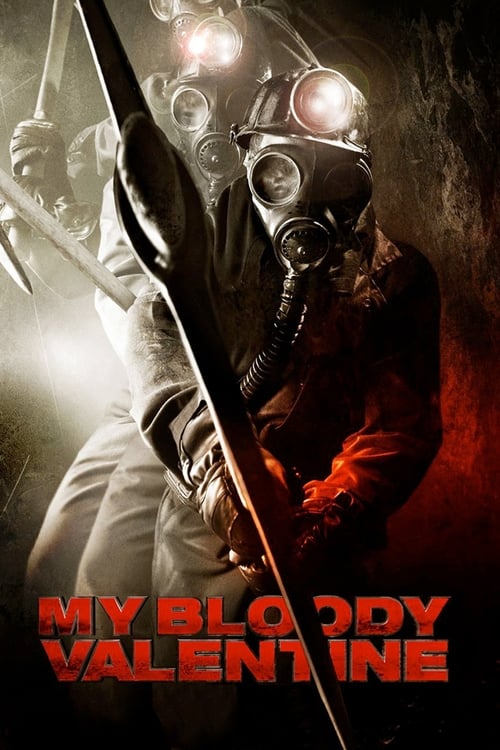
My Bloody Valentine (2009)
Directed by Patrick Lussier
No — My Bloody Valentine is not woke, scoring 0 out of 100 on our wokeness meter.
The 2009 model of My Bloody Valentine arrives with a pickaxe, a gas mask, and no interest in the moral instruction of its audience.
Consciousness Markers
The film features a Black actor in a supporting role, but this is incidental and not a deliberate representation casting choice; no commentary or emphasis on diversity.
No LGBTQ+ characters, themes, or subtext.
The film follows standard slasher conventions with a final girl, but offers no feminist critique or agenda.
No exploration of race, racism, or racial identity.
The mining setting is incidental; there is no environmental or climate message.
The mine ownership and sale are plot points, not a critique of capitalism or wealth inequality.
No body positivity themes or diverse body representation.
Mental illness is used as a villainous plot twist (split personality), not as positive neurodivergent representation.
No historical revisionism or reimagining of past events.
The film is a straightforward slasher with no preachy or lecture-like messaging.
Why it received this score
The 2009 model of My Bloody Valentine arrives with a pickaxe, a gas mask, and no interest in the moral instruction of its audience. A remake of the 1981 Canadian original, it relocates the carnage to the fictional town of Harmony, where a mining disaster begets a killer, and where the film's ambitions extend precisely as far as the next severed limb. Lionsgate released it in January, the first R-rated picture projected in RealD, a technical milestone that the studio paired with a body count of comparable scale. The result is a machine built for a single purpose, and it performs that purpose with workmanlike devotion.
We search the runtime for social content and find none. The cast is largely white, attractive, and interchangeable, which the reviews at the time noted without complaint. A Black actor appears in a supporting role and the film never remarks upon it, which is to say the role exists as a job and not as a statement. Women scream, flee, and occasionally survive, in the manner established by the genre four decades earlier. The mine is a mine. Its ownership changes hands, and the transaction serves as a motive for murder, not as an argument about labor or capital.
The film's one psychological gesture is a split personality revealed in the final act, a twist that treats mental illness as a costume the villain puts on. Sensitivity was not the assignment. The assignment was gore, and the 3D apparatus delivers it with a craftsman's enthusiasm. The final impression is a competent, unpretentious exercise in nostalgia, made by people who understood the brief and declined to add anything to it. There is something almost restful about a horror film with no interest in improving anyone.
Analysis generated by our Consciousness Algorithm
Part of


Synopsis
Ten years after a Valentine's Day tragedy claimed the lives of five miners, Harry Warden returns for a vengeful massacre among teen sweethearts gearing up for another party.
Questions about My Bloody Valentine
Is My Bloody Valentine woke?
No — My Bloody Valentine is not woke, scoring 0 out of 100 on our wokeness meter. That earns it a verdict of Ultra Based.
Does My Bloody Valentine have any woke elements?
No. All 10 markers score zero.
How does My Bloody Valentine compare to other 2009 movies?
It ranks #208 of the 230 films from 2009 we've scored; their average is 14. The wokest is Home (79).
How is the Woke Score calculated?
An AI-assisted process researches the film and its reception, scores it 0–100 on ten markers, then combines those into one 0–100 Woke Score. It measures a specific set of 2020s cultural themes, not film quality.