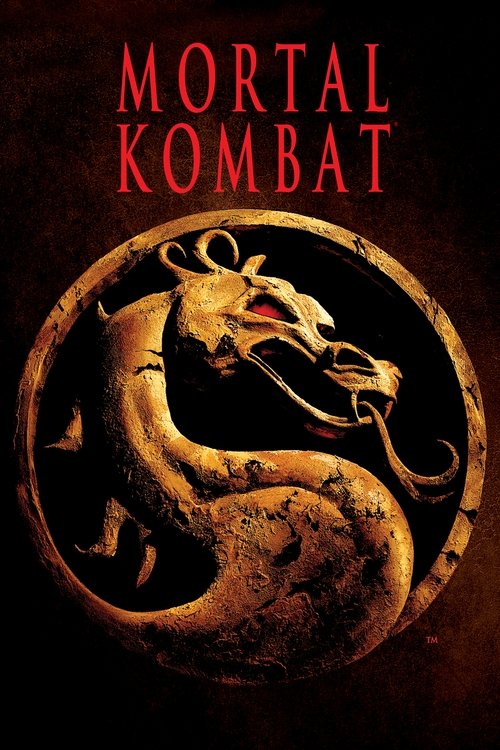
Mortal Kombat (1995)
Directed by Paul W. S. Anderson
No — Mortal Kombat is not woke, scoring 14 out of 100 on our wokeness meter.
Mortal Kombat arrived in 1995 as a video game adaptation with no business being as competent as it turned out to be, and it has aged into a curious artifact.
Consciousness Markers
The film casts a genuinely diverse ensemble — Robin Shou as the Asian lead Liu Kang, Cary-Hiroyuki Tagawa as Shang Tsung, Talisa Soto as Kitana — but this reflects the source material's roster rather than any 2020s diversity initiative. Notable for its era, but not woke by modern intent.
Sonya Blade is a competent Special Forces officer who kills Kano and performs her own stunts, but she remains a standard 1990s action heroine and love-interest-adjacent figure rather than a vehicle for feminist messaging.
The film features a diverse cast of fighters but offers no commentary on race, racism, or racial identity — the characters are defined by their martial arts and realm allegiances, not ethnicity.
The film delivers its good-versus-evil stakes through duels and quips rather than moralizing speeches; it has essentially no sermonizing to do.
No LGBTQ+ characters, subtext, or themes of any kind.
No environmental themes whatsoever; Outworld's ruin is a conquest narrative, not an ecological one.
No critique of wealth, corporations, or class. The villains seek power and souls, not profit.
No body-image or body-acceptance content; the cast is uniformly athletic fighters.
No neurodivergent characters or themes.
A pure fantasy tournament plot with no historical claims to revise.
Why it received this score
Mortal Kombat arrived in 1995 as a video game adaptation with no business being as competent as it turned out to be, and it has aged into a curious artifact. Paul W. S. Anderson, working from a script that treats the tournament bracket as a plot, delivers ninety minutes of martial arts, Thai temple locations, and Christopher Lambert squinting beneath a wig. The cast is genuinely diverse by the standards of its moment: Robin Shou carries the film as Liu Kang, Cary-Hiroyuki Tagawa devours scenery as Shang Tsung, Talisa Soto supplies Kitana. This is the roster of the source material translated to screen, not a diversity initiative. The film has no interest in why these faces are here. It simply needs fighters.
Sonya Blade, played by Bridgette Wilson after Cameron Diaz injured her wrist, is a Special Forces officer who performs her own stunts and dispatches Kano with a kick. She is also the designated woman, defined largely by a murdered partner and a romantic thread the editing room apparently abandoned. The film offers no commentary on race, gender, or identity. Kano is a Cockney crime boss, Goro is a four-armed champion, and the stakes are souls and realms. Nobody pauses to reflect on what any of it means.
On the remaining axes, the cupboard is bare. There is no environmental parable, no class critique, no body acceptance, no neurodivergent reading, no historical revision. The film's moral instruction extends to Liu Kang accepting that his brother's death was not his fault, delivered in a single line before a fireball. Mostly it communicates through punches and quips about five-hundred-dollar sunglasses. It is a relic of a simpler cinematic economy, and it makes no apologies for that.
Analysis generated by our Consciousness Algorithm


Synopsis
For nine generations an evil sorcerer has been victorious in hand-to-hand battle against his mortal enemies. If he wins a tenth Mortal Kombat tournament, desolation and evil will reign over the multiverse forever. To save Earth, three warriors must overcome seemingly insurmountable odds, their own inner demons, and superhuman foes.
Questions about Mortal Kombat
Is Mortal Kombat woke?
No — Mortal Kombat is not woke, scoring 14 out of 100 on our wokeness meter. That earns it a verdict of Ultra Based.
Does Mortal Kombat have any woke elements?
1 of the 10 markers register at 30 or above, led by Representation Casting (40). On Representation Casting: The film casts a genuinely diverse ensemble — Robin Shou as the Asian lead Liu Kang, Cary-Hiroyuki Tagawa as Shang Tsung, Talisa Soto as Kitana — but this reflects the source material's roster rather than any 2020s diversity initiative.
How does Mortal Kombat compare to other 1995 movies?
It ranks #29 of the 108 films from 1995 we've scored; their average is 12. The wokest is Total Eclipse (60).
How is the Woke Score calculated?
An AI-assisted process researches the film and its reception, scores it 0–100 on ten markers, then combines those into one 0–100 Woke Score. It measures a specific set of 2020s cultural themes, not film quality.