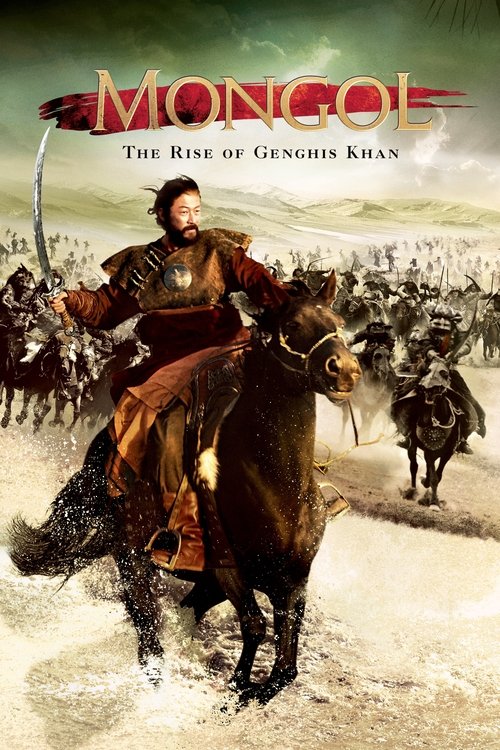
Mongol: The Rise of Genghis Khan (2007)
Directed by Sergei Bodrov
No — Mongol: The Rise of Genghis Khan is not especially woke, scoring 23 out of 100 on our wokeness meter.
Sergei Bodrov's Mongol arrives with the unhurried confidence of a film that knows exactly what it is: a sweeping steppe epic with blood oaths, kidnappings, and a great deal of horseback riding.
Consciousness Markers
The film utilized a diverse international cast, including Japanese and Chinese actors in lead roles, which was noted as a significant departure from earlier Western historical epics.
The film actively attempts to revise the traditional portrayal of Genghis Khan as a mere 'monster,' presenting him instead as a complex and visionary leader.
The film deals with tribal and ethnic conflicts within the Mongol sphere, but it does not engage with modern discussions of systemic racism or racial identity.
As an action epic, the film is not designed to be a didactic lecture, though it presents a specific historical interpretation.
The female characters, such as Börte, are primarily used as plot devices—objects of desire, kidnapping, and political leverage—rather than as agents of change.
The narrative is centered on tribal warfare and the establishment of a nomadic empire, not a critique of modern global capitalism or economic inequality.
There are no discernible LGBTQ+ themes, characters, or subtext present in the narrative or character development.
The film focuses entirely on military conquest and tribal politics, with no commentary on environmental issues or climate change.
There is no focus on body image, diverse body types, or the concept of body acceptance within the film's scope.
No characters are portrayed with neurodivergent traits or conditions.
Why it received this score
Sergei Bodrov's Mongol arrives with the unhurried confidence of a film that knows exactly what it is: a sweeping steppe epic with blood oaths, kidnappings, and a great deal of horseback riding. Its most quietly radical gesture is the casting. Tadanobu Asano and Sun Honglei lead an ensemble drawn largely from Mongolia, China, Japan, and Kazakhstan, which places the story of Temüjin in the hands of Asian performers. For a genre that once handed the role to John Wayne, this registers as a genuine, if modest, correction. The film does not stop to congratulate itself for the choice, which helps.
Elsewhere the progressive ledger stays largely blank. Börte is kidnapped, ransomed, and retrieved, functioning as a prize to be won instead of a person with her own trajectory. The tribal warfare is thick with ethnic grievance, though none of it is framed through a modern lens of systemic prejudice. There are no queer currents, no environmental sermon, no meditation on body image, and no neurodivergent characters. The camera cares about horses, weather, and throats, in roughly that order.
Where the film does reach for something contemporary is its treatment of its subject. Bodrov set out to rescue Genghis Khan from two centuries of caricature, presenting a slave and orphan who becomes a unifier with a legal code and a sense of honor. That is a real act of historical reframing, and it is argued with images instead of speeches. The result is an old-fashioned adventure that happens to hold a thesis about a much-maligned man. It entertains first. The argument arrives quietly, on horseback, and is gone before anyone can object.
Analysis generated by our Consciousness Algorithm


Synopsis
The story recounts the early life of Genghis Khan, a slave who went on to conquer half the world in the 11th century.
Questions about Mongol: The Rise of Genghis Khan
Is Mongol: The Rise of Genghis Khan woke?
No — Mongol: The Rise of Genghis Khan is not especially woke, scoring 23 out of 100 on our wokeness meter. That earns it a verdict of Based.
Does Mongol: The Rise of Genghis Khan have any woke elements?
2 of the 10 markers register at 30 or above, led by Representation Casting (60) and Revisionist History (45). On Representation Casting: The film utilized a diverse international cast, including Japanese and Chinese actors in lead roles, which was noted as a significant departure from earlier Western historical epics.
How does Mongol: The Rise of Genghis Khan compare to other 2007 movies?
It ranks #26 of the 201 films from 2007 we've scored; their average is 12. The wokest is Like Stars on Earth (92).
How is the Woke Score calculated?
An AI-assisted process researches the film and its reception, scores it 0–100 on ten markers, then combines those into one 0–100 Woke Score. It measures a specific set of 2020s cultural themes, not film quality.