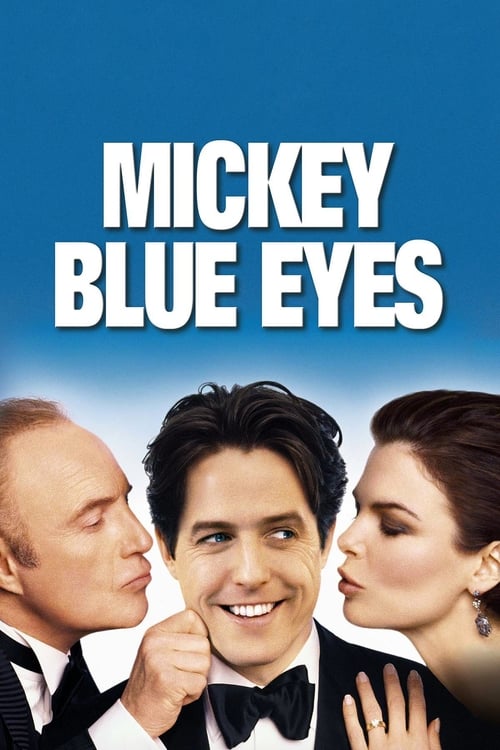
Mickey Blue Eyes (1999)
Directed by Kelly Makin
No — Mickey Blue Eyes is not woke, scoring 0 out of 100 on our wokeness meter.
Mickey Blue Eyes arrives from 1999, a romantic crime comedy that asks what happens when an English auctioneer proposes into a Mafia family.
Consciousness Markers
The cast is overwhelmingly white, with Italian-American actors filling the mob roles; no deliberate diverse or inclusive casting choices are present.
No LGBTQ+ characters, themes, or subtext appear anywhere in the film.
Gina is a somewhat active character, but the film is a conventional mob romantic comedy with no feminist agenda or commentary on gender power structures.
The film engages Italian-American mafia stereotypes for comedy but offers no racial consciousness or commentary on race.
No environmental or climate themes whatsoever.
Money laundering and mob wealth feature as plot mechanics, not as a critique of capitalism or wealth inequality.
No body positivity themes or messaging.
No neurodivergent characters or themes.
A fictional mob comedy with no historical revisionism.
The film is a light farce with no preachy or didactic messaging; it never lectures the audience.
Why it received this score
Mickey Blue Eyes arrives from 1999, a romantic crime comedy that asks what happens when an English auctioneer proposes into a Mafia family. Hugh Grant does his stammering decency. James Caan does his weary patriarch. Jeanne Tripplehorn's Gina is allowed a few moments of resolve, but the film has no interest in gender politics. It is a studio farce with a plot about money laundering, witness protection, and a fake execution. The cultural inventory is thin. The cast is white. The mob is Italian-American. Nobody discusses identity, power, or history. The film simply wants a laugh and a happy ending.
On the social consciousness front, the film is a clean zero. There is no LGBTQ presence. No racial commentary. No climate concern. No body positivity. No neurodivergence. Money is a plot device, not a target. The rich gangsters are not held up for economic critique. They are comic furniture. The film's only nod to representation is a parade of future Sopranos actors, which is less a statement than a casting coincidence. Gina fires a gun and participates in her own fake death, but the movie treats this as screwball mechanics, not feminist awakening. The wedding finale is about reconciling a couple, not dismantling patriarchy.
As for lecture energy, there is none. The film never preaches. It never explains what we should think. It is too busy arranging a ricochet bullet and a hidden microphone. This is not a moral failing. It is a genre limitation. The result is a mild, dated comedy that has aged into a curio of late-1990s studio filmmaking. It has no modern progressive agenda. It has no hidden sermon. It has Hugh Grant in a tuxedo and a mafia subplot. For the purposes of classification, that leaves every marker at the floor. The film is not offensive. It is simply not participating in the cultural conversation. It is a cinematic shrug, and a polite one at that.
Analysis generated by our Consciousness Algorithm


Synopsis
An English auctioneer proposes to the daughter of a mafia kingpin, only to realize that certain "favors" would be asked of him.
Questions about Mickey Blue Eyes
Is Mickey Blue Eyes woke?
No — Mickey Blue Eyes is not woke, scoring 0 out of 100 on our wokeness meter. That earns it a verdict of Ultra Based.
Does Mickey Blue Eyes have any woke elements?
No. All 10 markers score zero.
How does Mickey Blue Eyes compare to other 1999 movies?
It ranks #94 of the 103 films from 1999 we've scored; their average is 14. The wokest is Boys Don't Cry (60).
How is the Woke Score calculated?
An AI-assisted process researches the film and its reception, scores it 0–100 on ten markers, then combines those into one 0–100 Woke Score. It measures a specific set of 2020s cultural themes, not film quality.