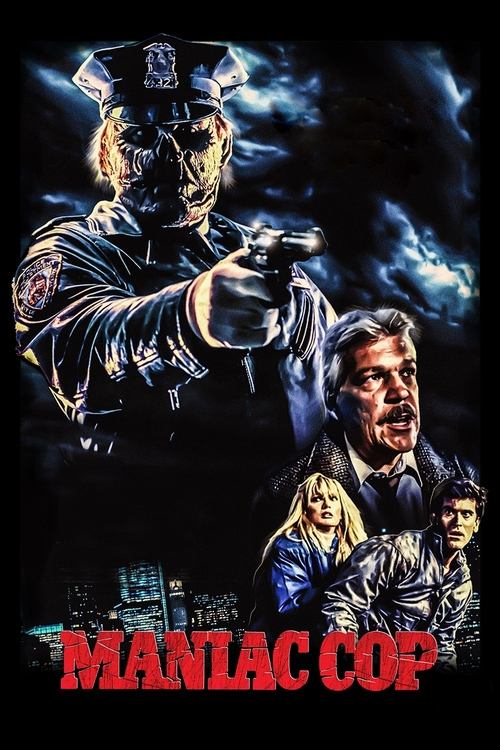
Maniac Cop (1988)
Directed by William Lustig
No — Maniac Cop is not woke, scoring 4 out of 100 on our wokeness meter.
Maniac Cop arrives from 1988 with the smell of VHS plastic still on it.
Consciousness Markers
The casting is standard for a low-budget 1980s action/horror film, featuring a mix of established and genre actors without any specific modern progressive casting mandates.
The film critiques institutional corruption and systemic injustice within the police force, which is a form of social critique, but it does not engage in modern anti-capitalist economic theory.
The female characters are primarily victims or plot devices within the action framework, lacking any significant feminist agenda or narrative focus.
While the film features diverse actors, the narrative does not engage with racial dynamics or offer a modern critical perspective on race.
The film relies on action and dialogue rather than didactic monologues or heavy, lecture-style social commentary.
There is no evidence of LGBTQ+ themes, characters, or representation within the film's narrative or cast.
The film's focus is entirely on urban crime and police corruption, with no reference to environmental issues or climate change.
There is no commentary or promotion of diverse body types or body positivity in the film.
No characters exhibit or are discussed in relation to neurodivergence.
The film is a fictional slasher/crime narrative and does not attempt to revise any established historical facts or events.
Why it received this score
Maniac Cop arrives from 1988 with the smell of VHS plastic still on it. William Lustig directs, Larry Cohen writes, and a large man named Robert Z'Dar stalks New York in a police uniform with a face like a clenched fist. The premise is thin and proud of it. A killer cop murders civilians, the department suppresses the eyewitnesses, and the city turns on its own patrolmen. Somewhere beneath the gore there is a modest civic complaint: the institution will protect itself and destroy the honest man inside it. Matthew Cordell, we learn, was framed for brutality while investigating corruption at city hall, then butchered in a prison shower by the men he helped convict. That is a real grievance, and the film states it plainly, then returns to the stabbing.
The casting is a genre buffet of its moment: Tom Atkins, Bruce Campbell, Laurene Landon, Richard Roundtree. Roundtree's presence is welcome and entirely unremarked upon, which is how 1988 handled such things. The women exist to be imperiled, deceived, or killed offscreen, and Landon's Mallory spends most of the running time being chased through rooms. Nobody is asked to consider their body, their mind, their carbon footprint, or the economic system that produced the hijacked van. The police force is corrupt, but the objection is to specific bad actors, not to capital itself. This is an exploitation picture with a grudge, not a sermon.
Campbell has since called it not a good movie. He is correct, and it hardly matters. The film delivers a hand emerging from the river and a dead man who does not breathe, and that is the transaction it promised. On the ledger of modern social instruction, it contributes almost nothing, having been assembled two decades before anyone thought to ask. We file it under camp, and we move on to the next tape.
Analysis generated by our Consciousness Algorithm


Synopsis
A killer dressed in a police uniform begins murdering innocent people on the streets of New York City.
Questions about Maniac Cop
Is Maniac Cop woke?
No — Maniac Cop is not woke, scoring 4 out of 100 on our wokeness meter. That earns it a verdict of Ultra Based.
Does Maniac Cop have any woke elements?
Very few. None of the 10 markers reaches 30, the level where a marker counts as present; the highest is Eat the Rich at 10.
How does Maniac Cop compare to other 1988 movies?
It ranks #41 of the 73 films from 1988 we've scored; their average is 10. The wokest is Stand and Deliver (58).
How is the Woke Score calculated?
An AI-assisted process researches the film and its reception, scores it 0–100 on ten markers, then combines those into one 0–100 Woke Score. It measures a specific set of 2020s cultural themes, not film quality.