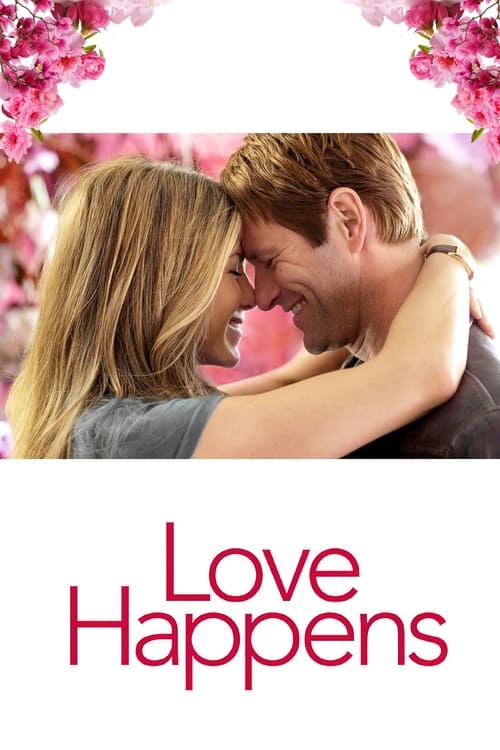
Love Happens (2009)
Directed by Brandon Camp
No — Love Happens is not woke, scoring 5 out of 100 on our wokeness meter.
Love Happens arrives from 2009 with the soft thud of a romantic drama that has mistaken grief for a plot device and a conference hotel for a personality.
Consciousness Markers
Eloise is described as a 'fiercely independent florist' who spurns Burke's advances, a mild independent-woman trait, but the film is a conventional romance with no feminist thesis.
The film is literally set around self-help seminars and motivational speaking, giving it a surface-level 'lecture' texture, but the messaging is therapeutic grief-counseling rather than progressive ideological preaching.
The cast is overwhelmingly white, with Clyde Kusatsu the lone notable minority performer in a natural supporting role. No deliberate representation casting effort is evident.
No LGBTQ+ characters, themes, or subtext appear anywhere in the film.
No engagement with race, racism, or racial identity whatsoever.
No environmental or climate themes present.
The self-help industry is depicted but never critiqued as a capitalist enterprise; no eat-the-rich sentiment.
No body positivity themes or messaging.
No neurodivergent characters or themes.
No historical revisionism; the film is a contemporary fictional romance.
Why it received this score
Love Happens arrives from 2009 with the soft thud of a romantic drama that has mistaken grief for a plot device and a conference hotel for a personality. Aaron Eckhart plays Burke Ryan, a self-help author and motivational speaker who dispenses healing to strangers while refusing his own. The film is built around seminars and headset microphones, which gives it a lecture-hall texture, though the sermons concern widower's guilt and the healing process, not any ideological program. The lecture energy is ambient and therapeutic, never sermonic in a social sense.
Jennifer Aniston's Eloise is a fiercely independent florist, a phrase the film treats as sufficient characterization. She spurns Burke's advances and insists they are not dating. This is the film's entire gesture toward independent womanhood, and it is a mild one. The cast is white by default, with Clyde Kusatsu in a natural supporting role that the film does not advertise. No other contemporary social currents disturb the surface: no racial reckoning, no climate anxiety, no economic critique of the self-help industry that funds Burke's hotel suites.
The result is a romance of therapeutic reconciliation. Burke confesses onstage, the father-in-law forgives, the audience applauds, the florist kisses. The machinery is efficient and entirely conventional. It would be unfair to call the film preachy; it is too soft for that. Progressive sensibilities are absent, but so is any active resistance to them. The film simply does not consider the question. It is a relic of a moment when a white widower's grief and a florist's guarded heart could carry a studio release without anyone asking what else the story might be for.
Analysis generated by our Consciousness Algorithm
Part of


Synopsis
Dr. Burke Ryan is a successful self-help author and motivational speaker with a secret. While he helps thousands of people cope with tragedy and personal loss, he secretly is unable to overcome the death of his late wife. It's not until Burke meets a fiercely independent florist named Eloise that he is forced to face his past and overcome his demons.
Questions about Love Happens
Is Love Happens woke?
No — Love Happens is not woke, scoring 5 out of 100 on our wokeness meter. That earns it a verdict of Ultra Based.
Does Love Happens have any woke elements?
Very few. None of the 10 markers reaches 30, the level where a marker counts as present; the highest is Feminist Agenda at 10.
How does Love Happens compare to other 2009 movies?
It ranks #154 of the 230 films from 2009 we've scored; their average is 14. The wokest is Home (79).
How is the Woke Score calculated?
An AI-assisted process researches the film and its reception, scores it 0–100 on ten markers, then combines those into one 0–100 Woke Score. It measures a specific set of 2020s cultural themes, not film quality.