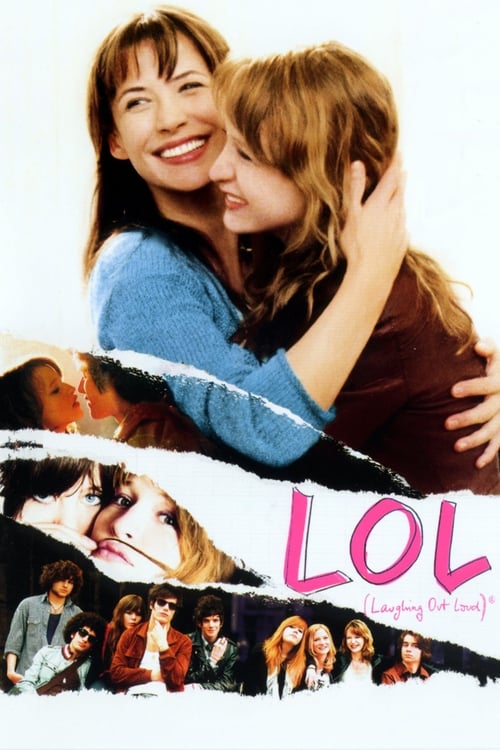
LOL (Laughing Out Loud) (2009)
Directed by Lisa Azuelos
No — LOL (Laughing Out Loud) is not woke, scoring 5 out of 100 on our wokeness meter.
LOL arrives from 2008 France with the confidence of a film that knows exactly what it is and has no intention of apologizing for it.
Consciousness Markers
A woman director and a mother-daughter coming-of-age focus give it a faint female-centric tilt, but it advances no explicit feminist thesis.
The cast is uniformly white French actors; there is no evident effort at diverse or color-conscious casting.
A breezy commercial comedy that observes its characters rather than sermonizing at the audience.
No LGBTQ+ characters or themes appear in this heterosexual teen romance.
Race is entirely absent as a subject; the film concerns itself with bourgeois Parisian adolescence.
No environmental themes whatsoever.
No economic critique; the milieu is comfortable middle-class domesticity.
No body-image or body-acceptance messaging present.
No neurodivergent characters or themes.
A contemporary teen comedy with no historical subject matter to revise.
Why it received this score
LOL arrives from 2008 France with the confidence of a film that knows exactly what it is and has no intention of apologizing for it. Lisa Azuelos directs a portrait of Parisian adolescence unfolding in comfortable apartments, high school corridors, and the sort of domestic squabbles that resolve themselves by the closing credits. Sophie Marceau, once the teenager of La Boum, now plays the mother, a piece of casting that carries more nostalgic weight than any thematic ambition the screenplay can muster. The film was a hit at home. It exists, it pleased people, and it moves on.
The canvas is uniformly white, uniformly middle-class, and uniformly heterosexual. Lola cycles through boyfriends the way teenagers do, and the film watches with a shrug. Nobody lectures us about representation, because nobody in this production appears to have considered it. There is a woman behind the camera and a mother-daughter friction at the center, which grants the proceedings a faint feminine pulse, though the film advances no argument on the subject and seems mildly embarrassed by the idea of having one. Money, race, sexuality, the body, the climate, the historical record: none of these intrude. The characters have nicer apartments than most viewers and never wonder why.
What keeps the whole enterprise watchable is its refusal to sermonize. The comedy observes. It does not instruct. When the class trip to England arrives, the film indulges every French cliché about damp streets and floral dresses and pasta served beside marmalade on the same plate, and it does so without a flicker of self-consciousness. That is either charming or provincial, depending on the viewer's patience. The result is a minor, genial artifact of a specific national cinema, pleasant enough, harmless, and entirely content to leave the culture wars for someone else.
Analysis generated by our Consciousness Algorithm


Synopsis
Lola is a striking teenaged girl who is on the cusp of adulthood and longs to rush into the adult world of independence, freedom and sexual exploits, but is tenaciously held back by her mother.
Questions about LOL (Laughing Out Loud)
Is LOL (Laughing Out Loud) woke?
No — LOL (Laughing Out Loud) is not woke, scoring 5 out of 100 on our wokeness meter. That earns it a verdict of Ultra Based.
Does LOL (Laughing Out Loud) have any woke elements?
Very few. None of the 10 markers reaches 30, the level where a marker counts as present; the highest is Feminist Agenda at 12.
How does LOL (Laughing Out Loud) compare to other 2009 movies?
It ranks #154 of the 230 films from 2009 we've scored; their average is 14. The wokest is Home (79).
How is the Woke Score calculated?
An AI-assisted process researches the film and its reception, scores it 0–100 on ten markers, then combines those into one 0–100 Woke Score. It measures a specific set of 2020s cultural themes, not film quality.