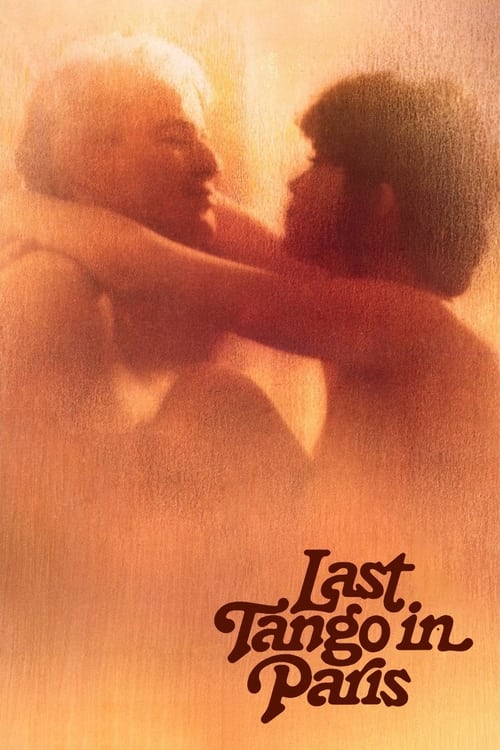
Last Tango in Paris (1972)
Directed by Bernardo Bertolucci
No — Last Tango in Paris is not woke, scoring 0 out of 100 on our wokeness meter.
Bernardo Bertolucci's 1972 drama follows Paul, a recently widowed American hotelier, and Jeanne, a young Parisian woman engaged to a filmmaker, through an anonymous affair conducted in a rented apartment.
Consciousness Markers
The cast is entirely white European and American performers; there is no deliberate diverse or inclusive casting to speak of.
The film contains no LGBTQ+ characters or themes; Maria Schneider's off-screen bisexuality is not reflected in the narrative.
The film is the opposite of a feminist text, centering a woman's anonymous sexual submission and culminating in a rape scene whose off-screen production was itself exploitative of its young actress.
Race is entirely absent as a subject; the film concerns two white characters in a Parisian affair.
There is no environmental or climate content whatsoever.
No economic critique or class-consciousness theme is present; the film is a psychological and erotic drama.
The film's treatment of the body is exploitative and objectifying rather than body-positive.
No neurodivergent characters or themes appear.
The film is a contemporary fictional drama with no historical revisionism.
The film offers no didactic social messaging; it is an art-house character study with no preaching.
Why it received this score
Bernardo Bertolucci's 1972 drama follows Paul, a recently widowed American hotelier, and Jeanne, a young Parisian woman engaged to a filmmaker, through an anonymous affair conducted in a rented apartment. He insists they exchange no names. The arrangement collapses into the butter sequence, a chase through the streets, and a gunshot on a balcony. Vittorio Storaro's oranges, borrowed from Francis Bacon, remain gorgeous. The film's reputation rests on transgression, not on argument.
Measured against the contemporary markers, the ledger comes back blank. The cast is entirely white European and American, with no inclusive casting to speak of. Race never surfaces as a subject. The narrative contains no LGBTQ characters or themes, whatever its lead actress said in interviews about her own life. The camera treats the body as a specimen to be arranged and displayed, which is the opposite of body-positive. There is no environmental content, no economic critique, no neurodivergent character, no historical revisionism, no sermonizing. On the feminist axis the film is not neutral; it is hostile, built on a woman's submission and a rape whose staging was concealed from the actress performing it.
A zero across the board is not a certificate of virtue. This is a cruel, beautiful, exploitative artifact of 1972, and the sexual politics it dramatizes were their own kind of grim. The modern discourse surrounding the film concerns consent and the treatment of Maria Schneider, and that discourse is a genuine feature of our moment, but it is a conversation about the film, not a quality within it. We classify the text. The text asks for nothing and preaches nothing. It simply watches.
Analysis generated by our Consciousness Algorithm


Synopsis
A recently widowed American begins an anonymous sexual relationship with a young Parisian woman.
Questions about Last Tango in Paris
Is Last Tango in Paris woke?
No — Last Tango in Paris is not woke, scoring 0 out of 100 on our wokeness meter. That earns it a verdict of Ultra Based.
Does Last Tango in Paris have any woke elements?
No. All 10 markers score zero.
How does Last Tango in Paris compare to other 1972 movies?
It ranks #19 of the 24 films from 1972 we've scored; their average is 14. The wokest is Silent Running (69).
How is the Woke Score calculated?
An AI-assisted process researches the film and its reception, scores it 0–100 on ten markers, then combines those into one 0–100 Woke Score. It measures a specific set of 2020s cultural themes, not film quality.