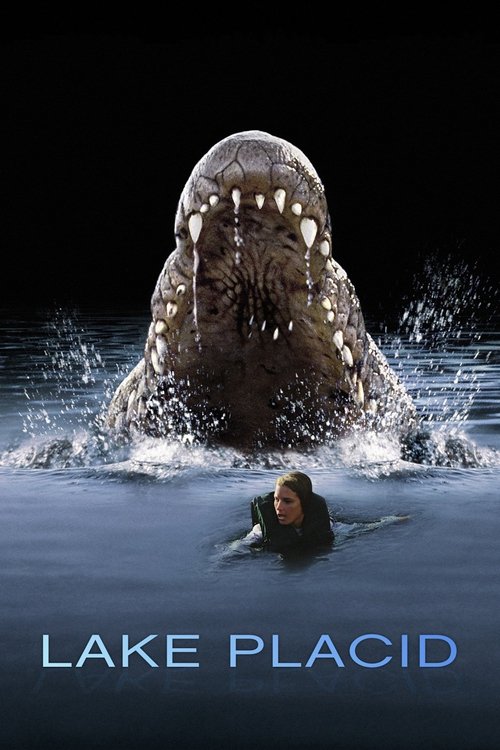
Lake Placid (1999)
Directed by Steve Miner
No — Lake Placid is not woke, scoring 7 out of 100 on our wokeness meter.
Lake Placid arrives from the summer of 1999, a moment when a monster movie could still be just a monster movie.
Consciousness Markers
Bridget Fonda's paleontologist Kelly Scott is a competent professional woman in a male-dominated expedition, but her role is largely functional and the film makes no feminist argument.
The cast is overwhelmingly white with the notable exception of Natassia Malthe in a minor role; diversity is incidental rather than a stated priority of this 1999 creature feature.
The film is campy entertainment with no preaching or moral instruction; any didacticism is limited to crocodile trivia delivered for laughs.
No LGBTQ+ characters, themes, or subtext of any kind appear in the film.
Race is never a subject of the film; the story is a straightforward monster-hunt narrative with no racial commentary.
There is no environmental or climate messaging; the crocodile is a monster, not a metaphor for ecological collapse.
No critique of wealth or capitalism; the eccentric rich man Hector is a comedic ally, not a target of class satire.
The film contains no body-positive themes or messaging.
No neurodivergent characters or themes are present.
The film is a fictional monster story with no historical revisionism.
Why it received this score
Lake Placid arrives from the summer of 1999, a moment when a monster movie could still be just a monster movie. David E. Kelley, fresh from writing courtroom dramas full of talk, turned his hand to a screenplay about a thirty-foot saltwater crocodile in a Maine lake, and the result is a lean, campy entertainment that knows exactly what it is. Steve Miner directs with the efficient indifference of a man who has done this before, which he has.
The cast is a study in late-nineties default whiteness, with Natassia Malthe appearing briefly and the film giving the matter no thought whatsoever. Bridget Fonda plays Kelly Scott, a paleontologist who holds her own among men who would prefer she did not, and the film grants her competence without ever building an argument around it. Betty White steals the picture as an elderly widow feeding dairy cows to the beast, a performance that suggests the entire enterprise is in on its own joke. There is no racial commentary, no environmental sermon, no class satire, no body-positive messaging, and no neurodivergent character to speak of. The crocodile is not a metaphor for anything. It is a crocodile.
The preaching is confined to crocodile trivia, delivered for laughs and received as such. This is a film that wants nothing from its audience but a willingness to watch a large reptile eat a bear. The sequels would follow in cheaper and cheaper iterations, but the original retains a certain grubby charm. It is not important. It is not trying to be.
Analysis generated by our Consciousness Algorithm


Synopsis
When a man is eaten alive by an unknown creature, the local Game Warden teams up with a paleontologist from New York to find the beast. Add to the mix an eccentric philanthropist with a penchant for "Crocs", and here we go! This quiet, remote lake is suddenly the focus of an intense search for a crocodile with a taste for live animals...and people!
Questions about Lake Placid
Is Lake Placid woke?
No — Lake Placid is not woke, scoring 7 out of 100 on our wokeness meter. That earns it a verdict of Ultra Based.
Does Lake Placid have any woke elements?
Very few. None of the 10 markers reaches 30, the level where a marker counts as present; the highest is Feminist Agenda at 15.
How does Lake Placid compare to other 1999 movies?
It ranks #64 of the 103 films from 1999 we've scored; their average is 14. The wokest is Boys Don't Cry (60).
How is the Woke Score calculated?
An AI-assisted process researches the film and its reception, scores it 0–100 on ten markers, then combines those into one 0–100 Woke Score. It measures a specific set of 2020s cultural themes, not film quality.