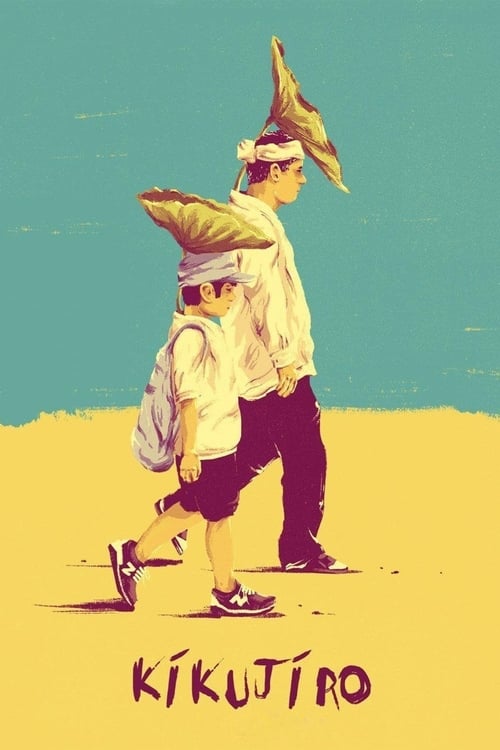
Kikujiro (1999)
Directed by Takeshi Kitano
No — Kikujiro is not woke, scoring 0 out of 100 on our wokeness meter.
Takeshi Kitano's Kikujiro arrived in 1999 carrying a bell, a boy, and a gambling addict with no business supervising either.
Consciousness Markers
The cast is entirely Japanese, reflecting the film's Japanese setting and characters; this is not a deliberate modern diversity casting choice.
There are no LGBTQ+ characters, themes, or subtext in the film.
Female characters appear in traditional roles and the film does not advance a feminist agenda or critique patriarchy.
The film explores social alienation and outcasts in Japanese society, but not racial consciousness or systemic racial themes.
There is no environmental or climate-related messaging in the film.
The film contains no critique of capitalism or wealth inequality as a central theme.
There is no body positivity messaging or focus on body image issues.
The film does not depict or discuss neurodivergence or neurodiverse characters.
The film is a fictional road drama and does not revise or reinterpret historical events.
The film is a gentle, whimsical character study with no preachy or lecture-like messaging.
Why it received this score
Takeshi Kitano's Kikujiro arrived in 1999 carrying a bell, a boy, and a gambling addict with no business supervising either. Masao, raised by his grandmother in a Tokyo neighborhood, finds a photograph of the mother he has never met and decides to go find her. Kikujiro's wife drafts her loutish husband as a chaperone, and the pair drifts west toward Toyohashi by way of cycling tracks, a stolen taxi, and the intermittent kindness of strangers. Joe Hisaishi's score does much of the emotional work. The film handles the rest with shrugs.
The film is about alienation and belonging, and it makes no argument about either. Everyone who helps the travelers is, by the standards of respectable society, a failure: a poet, two bikers, a juggler on a date. Nobody explains the dignity of the marginalized. The marginalization sits there, unremarked, and the trip continues. Masao's arrival at his mother's house is a quiet catastrophe, and Kikujiro's answer is to shake down two strangers for an angel-shaped bell and invent a story about it. That is the film's instruction to its audience: none.
For classification purposes, this is a gentle, whimsical character study with no sermon attached. The outcast material functions as observation, not advocacy. Kitano lingers on summer fields and tengu dreams because they are beautiful, not because they argue a case. A sommelier presented with this vintage would find no additives, no fortification, nothing to complain about. This is a road movie about two lonely people and a bell that may or may not ring. It rings. The film asks only for attention, which is an old-fashioned request and a rare one. Zero across the board, and the sommelier means it kindly.
Analysis generated by our Consciousness Algorithm


Synopsis
Brash, loudmouthed and opportunistic, Kikujiro is the unlikely companion for Masao who is determined to see the mother he has never met. The two begin a series of adventures which soon turns out to be a whimsical journey of laughter and tears with a wide array of surprises and unique characters along the way.
Questions about Kikujiro
Is Kikujiro woke?
No — Kikujiro is not woke, scoring 0 out of 100 on our wokeness meter. That earns it a verdict of Ultra Based.
Does Kikujiro have any woke elements?
No. All 10 markers score zero.
How does Kikujiro compare to other 1999 movies?
It ranks #94 of the 103 films from 1999 we've scored; their average is 14. The wokest is Boys Don't Cry (60).
How is the Woke Score calculated?
An AI-assisted process researches the film and its reception, scores it 0–100 on ten markers, then combines those into one 0–100 Woke Score. It measures a specific set of 2020s cultural themes, not film quality.