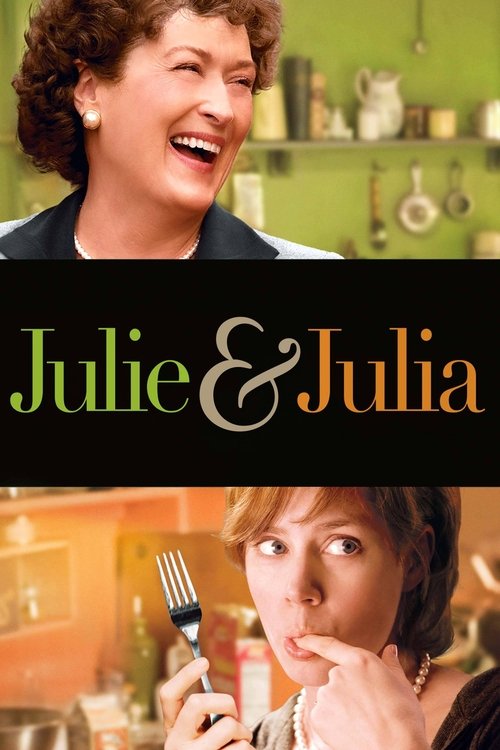
Julie & Julia (2009)
Directed by Nora Ephron
No — Julie & Julia is not especially woke, scoring 20 out of 100 on our wokeness meter.
Julie & Julia arrives from 2009, a year when a studio could still release a culinary comedy built on two memoirs, a blog, and the sight of Meryl Streep fluting her way through a Parisian kitchen.
Consciousness Markers
The film centers two women's ambition and authorship, and Julia is shown as the lone woman dismissed at Le Cordon Bleu, but this is a warm humanist portrait rather than a modern feminist polemic.
A light, old-fashioned culinary comedy that entertains rather than instructs; no preachy messaging.
The principal cast is entirely white, with no meaningful representation casting choices; the film reflects standard 2009 Hollywood casting norms without comment.
No LGBTQ+ characters or themes appear; the relationships depicted are heterosexual marriages.
No engagement with race or racial politics; the story is set in overwhelmingly white milieus in 1950s Paris and 2000s New York.
No environmental or climate themes whatsoever.
The film is aspirational about publishing, blogging, and celebrity authorship; it celebrates rather than critiques commercial success.
Julia Child's larger frame is presented matter-of-factly, but the film makes no body-positivity argument or statement.
No neurodivergent characters or themes are present.
A straightforward biographical treatment of real figures; no historical revisionism is attempted.
Why it received this score
Julie & Julia arrives from 2009, a year when a studio could still release a culinary comedy built on two memoirs, a blog, and the sight of Meryl Streep fluting her way through a Parisian kitchen. Nora Ephron's last film before her death, it braids the 1950s education of Julia Child with the 2002 apartment-bound mania of Julie Powell, who cooked all 524 recipes in a year and typed about it. The result is warm, edible, and almost aggressively untroubled by ideology. It is a movie about butter.
Two women pursue authorship and ambition across half a century, and the film takes that seriously without ever reaching for a manifesto. Julia sits alone in a Le Cordon Bleu classroom while the men snicker, and the camera simply watches. The point is made, then dropped. No speech follows. This is humanist portraiture in the old studio manner, where a woman's determination functions as a plot engine instead of a thesis statement.
Elsewhere the film is content to be a period piece about white people cooking. The Paris of the fifties and the New York of the early aughts are monochrome in every sense, and nobody in the frame seems to notice or mind. Julie's ambition terminates in a book deal, a Times feature, and the warm embrace of commerce, which the film regards as a happy ending and not a subject for interrogation. Julia Child's sturdy frame is presented without comment, which is its own quiet decency but not a position. There is no sermon here, no lecture, no finger wagged at the audience. Ephron trusted us to enjoy two hours of food and striving, and the film's greatest sin is that it would rather charm than scold. We have grown unaccustomed to that.
Analysis generated by our Consciousness Algorithm


Synopsis
Julia Child and Julie Powell – both of whom wrote memoirs – find their lives intertwined. Though separated by time and space, both women are at loose ends... until they discover that with the right combination of passion, fearlessness and butter, anything is possible.
Questions about Julie & Julia
Is Julie & Julia woke?
No — Julie & Julia is not especially woke, scoring 20 out of 100 on our wokeness meter. That earns it a verdict of Based.
Does Julie & Julia have any woke elements?
1 of the 10 markers register at 30 or above, led by Feminist Agenda (32). On Feminist Agenda: The film centers two women's ambition and authorship, and Julia is shown as the lone woman dismissed at Le Cordon Bleu, but this is a warm humanist portrait rather than a modern feminist polemic.
How does Julie & Julia compare to other 2009 movies?
It ranks #50 of the 230 films from 2009 we've scored; their average is 14. The wokest is Home (79).
How is the Woke Score calculated?
An AI-assisted process researches the film and its reception, scores it 0–100 on ten markers, then combines those into one 0–100 Woke Score. It measures a specific set of 2020s cultural themes, not film quality.