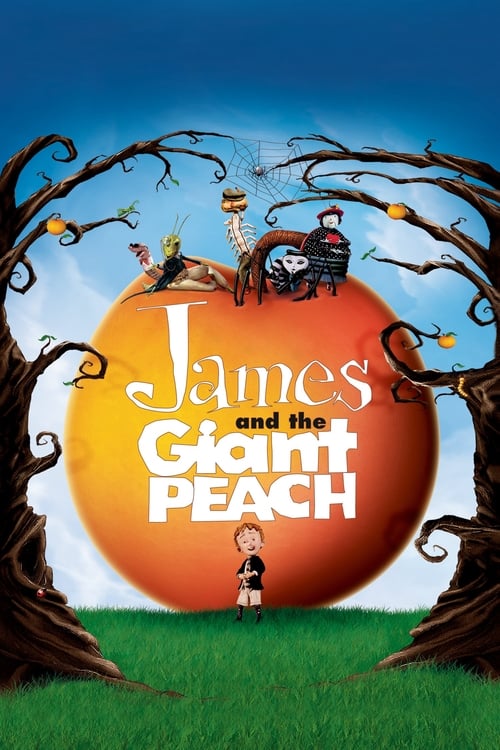
James and the Giant Peach (1996)
Directed by Henry Selick
No — James and the Giant Peach is not woke, scoring 2 out of 100 on our wokeness meter.
It is the summer of 1948, and a small English boy has been handed over to two aunts who treat him as an unpaid servant.
Consciousness Markers
The cast is entirely white British, with no deliberate inclusive or color-conscious casting choices.
No LGBTQ+ characters, relationships, or themes are present in the film.
Female characters exist as kindly insects or villainous aunts, but the film advances no feminist agenda or gender critique.
The film contains no exploration of race, racism, or racial identity.
There is no environmental or climate-change messaging in the story.
The aunts exploit the peach for money, but this is simple greed, not a systemic anti-capitalist critique.
The film does not address body image, size acceptance, or related themes.
No neurodivergent characters or themes are depicted or discussed.
The film is a fantasy adaptation and makes no historical claims to revise.
The story offers gentle moral lessons about family and kindness, but never adopts a preachy or lecture-like tone.
Why it received this score
It is the summer of 1948, and a small English boy has been handed over to two aunts who treat him as an unpaid servant. This is the premise of James and the Giant Peach, a 1996 adaptation of the Roald Dahl novel, directed by Henry Selick, who opens with twenty minutes of live action, vanishes into stop-motion for the sea voyage, and returns to live action for the arrival in New York. The peach grows because of spilled magic. The insects are large and courteous. A rhinoceros is the engine of the boy's grief. None of this carries an argument.
An audit of the film's cultural positions returns a clean sheet. The cast is uniformly white and British, and no color-conscious choices interrupt it. There is no romantic attachment, of any orientation, among the six arthropods, who comport themselves like a touring repertory company of unmarried uncles and aunts. The two villainous women are grotesques, and the film offers no gender critique beyond observing that they are dreadful. Their exploitation of the peach is ordinary greed, a fairground scheme, not an indictment of markets. The weather is simply weather. Nobody discusses their body, their mind, or the empire. The moral instruction is light: be kind, keep your friends, do not let the aunts win. It arrives without a pulpit.
The film's pleasures are visual and odd, and its refusal to lecture now looks like an artifact from a lost civilization. It lost money against its budget, was nominated for an Academy Award for Randy Newman's score, and won nothing. A sommelier would call this a clean vintage, no additives, faintly melancholic on the finish.
Analysis generated by our Consciousness Algorithm
Part of


Synopsis
When the young orphan boy James spills a magic bag of crocodile tongues, he finds himself in possession of a giant peach that flies him away to strange lands.
Questions about James and the Giant Peach
Is James and the Giant Peach woke?
No — James and the Giant Peach is not woke, scoring 2 out of 100 on our wokeness meter. That earns it a verdict of Ultra Based.
Does James and the Giant Peach have any woke elements?
No. All 10 markers score zero.
How does James and the Giant Peach compare to other 1996 movies?
It ranks #82 of the 93 films from 1996 we've scored; their average is 11. The wokest is Bound (60).
How is the Woke Score calculated?
An AI-assisted process researches the film and its reception, scores it 0–100 on ten markers, then combines those into one 0–100 Woke Score. It measures a specific set of 2020s cultural themes, not film quality.