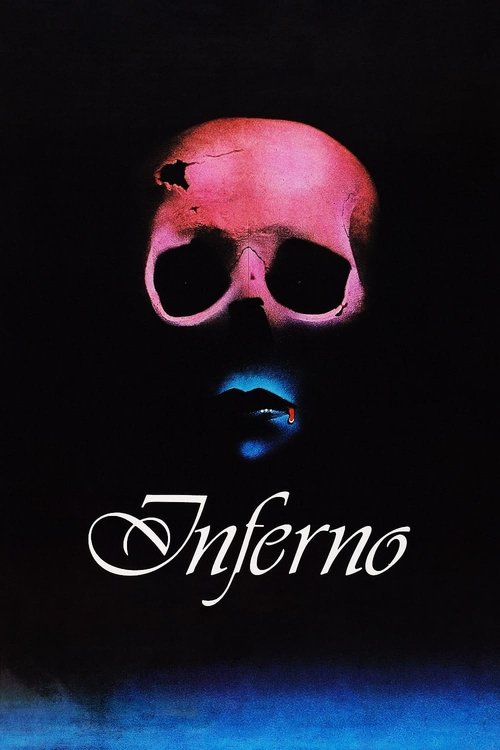
Inferno (1980)
Directed by Dario Argento
No — Inferno is not woke, scoring 0 out of 100 on our wokeness meter.
Dario Argento's Inferno (1980) arrives for classification as the second panel of the Three Mothers triptych, a thematic sequel to Suspiria and a film that has spent four decades being praised for its atmosphere and scolded for its plot.
Consciousness Markers
The cast is entirely white European performers, assembled for Argento's repertory and genre needs rather than any diversity mandate.
No LGBTQ+ characters, themes, or subtext appear anywhere in the film.
Daria Nicolodi devised the story but received no on-screen credit, and the film offers no feminist critique or agenda; women are largely victims of a gloved killer.
Race is entirely absent as a subject; the film is a supernatural horror with no engagement with racial themes.
No environmental or climate themes whatsoever.
No economic critique; the film is a surreal occult thriller unconcerned with class or capital.
No body-positivity themes; the film's bodies exist to be menaced and mutilated in giallo fashion.
No neurodivergence themes; Professor Arnold's mechanical voice device is a plot mechanism, not a statement on disability.
The film is a fantastical occult fiction derived from Thomas de Quincey's prose poetry, not a revisionist account of real history.
The film is deliberately incoherent and dreamlike, offering no moral instruction or social messaging to the audience.
Why it received this score
Dario Argento's Inferno (1980) arrives for classification as the second panel of the Three Mothers triptych, a thematic sequel to Suspiria and a film that has spent four decades being praised for its atmosphere and scolded for its plot. It concerns a New York apartment house built as a dwelling for Mater Tenebrarum, a centuries-old witch, and a young music student named Mark who wanders into its crawl spaces looking for his sister. The plot resists summary. This is not a defect. It is the operating principle.
Our survey of the ten markers returns a clean sheet. The cast is a roster of white European performers assembled for genre purposes, not for any representational mandate. No LGBTQ+ characters or subtext appear. Race is never a subject. The environment is not a concern; the rats, the cats, and the flooded ballroom exist to unsettle, not to instruct. Class and capital go unexamined. Bodies here are mutilated in the giallo manner, which is to say they are props. Professor Arnold's mechanical voice box is a plot device, not a statement on disability. And the film, derived from Thomas de Quincey's opium prose, makes no claim on real history.
What lingers is the absence of instruction. Inferno lectures no one. It offers no moral, no social program, no corrective. Daria Nicolodi devised the story and received no screen credit, a fact that says more about the industry than the film says about anything, and the film itself says nothing at all beyond its own fever. We file it accordingly. A sommelier might call it a difficult vintage. We call it a dream that never asked to be understood, and we respect it for that.
Analysis generated by our Consciousness Algorithm


Synopsis
A young man returns from Rome to his sister's satanic New York apartment house.
Questions about Inferno
Is Inferno woke?
No — Inferno is not woke, scoring 0 out of 100 on our wokeness meter. That earns it a verdict of Ultra Based.
Does Inferno have any woke elements?
No. All 10 markers score zero.
How does Inferno compare to other 1980 movies?
It ranks #32 of the 37 films from 1980 we've scored; their average is 10. The wokest is Nine to Five (42).
How is the Woke Score calculated?
An AI-assisted process researches the film and its reception, scores it 0–100 on ten markers, then combines those into one 0–100 Woke Score. It measures a specific set of 2020s cultural themes, not film quality.