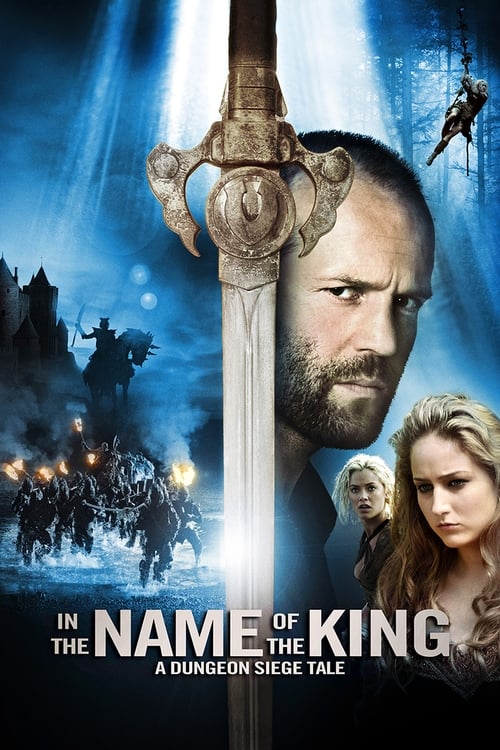
In the Name of the King: A Dungeon Siege Tale (2007)
Directed by Uwe Boll
No — In the Name of the King: A Dungeon Siege Tale is not woke, scoring 7 out of 100 on our wokeness meter.
In the Name of the King: A Dungeon Siege Tale arrives from 2007 with the grim determination of a film that has no interest in the cultural conversation.
Consciousness Markers
The cast is overwhelmingly white, with Brian J. White as Commander Tarish the only notable non-white principal. His presence is incidental to the story and carries no commentary on representation.
Female characters such as Muriella, Elora, and Solana have moments of agency, but the film is a conventional damsel-rescue fantasy with no feminist framing or critique.
No LGBTQ+ characters, relationships, or subtext appear anywhere in the film.
The Krug are a fantasy race of animal-warriors, not a stand-in for any real racial group, and the film engages no racial themes whatsoever.
No environmental or climate themes are present in this medieval fantasy.
The conflict is dynastic and magical, with no economic critique or anti-capitalist messaging.
No body-positivity themes or messaging appear in the film.
No neurodivergent characters or themes are depicted.
The film is a straightforward fantasy narrative with no historical revisionism.
The film delivers no social or political lecturing; it is a generic sword-and-sorcery adventure.
Why it received this score
In the Name of the King: A Dungeon Siege Tale arrives from 2007 with the grim determination of a film that has no interest in the cultural conversation. Uwe Boll, working with his largest budget to date, took a video game franchise about clicking on monsters and fashioned a medieval revenge saga in which Jason Statham plays a man named Farmer. Farmer wants his wife back and his son avenged. That is the entire moral universe of the picture, delivered without apology, subtext, or a single knowing glance toward the audience.
We search the kingdom of Ehb in vain for signs of contemporary social consciousness. The cast is a wall of pale faces, with Brian J. White appearing as Commander Tarish and carrying no burden of commentary. He is simply a soldier among soldiers. The women, Muriella, Elora, and Solana, are granted moments of competence, though the plot remains a rescue of a kidnapped wife, and the film never frames that arrangement as a problem requiring correction. No queer characters appear. No environmental lament sounds. No economic system is interrogated. The Krug are animal-warriors under a wizard's spell, not a metaphor for anyone. The film is too busy being mediocre to lecture.
Gallian, played by Ray Liotta with visible confusion, wants power because power is pleasant. Duke Fallow wants a throne because thrones are pleasant. Nobody delivers a speech about inclusion or the sins of history. The film moves from one swordfight to the next and says nothing of consequence. Four percent on Rotten Tomatoes, a Golden Raspberry for its director, a footnote in the long ledger of video game adaptations that should not have been made. By the standards of our current taxonomy, it is a wasteland. A remarkably clean one.
Analysis generated by our Consciousness Algorithm


Synopsis
A man named Farmer sets out to rescue his kidnapped wife and avenge the death of his son – two acts committed by the Krugs, a race of animal-warriors who are controlled by the evil Gallian.
Questions about In the Name of the King: A Dungeon Siege Tale
Is In the Name of the King: A Dungeon Siege Tale woke?
No — In the Name of the King: A Dungeon Siege Tale is not woke, scoring 7 out of 100 on our wokeness meter. That earns it a verdict of Ultra Based.
Does In the Name of the King: A Dungeon Siege Tale have any woke elements?
Very few. None of the 10 markers reaches 30, the level where a marker counts as present; the highest is Representation Casting at 12.
How does In the Name of the King: A Dungeon Siege Tale compare to other 2007 movies?
It ranks #108 of the 201 films from 2007 we've scored; their average is 12. The wokest is Like Stars on Earth (92).
How is the Woke Score calculated?
An AI-assisted process researches the film and its reception, scores it 0–100 on ten markers, then combines those into one 0–100 Woke Score. It measures a specific set of 2020s cultural themes, not film quality.