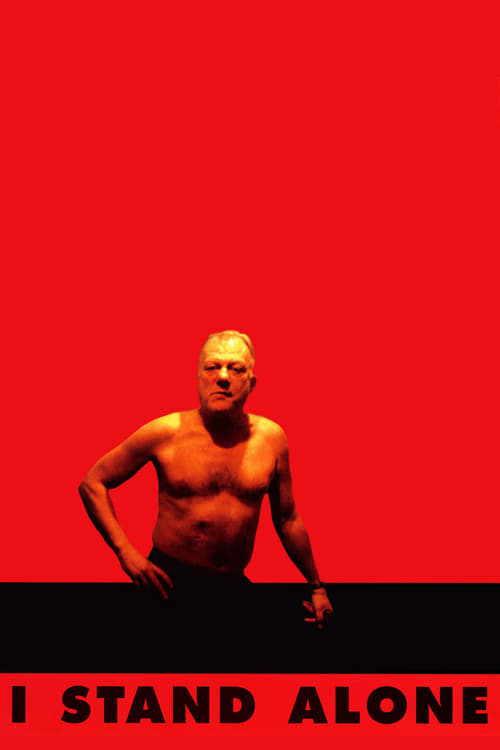
I Stand Alone (1999)
Directed by Gaspar Noé
No — I Stand Alone is not woke, scoring 15 out of 100 on our wokeness meter.
Gaspar Noé's feature debut arrives as a sequel to his own short film, and it carries the same conviction that the world is a slaughterhouse with better lighting.
Consciousness Markers
The film opens with an explicit monologue arguing that morality and justice serve the rich while the poor must enforce their own, and its plot is driven by economic precarity, unemployment, and a mistress who wields her wealth as a weapon. This is genuine class resentment, though it is nihilistic and pre-2010s in register rather than modern 'eat the rich' advocacy.
The film is almost entirely internal monologue punctuated by didactic title cards ('Morality', 'Justice') and even a 30-second 'Warning' countdown before the climax, making it relentlessly preachy. The sermon, however, is one of misanthropy and nihilism rather than progressive moralizing.
The cast is overwhelmingly white French, with a single supporting character (Dr. Choukroun) bearing a Maghrebi name and no narrative comment on her background. This is incidental presence, not deliberate representation casting.
The Butcher's daughter is mute and described as mentally handicapped, but her condition functions as a plot device and object of the protagonist's transgression rather than as neurodivergence-affirming representation.
There are no LGBTQ+ characters, themes, or subtext anywhere in the film's grim chronicle of a butcher's rage and despair.
The film is the opposite of a feminist text: its protagonist beats his pregnant mistress and fondles his institutionalized daughter, and the camera treats these acts as expressions of his pathology rather than critiquing gendered power.
The Butcher's grievances are entirely about class, money, and personal humiliation; race is never a subject of the film's consciousness.
No environmental or climate themes appear in this urban tale of unemployment and revenge.
No body-positivity themes are present; the film's treatment of bodies is one of violence and disgust.
The film makes no attempt to revise or reinterpret historical events; its brief references to the father's death in a concentration camp are background detail, not historical revisionism.
Why it received this score
Gaspar Noé's feature debut arrives as a sequel to his own short film, and it carries the same conviction that the world is a slaughterhouse with better lighting. The Butcher, played by Philippe Nahon with the weariness of a man evicted from every room he ever entered, opens the picture with a monologue asserting that morality and justice are commodities reserved for the wealthy. What follows is a chronicle of unemployment, humiliation, and the collapse of the horse meat trade. The class resentment here is real and corrosive, though it belongs to an older, bleaker tradition of European misanthropy. There is no program, no solidarity, no remedy. Just a man assigning three bullets to the people who wronged him.
On the matter of contemporary social consciousness, the film is nearly barren. The cast is overwhelmingly white French, with a single doctor bearing a Maghrebi surname and no comment made about it. There are no queer characters or subtext. The treatment of women is savage: the mistress is beaten, the daughter is fondled, and the camera records these acts as symptoms of one man's rot. This is not critique. It is autopsy. The daughter's mutism functions as a narrative mechanism, an object for the protagonist's transgression, nothing more.
Where the film does register is in its compulsion to lecture. The script is almost entirely voice-over, punctuated by title cards announcing "Morality" and "Justice," and capped by a thirty-second warning countdown borrowed from William Castle. It is relentless sermonizing. The congregation is addressed directly, warned, then abandoned. The lesson, however, is not uplift. It is contempt for the audience, the characters, and the species. A grim achievement, precisely catalogued, and not remotely redemptive.
Analysis generated by our Consciousness Algorithm
Synopsis
After completing jail time for beating up a man who tried to seduce his mentally-handicapped teenage daughter, the Butcher wants to start life anew. He institutionalizes his daughter and moves to the Lille suburbs with his mistress, who promises him a new butcher shop. Learning that she lied, the Butcher returns to Paris to find his daughter.
Questions about I Stand Alone
Is I Stand Alone woke?
No — I Stand Alone is not woke, scoring 15 out of 100 on our wokeness meter. That earns it a verdict of Ultra Based.
Does I Stand Alone have any woke elements?
2 of the 10 markers register at 30 or above, led by Eat the Rich (40) and Lecture Energy (40). On Eat the Rich: The film opens with an explicit monologue arguing that morality and justice serve the rich while the poor must enforce their own, and its plot is driven by economic precarity, unemployment, and a mistress who wields her wealth as a weapon.
How does I Stand Alone compare to other 1999 movies?
It ranks #34 of the 103 films from 1999 we've scored; their average is 14. The wokest is Boys Don't Cry (60).
How is the Woke Score calculated?
An AI-assisted process researches the film and its reception, scores it 0–100 on ten markers, then combines those into one 0–100 Woke Score. It measures a specific set of 2020s cultural themes, not film quality.