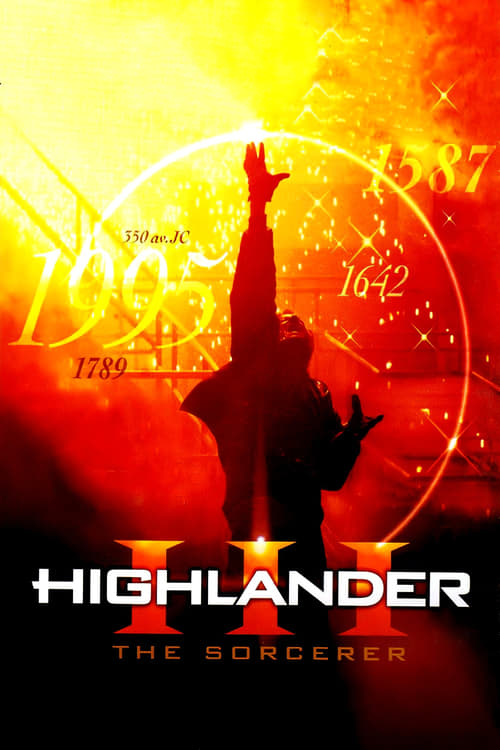
Highlander III: The Sorcerer (1994)
Directed by Andrew Morahan
No — Highlander III: The Sorcerer is not woke, scoring 4 out of 100 on our wokeness meter.
Highlander III: The Sorcerer arrives from 1994 with the confidence of a franchise that has decided to pretend its predecessor never happened.
Consciousness Markers
The cast includes Mario Van Peebles, Mako, and Daniel Dõ in prominent roles, but this is unremarkable 1994 ensemble casting with no commentary on representation.
Deborah Kara Unger's Dr. Alexandra Johnson is a working archaeologist, but she functions primarily as a romantic interest and reincarnation plot device rather than a feminist statement.
No LGBTQ+ characters, themes, or subtext appear anywhere in the film.
The film features a multiethnic cast but engages in no racial themes, commentary, or consciousness whatsoever.
No environmental or climate themes are present; the film is a sword-and-sorcery fantasy.
No economic critique or anti-capitalist messaging exists in the film.
No body positivity themes; the film adheres to conventional action-hero physicality.
No neurodivergent characters or themes are depicted.
The film uses historical settings (16th-century Japan, Revolutionary France) as fantasy backdrop, not as historical revisionism.
The film offers no moralizing or preachy messaging; it is a straightforward action-fantasy sequel.
Why it received this score
Highlander III: The Sorcerer arrives from 1994 with the confidence of a franchise that has decided to pretend its predecessor never happened. Connor MacLeod, an immortal Scotsman with a long memory and a longer sword, is drawn from his retirement in Marrakesh when an entombed sorcerer named Kane escapes and begins decapitating his way toward the Prize. The film moves from sixteenth-century Japan to Revolutionary France to a New York City power plant, and it does so without pausing to examine any of it. This is a movie about swords, and it knows it.
On the matter of casting, the ensemble is diverse in the unselfconscious manner of mid-1990s action cinema. Mario Van Peebles, Mako, and Daniel Dõ appear in substantial roles, and the film treats their presence as nothing more than casting. That is not a complaint. No racial themes are raised, no commentary is offered, and the narrative proceeds as though ethnicity were simply a fact of the world. Deborah Kara Unger plays Dr. Alexandra Johnson, an archaeologist with a trowel and a doctorate, who spends the back half of the film as a love interest and a plot mechanism. The doctorate is real. The agency is not.
The film lectures no one. There is no environmental sermon, no economic critique, no meditation on identity, no instruction on how we ought to live. Kane wants world domination. Connor wants to stop him and then retire to Scotland. The moral universe is a straight line, and the movie walks it with the grim determination of a man who has forgotten why he started. For a viewer in search of contemporary social instruction, this offers nothing. For a viewer in search of a man in a trench coat fighting a sorcerer in an abandoned power plant, it delivers precisely that.
Analysis generated by our Consciousness Algorithm


Synopsis
Deceived that he had won the Prize, Connor MacLeod wanders through the world; however, he is awakened from his peaceful life when an entombed immortal magician, Kane, escapes and comes seeking the Highlander.
Questions about Highlander III: The Sorcerer
Is Highlander III: The Sorcerer woke?
No — Highlander III: The Sorcerer is not woke, scoring 4 out of 100 on our wokeness meter. That earns it a verdict of Ultra Based.
Does Highlander III: The Sorcerer have any woke elements?
Very few. None of the 10 markers reaches 30, the level where a marker counts as present; the highest is Representation Casting at 15.
How does Highlander III: The Sorcerer compare to other 1994 movies?
It ranks #54 of the 86 films from 1994 we've scored; their average is 10. The wokest is On Deadly Ground (75).
Is Highlander III: The Sorcerer the most woke Highlander movie?
No. It ranks #3 of the 3 Highlander films we've scored; the wokest is Highlander II: The Quickening (34).