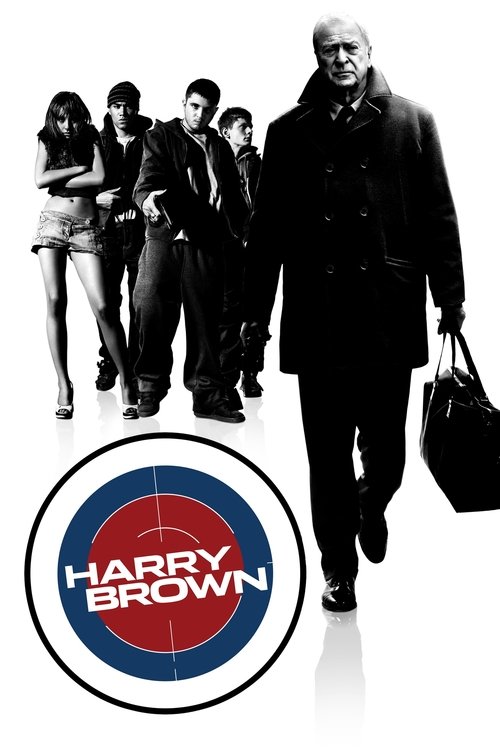
Harry Brown (2009)
Directed by Daniel Barber
No — Harry Brown is not woke, scoring 6 out of 100 on our wokeness meter.
Harry Brown arrives in 2009 with a bayonet in one hand and a grievance in the other.
Consciousness Markers
The film gestures at social commentary on youth crime and urban decay, but it is a lurid revenge thriller first; critics found it either too didactic or politically odious rather than preachy in a woke register.
Emily Mortimer's DI Frampton is a competent, dogged investigator who deduces the truth when her superiors won't, but her role serves the plot rather than any feminist argument.
The cast is overwhelmingly white British, with a few naturally-present performers of color among the estate youth (e.g. rapper Plan B), but the film makes no comment on or effort toward diverse representation.
Poverty and the blight of council estates feature prominently, but the villains are disaffected youth and drug dealers, not the wealthy; it offers grievance without an economic critique.
The film's social anxieties are framed entirely around class, youth crime, and 'Broken Britain' rather than race; no racial themes are engaged.
There are no LGBTQ+ characters, themes, or subtext anywhere in the film.
No environmental or climate themes whatsoever.
No body positivity themes present.
No neurodivergence themes present.
Harry's Northern Ireland service is background detail for his combat skills, not a revisionist reframing of history.
Why it received this score
Harry Brown arrives in 2009 with a bayonet in one hand and a grievance in the other. Michael Caine plays a widowed Royal Marine pensioner on a London council estate, a man who has buried a wife and a daughter and now buries a chess partner. The film wants us to feel the rot of the place, the underpass where the gangs gather, the police who cannot act. It is a revenge picture first and a social tract a distant second, and the ordering matters more than the film cares to admit.
On the question of representation, the cast is overwhelmingly white and British, with a handful of performers of color moving through the estate youth while the film never remarks on them. Emily Mortimer's DI Frampton is a capable investigator who out-thinks her superiors, though her competence serves the plot, not an argument. The anxieties here are about class, youth, and urban decay. Race does not enter the frame. Neither does sexuality, environmental concern, body image, or neurodivergence. Harry's Northern Ireland service is a skillset, not a thesis on empire.
Where the film gestures toward sermonizing, it does so about Broken Britain, hoodies, and the failure of the state, and the critics split accordingly. The Times called it morally odious. Roger Ebert filed it somewhere between Death Wish and Gran Torino, which is roughly right. The villains are drug dealers and feral teenagers, not bankers, so the economic complaint stays personal and small. The lasting image is Caine, weary and precise, walking toward an underpass that has finally gone quiet.
Analysis generated by our Consciousness Algorithm


Synopsis
An elderly ex-serviceman and widower looks to avenge his best friend's murder by doling out his own form of justice.
Questions about Harry Brown
Is Harry Brown woke?
No — Harry Brown is not woke, scoring 6 out of 100 on our wokeness meter. That earns it a verdict of Ultra Based.
Does Harry Brown have any woke elements?
Very few. None of the 10 markers reaches 30, the level where a marker counts as present; the highest is Lecture Energy at 15.
How does Harry Brown compare to other 2009 movies?
It ranks #144 of the 230 films from 2009 we've scored; their average is 14. The wokest is Home (79).
How is the Woke Score calculated?
An AI-assisted process researches the film and its reception, scores it 0–100 on ten markers, then combines those into one 0–100 Woke Score. It measures a specific set of 2020s cultural themes, not film quality.