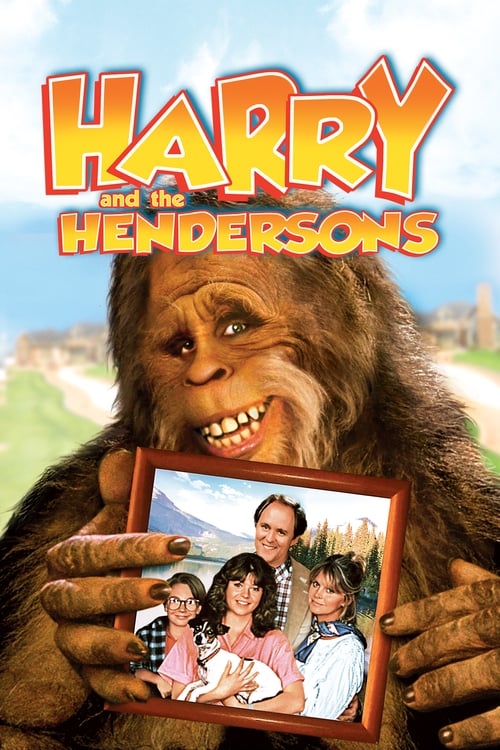
Harry and the Hendersons (1987)
Directed by William Dear
No — Harry and the Hendersons is not woke, scoring 6 out of 100 on our wokeness meter.
Harry and the Hendersons arrives from 1987 with an Academy Award for Best Makeup and the long shadow of Steven Spielberg, who produced without a credit.
Consciousness Markers
George initially schemes to exploit Harry for fame and fortune before learning better, and the film gently critiques hunting and commodification, though it never becomes an economic polemic.
The film carries a soft moral about kindness to animals and not hunting, which one critic derided as a 'vegetarian screed,' but the messaging is gentle and embedded in family-comedy plotting.
The cast is overwhelmingly white, with Kevin Peter Hall (a Black actor) buried inside the Harry suit, which is a creature performance rather than meaningful representation.
Nancy and Sarah Henderson exist as supportive family members but the film offers no feminist critique or gendered commentary.
There is a mild wildlife-conservation sentiment in returning Harry to the wilderness, but no climate or environmental-advocacy framework.
No LGBTQ+ characters, themes, or subtext of any kind appear in this 1987 family comedy.
The film engages no racial themes whatsoever; its conflict is between a family, a hunter, and a cryptid.
No body-positivity themes; Harry's size is played for slapstick rather than any message about body acceptance.
No neurodivergent characters or themes are present.
The film is a contemporary fantasy with no historical narrative to revise.
Why it received this score
Harry and the Hendersons arrives from 1987 with an Academy Award for Best Makeup and the long shadow of Steven Spielberg, who produced without a credit. A Seattle family strikes a Bigfoot with the station wagon, hauls the body home in the hope of a payday, and discovers the creature is alive, gentle, and partial to hamburgers. Rick Baker built the suit. Kevin Peter Hall wore it. The result is a technical marvel wrapped around a screenplay that critics of the day found juiceless, and history has largely agreed with them.
The film's conscience is economic, faintly. George Henderson sees dollar signs before he sees a living thing, and the narrative corrects him. Hunting is the villain here, embodied by David Suchet's relentless tracker, and the resolution asks us to regard a large hairy stranger as a neighbor. One reviewer dismissed the whole affair as a vegetarian screed, which is a generous reading of a movie whose moral amounts to: do not shoot the nice animal. The messaging stays soft, folded into slapstick and a car chase, never rising to a sermon.
What the film does not do is instruct us on identity, gender, or the climate. Nancy and Sarah Henderson are supportive and largely decorative. The cast is white, with a Black performer sealed inside the prosthetics, a fact the movie never contemplates. Harry's bulk generates pratfalls, not a discourse on body acceptance. There is no racial argument, no queer subtext, no neurodivergent character, no historical reckoning to perform. It is a creature feature with a warm heart and a merchandising instinct, and it wants only to be liked. In that modest ambition it mostly succeeds, which is its own kind of innocence. The culture has since found other uses for the family film. This one simply wanted to sell a plush toy.
Analysis generated by our Consciousness Algorithm
Part of


Synopsis
Returning from a hunting trip in the forest, the Henderson family's car hits an animal in the road. At first they fear it was a man, but when they examine the "body" they find it's a "bigfoot". They think it's dead so they decide to take it home (there could be some money in this). As you guessed, it isn't dead. Far from being the ferocious monster they fear "Harry" to be, he's a friendly giant.
Questions about Harry and the Hendersons
Is Harry and the Hendersons woke?
No — Harry and the Hendersons is not woke, scoring 6 out of 100 on our wokeness meter. That earns it a verdict of Ultra Based.
Does Harry and the Hendersons have any woke elements?
Very few. None of the 10 markers reaches 30, the level where a marker counts as present; the highest is Eat the Rich at 15.
How does Harry and the Hendersons compare to other 1987 movies?
It ranks #26 of the 59 films from 1987 we've scored; their average is 8. The wokest is Maurice (68).
How is the Woke Score calculated?
An AI-assisted process researches the film and its reception, scores it 0–100 on ten markers, then combines those into one 0–100 Woke Score. It measures a specific set of 2020s cultural themes, not film quality.