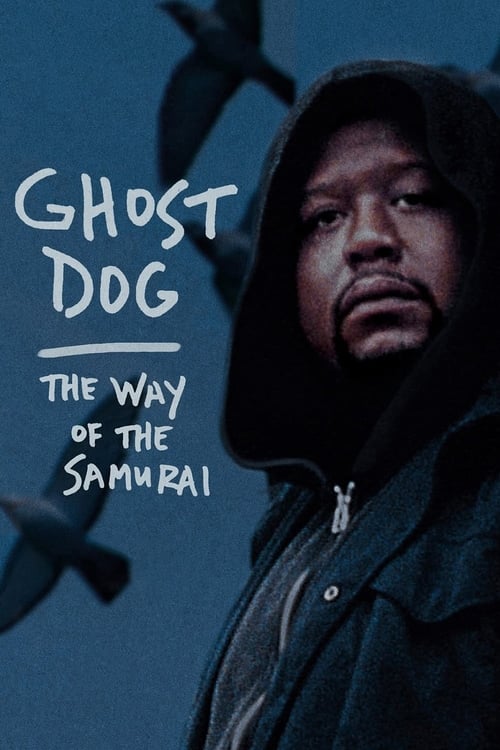
Ghost Dog: The Way of the Samurai (1999)
Directed by Jim Jarmusch
No — Ghost Dog: The Way of the Samurai is not woke, scoring 16 out of 100 on our wokeness meter.
Jim Jarmusch's 1999 study of a Black hitman who reads the Hagakure between assignments arrives with a multiethnic ensemble that feels curated without ever announcing itself as such.
Consciousness Markers
Forest Whitaker headlines as a Black samurai-obsessed hitman, with Isaach de Bankolé as a Haitian ice-cream man and Camille Winbush as a young Black girl, giving the film a notably multiethnic cast for 1999. The cross-cultural casting is deliberate but not framed as a modern representation statement.
A Black protagonist operates inside an all-white mafia hierarchy, and a racial slur appears in the dialogue, but Jarmusch explicitly frames the film as cultural synthesis rather than racial critique.
The recurring Hagakure quotations lend a meditative, aphoristic voiceover, but they impart a warrior's philosophy rather than social instruction to the audience.
Pearline, a young girl, is entrusted with the Hagakure and reads it at the close, and Vargo's daughter inherits the mob throne. These are incidental beats rather than a feminist thesis.
No LGBTQ+ characters, themes, or subtext appear anywhere in the film.
No environmental or climate themes are present.
The antagonists are mobsters, not plutocrats, and the film offers no economic critique of wealth or capitalism.
No body-positivity themes or messaging appear.
Ebert speculated the character may be unhinged, but the film presents no neurodivergence as a theme or identity.
The film is a contemporary crime drama with no historical revisionism.
Why it received this score
Jim Jarmusch's 1999 study of a Black hitman who reads the Hagakure between assignments arrives with a multiethnic ensemble that feels curated without ever announcing itself as such. Forest Whitaker anchors the film as a man who has assembled a self from borrowed fragments, and around him Jarmusch places a Haitian ice cream vendor, a young girl, and a crew of aging Italian mobsters who now conduct business out of a Chinese restaurant. The synthesis is the point. A Black protagonist serving an all-white crime family carries an implicit charge, and a racial slur lands in the dialogue, but the film treats these as texture in a larger meditation on cultural collision. It observes. It does not scold.
The women in the film occupy the margins with quiet purpose. Pearline inherits the book, and Vargo's daughter inherits the throne, small gestures that gesture toward something without building a case for it. The recurring voiceover quotations from the samurai text supply a steady aphoristic hum, though the wisdom dispensed is a warrior's private philosophy, not a lesson aimed at the audience. There is no economic critique here, no environmental concern, no inquiry into body or mind. The antagonists are gangsters. They want money and survival, which is an old appetite and not a political one.
What remains is a film about a man who has chosen his code and will die inside it, and Jarmusch films that devotion with the patience of someone who finds it genuinely strange. The pigeons, the cartoons, the ice cream truck, the RZA score: all of it coheres into something mournful and dryly funny. It is a serious picture about serious things. It simply declines to tell us what to think about them, which in this era of instruction amounts to a kind of courtesy.
Analysis generated by our Consciousness Algorithm


Synopsis
A Black hitman who models after the samurai of old finds himself targeted for death by the mob.
Questions about Ghost Dog: The Way of the Samurai
Is Ghost Dog: The Way of the Samurai woke?
No — Ghost Dog: The Way of the Samurai is not woke, scoring 16 out of 100 on our wokeness meter. That earns it a verdict of Ultra Based.
Does Ghost Dog: The Way of the Samurai have any woke elements?
1 of the 10 markers register at 30 or above, led by Representation Casting (45). On Representation Casting: Forest Whitaker headlines as a Black samurai-obsessed hitman, with Isaach de Bankolé as a Haitian ice-cream man and Camille Winbush as a young Black girl, giving the film a notably multiethnic cast for 1999.
How does Ghost Dog: The Way of the Samurai compare to other 1999 movies?
It ranks #32 of the 103 films from 1999 we've scored; their average is 14. The wokest is Boys Don't Cry (60).
How is the Woke Score calculated?
An AI-assisted process researches the film and its reception, scores it 0–100 on ten markers, then combines those into one 0–100 Woke Score. It measures a specific set of 2020s cultural themes, not film quality.