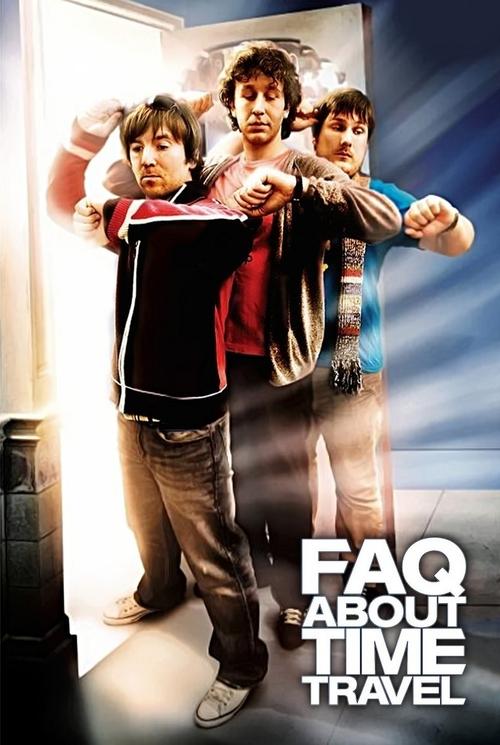
Frequently Asked Questions About Time Travel (2009)
Directed by Gareth Carrivick
No — Frequently Asked Questions About Time Travel is not woke, scoring 5 out of 100 on our wokeness meter.
Frequently Asked Questions About Time Travel arrives from 2009, a year when a British comedy could still be about three men in a pub and nothing else.
Consciousness Markers
The cast is a predominantly white British ensemble with Anna Faris as the lone American lead; no deliberate diverse or inclusive casting choices are evident.
Anna Faris and Meredith MacNeill play capable time-travelling women, but the film is a laddish pub comedy with no feminist thesis or commentary.
The 'Letter to Hollywood' and the 'Editors' who police cultural standards gesture at anti-corporate/anti-industry satire, but this is a showbiz joke rather than an eat-the-rich economic critique.
The film is a lightweight comedy that never lectures the audience on social or moral issues.
No LGBTQ+ characters, relationships, or themes appear anywhere in the film.
No engagement with race, racism, or racial identity; the film is entirely concerned with time-travel mechanics and geek culture.
No environmental or climate themes whatsoever.
No body-positive messaging or body-diversity themes present.
The leads are described as 'geeks' and 'social outcasts,' but this is fandom-culture characterization, not an exploration of neurodivergence.
No historical revisionism; the film is a contemporary sci-fi comedy with no historical subject matter.
Why it received this score
Frequently Asked Questions About Time Travel arrives from 2009, a year when a British comedy could still be about three men in a pub and nothing else. Two science fiction enthusiasts and their caustic friend bicker over lager, wander into a time leak in the men's toilet, and meet a traveller from the future. The stakes are temporal. The register is laddish. Gareth Carrivick directs with the energy of a stretched television pilot, and the screenplay by Jamie Mathieson cares only about paradox mechanics and the correct way to mock Hollywood.
On the matter of social consciousness, the film is a near-vacuum. The cast is a white British ensemble with Anna Faris imported as the lone American, and no inclusive intent is visible in the arrangement. Cassie and Millie are competent women who repair timelines and threaten assassinations, yet the film advances no thesis about gender, and the pub banter keeps its laddish footing throughout. The Letter to Hollywood and the Editors who police cultural standards amount to a showbiz in-joke, a complaint about bad movies, not an economic argument about who owns what. Race, climate, body image, neurodivergence and history are simply absent. The geeks are geeks because they like spaceships, not because the film has anything to say about how minds work.
The film never lectures. It has no sermon to deliver and no moral to press upon a captive audience, and in that narrow sense it is almost restful. The residue is a modest comic curio, amiable, disposable, untroubled by the questions that would soon dominate the culture. We classify it accordingly, and we move on.
Analysis generated by our Consciousness Algorithm


Synopsis
Follows three social outcasts -- two geeks and a cynic -- as they attempt to navigate a time-travel conundrum in the middle of a British pub.
Questions about Frequently Asked Questions About Time Travel
Is Frequently Asked Questions About Time Travel woke?
No — Frequently Asked Questions About Time Travel is not woke, scoring 5 out of 100 on our wokeness meter. That earns it a verdict of Ultra Based.
Does Frequently Asked Questions About Time Travel have any woke elements?
Very few. None of the 10 markers reaches 30, the level where a marker counts as present; the highest is Eat the Rich at 10.
How does Frequently Asked Questions About Time Travel compare to other 2009 movies?
It ranks #154 of the 230 films from 2009 we've scored; their average is 14. The wokest is Home (79).
How is the Woke Score calculated?
An AI-assisted process researches the film and its reception, scores it 0–100 on ten markers, then combines those into one 0–100 Woke Score. It measures a specific set of 2020s cultural themes, not film quality.