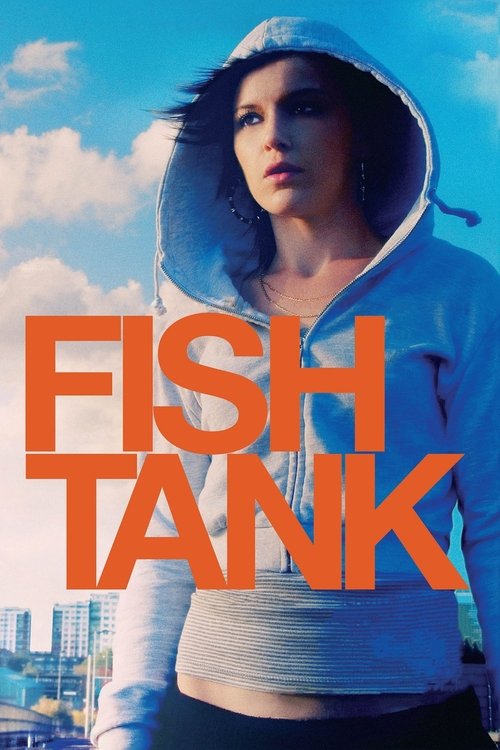
Fish Tank (2009)
Directed by Andrea Arnold
No — Fish Tank is not woke, scoring 13 out of 100 on our wokeness meter.
Fish Tank arrives from 2009, a year when British social realism still trusted its audience to assemble meaning without a pamphlet.
Consciousness Markers
Directed by Andrea Arnold and centered entirely on a teenage girl's interior life, sexuality, and agency, the film offers a complex, unglamorous female perspective. However, it presents this through raw naturalism rather than explicit feminist messaging.
The film depicts working-class deprivation on a council estate and contrasts it with Connor's comfortable middle-class home, but this is social realism rather than an anti-capitalist polemic.
The cast is overwhelmingly white British, though lead Katie Jarvis was a non-professional discovered on the street and the milieu is a multicultural East London estate. No deliberate identity-based casting agenda drives the film.
The film is set in a mixed East London community and its diegetic soundtrack leans on Black British and hip-hop music, but race is never a thematic concern or subject of commentary.
Arnold's style is observational and show-don't-tell, with no didactic speeches or moralizing; it lets the audience draw its own conclusions.
No LGBTQ+ characters or themes appear anywhere in the narrative.
No environmental or climate themes are present.
No body positivity themes; the film's treatment of the body is naturalistic rather than a message about self-acceptance.
No neurodivergent characters or themes are depicted or discussed.
The film is a contemporary fictional drama with no historical subject matter to revise.
Why it received this score
Fish Tank arrives from 2009, a year when British social realism still trusted its audience to assemble meaning without a pamphlet. Andrea Arnold follows Mia, fifteen and at war with everyone, across a Havering council estate, and the camera never stops to explain her. The film took the Jury Prize at Cannes and a BAFTA, which suggests the establishment will reward misery when it is rendered this beautifully. It is a small, hard film that has aged into a canon entry, ranked on lists of the century's best by people who compile such things.
There is a female perspective here, and it is unsparing. Arnold grants Mia an interior life, a sexuality, and an anger that the film refuses to tidy into a lesson. She dances alone in an empty flat, drinks cider, pursues a man twice her age, and the film sits with the discomfort instead of resolving it. A woman's gaze rests on a girl's becoming, though it arrives as raw observation, not advocacy. The multiracial texture of East London drifts through the streets and the soundtrack, yet race remains scenery, never argument.
The class politics are present and deliberate. Mia's estate sits a river of taste and money away from Connor's comfortable home, and the film lets that distance speak for itself. This is social realism of the old school, which shows deprivation without prescribing an economy. The casting carries its own quiet footnote: Katie Jarvis was discovered arguing at a railway station, a non-professional dropped into a role she seemed to inhabit. Nothing here lectures. It observes, withholds, and ends on a Nas track and a bus to Wales. The result is a film of enormous empathy and no sermon at all, which is its own kind of restraint.
Analysis generated by our Consciousness Algorithm


Synopsis
Fifteen-year-old Mia is in a constant state of war with her family and the world around her. When she meets her party-girl mother’s charming new boyfriend Connor, she is amazed to find he returns her attention, and believes he might help her start to make sense of her life.
Questions about Fish Tank
Is Fish Tank woke?
No — Fish Tank is not woke, scoring 13 out of 100 on our wokeness meter. That earns it a verdict of Ultra Based.
Does Fish Tank have any woke elements?
1 of the 10 markers register at 30 or above, led by Feminist Agenda (42). On Feminist Agenda: Directed by Andrea Arnold and centered entirely on a teenage girl's interior life, sexuality, and agency, the film offers a complex, unglamorous female perspective.
How does Fish Tank compare to other 2009 movies?
It ranks #82 of the 230 films from 2009 we've scored; their average is 14. The wokest is Home (79).
How is the Woke Score calculated?
An AI-assisted process researches the film and its reception, scores it 0–100 on ten markers, then combines those into one 0–100 Woke Score. It measures a specific set of 2020s cultural themes, not film quality.