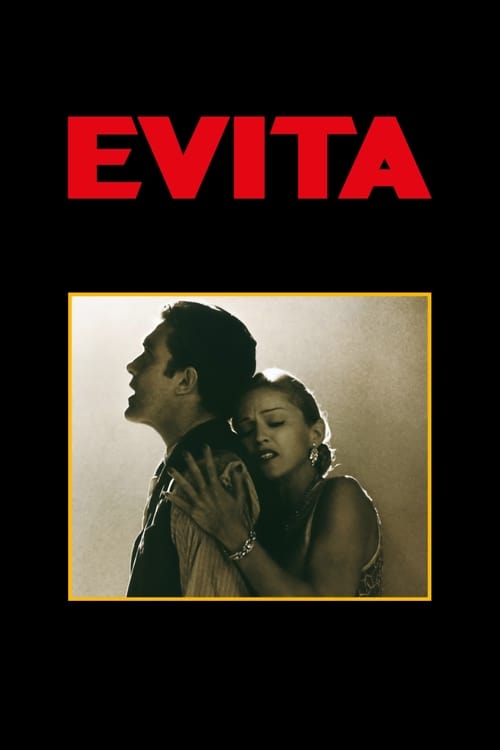
Evita (1996)
Directed by Alan Parker
No — Evita is not woke, scoring 6 out of 100 on our wokeness meter.
The 1996 adaptation of the Rice and Lloyd Webber musical arrives with a full orchestra and no interest in the casting debates that would occupy a later era.
Consciousness Markers
Centers on Eva Perón's rise as a powerful woman and includes the song 'Partido Feminista,' but its portrayal is ambivalent and not a modern feminist manifesto.
Critiques the oligarchy and Perónist corruption, but lacks a coherent modern anti-capitalist message.
Che's cynical narration and political songs offer commentary, but the film is not preachy in a modern woke sense.
The film casts non-Latin actors like Madonna and Jonathan Pryce in Argentine roles, reflecting no modern inclusive casting agenda.
No LGBTQ+ characters or themes are present.
The film addresses class and populism in Argentina but does not engage with racial consciousness or racial justice.
No environmental or climate themes.
No body positivity themes.
No neurodivergence themes.
A musical biopic with dramatic liberties, but not a modern revisionist history.
Why it received this score
The 1996 adaptation of the Rice and Lloyd Webber musical arrives with a full orchestra and no interest in the casting debates that would occupy a later era. Madonna, a Michigan native, plays the Argentine first lady. Jonathan Pryce, Welsh, plays Juan Perón. Antonio Banderas, Spanish, narrates as Ché. Nobody involved appears troubled by this arrangement, and the film offers no comment on it. The result is a curious artifact: a sung-through biopic that treats its subject as a creature of ambition, appetite, and spectacle, and declines to convert her into a lesson.
The film does center a woman who claws her way from provincial obscurity to the presidential balcony, and it grants her a number in which she addresses the working women of Argentina. Yet the gaze stays skeptical. Ché trails her like a conscience in a leather jacket, noting that the money kept rolling in and out. A critique of oligarchy is present, along with a dim view of Perónist graft, but it is the old-fashioned kind, aimed at corruption in general instead of capital as a system.
If the film lectures, it does so through a cynic, not a preacher. Its political songs sneer at the aristocracy and at the Peróns alike, leaving the audience without a comfortable position. No environmental theme intrudes. No questions of body, brain, or identity are raised. The racial politics of Argentina go untouched. History is dramatized with the usual liberties of a musical, not revised toward a contemporary thesis. The film stands as a monument to a different set of priorities, one in which a pop star could simply be cast as a historical figure and the audience was expected to cope. It is handsome, occasionally stirring, and almost entirely untouched by the social consciousness later demanded of such material. For the viewer seeking instruction, there is little to harvest.
Analysis generated by our Consciousness Algorithm


Synopsis
The hit musical based on the life of Evita Duarte, an Argentinian actress who eventually became the wife of Argentinian president Juan Perón, and the most beloved and hated woman in Argentina.
Questions about Evita
Is Evita woke?
No — Evita is not woke, scoring 6 out of 100 on our wokeness meter. That earns it a verdict of Ultra Based.
Does Evita have any woke elements?
1 of the 10 markers register at 30 or above, led by Feminist Agenda (30). On Feminist Agenda: Centers on Eva Perón's rise as a powerful woman and includes the song 'Partido Feminista,' but its portrayal is ambivalent and not a modern feminist manifesto.
How does Evita compare to other 1996 movies?
It ranks #58 of the 93 films from 1996 we've scored; their average is 11. The wokest is Bound (60).
How is the Woke Score calculated?
An AI-assisted process researches the film and its reception, scores it 0–100 on ten markers, then combines those into one 0–100 Woke Score. It measures a specific set of 2020s cultural themes, not film quality.