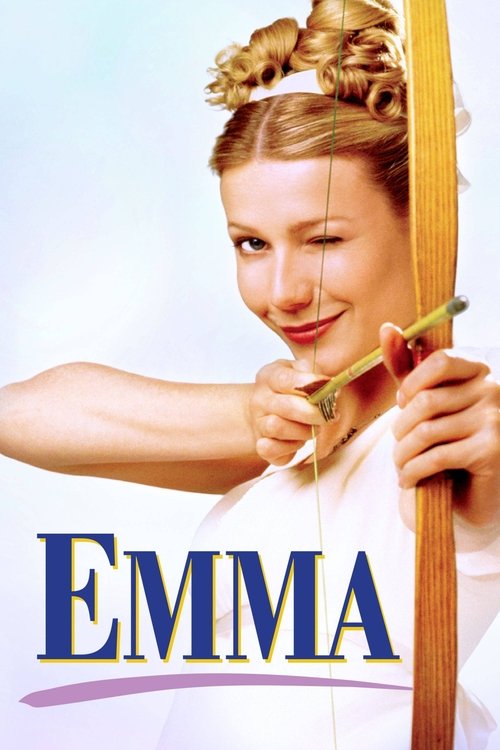
Emma (1996)
Directed by Douglas McGrath
No — Emma is not woke, scoring 8 out of 100 on our wokeness meter.
Douglas McGrath's 1996 adaptation of Jane Austen's Emma arrives with impeccable manners and no visible interest in the preoccupations of a later century.
Consciousness Markers
The film centers on a strong-willed female protagonist and her social agency, but it remains a 19th-century marriage plot without a modern feminist agenda.
The cast is entirely white and lacks any deliberate racial or ethnic diversity; no modern representation casting elements are present.
No LGBTQ+ characters, relationships, or themes appear in the film.
The story does not engage with racial identity, racism, or racial justice themes.
No environmental or climate-related themes are present.
While the film touches on class and wealth differences, it does not advance an anti-capitalist or eat-the-rich message.
Although Toni Collette gained weight for the role of Harriet, the film itself does not promote body positivity as a theme.
No neurodivergent characters or themes are depicted.
The film is a faithful period adaptation of Jane Austen's novel, not a revisionist historical narrative.
The film is a comedy of manners and does not contain modern lecturing or didactic social commentary.
Why it received this score
Douglas McGrath's 1996 adaptation of Jane Austen's Emma arrives with impeccable manners and no visible interest in the preoccupations of a later century. Gwyneth Paltrow glides through the title role with a composure the film mistakes, gently, for wisdom. The cast is uniformly pale, the concerns uniformly domestic, and the moral universe bounded by a few Hampshire estates and the price of a decent carriage. We are asked to find charm in a young woman who sabotages her friend's romantic prospects and receives a mild scolding for it. The film complies. Jeremy Northam frowns beautifully. England endures.
On the matter of social consciousness, the film keeps its hands clean by never raising them. Emma possesses will and social agency, enough to register as a faint pulse of female self-determination, but the story remains a nineteenth-century marriage plot and resolves exactly as one. Class and wealth are observed with the detachment of a naturalist and never indicted. The drawing rooms contain no one who would trouble a modern casting director, and no theme arrives to announce itself. Toni Collette's fuller figure is a decision noted in interviews, not a thesis advanced by the text.
There is no sermon here, no lecture, no modern grievance smuggled into the drawing rooms. The film is a faithful, well-tailored adaptation that trusts Austen to carry the load, and she does. Rachel Portman's score won an Academy Award, the first for a woman in that category, a fact the film itself would never dream of mentioning. The result is pleasant, literate, and entirely of its period, which is to say it asks nothing of us but two hours and a tolerance for archery. We file it accordingly.
Analysis generated by our Consciousness Algorithm


Synopsis
Emma Woodhouse is a congenial young lady who delights in meddling in other people’s affairs. She is perpetually trying to unite men and women who are utterly wrong for each other. Despite her interest in romance, Emma is clueless about her own feelings, and her relationship with gentle Mr. Knightley.
Questions about Emma
Is Emma woke?
No — Emma is not woke, scoring 8 out of 100 on our wokeness meter. That earns it a verdict of Ultra Based.
Does Emma have any woke elements?
Very few. None of the 10 markers reaches 30, the level where a marker counts as present; the highest is Feminist Agenda at 15.
How does Emma compare to other 1996 movies?
It ranks #39 of the 93 films from 1996 we've scored; their average is 11. The wokest is Bound (60).
How is the Woke Score calculated?
An AI-assisted process researches the film and its reception, scores it 0–100 on ten markers, then combines those into one 0–100 Woke Score. It measures a specific set of 2020s cultural themes, not film quality.