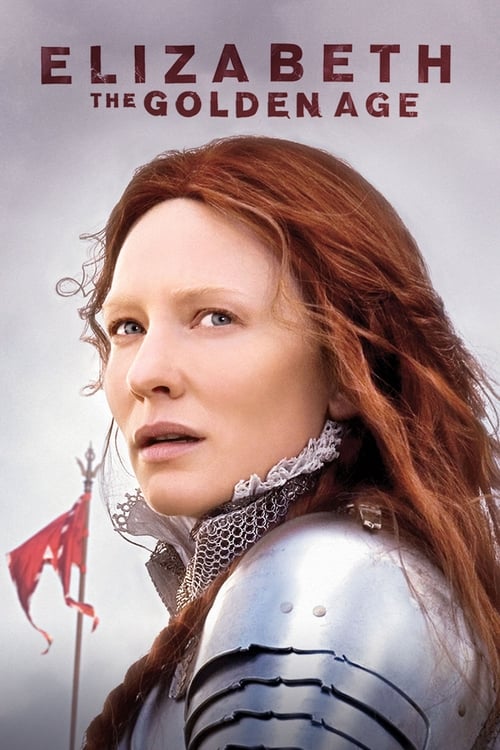
Elizabeth: The Golden Age (2007)
Directed by Shekhar Kapur
No — Elizabeth: The Golden Age is not woke, scoring 11 out of 100 on our wokeness meter.
Shekhar Kapur returns to the Tudor court nine years after his first Elizabeth, and the machinery of prestige has been reassembled with care.
Consciousness Markers
The film centers on a female monarch wielding power in a male-dominated court and refusing marriage, which carries an inherent proto-feminist charge, but it is framed as historical biography rather than a modern feminist statement.
The film takes heavy dramatic license with Tudor history, but its distortions serve entertainment and a traditional English Protestant viewpoint rather than a modern ideological reinterpretation of the past.
The film is a sweeping historical romance-drama that dramatizes events rather than delivering direct moral instruction to the audience.
The cast is a uniformly white ensemble of British and European actors playing Tudor-era historical figures; no diverse or color-conscious casting choices are present.
No LGBTQ+ characters, relationships, or themes appear anywhere in the narrative.
The conflict is religious and geopolitical (Protestant England vs. Catholic Spain); there is no engagement with racial consciousness or racial justice.
No environmental or climate themes are present; the felling of Spanish forests for shipbuilding is a plot detail, not an ecological message.
The film concerns monarchy, faith, and empire; there is no critique of capitalism or class-based economic commentary.
No body-positivity themes or messaging about body image appear in the film.
No neurodivergent characters or themes of neurodiversity are depicted.
Why it received this score
Shekhar Kapur returns to the Tudor court nine years after his first Elizabeth, and the machinery of prestige has been reassembled with care. Cate Blanchett wears the ruff and the burden. Geoffrey Rush frets in corridors. Clive Owen arrives from the New World with good teeth and better stories. The picture won an Academy Award for costume design, which tells us where the production's true faith lay. It is also a sequel, a fact the taxonomy absorbs without complaint. The film looks expensive, moves slowly, and believes in destiny.
A woman holds the throne while men scheme for her hand and her death. That arrangement carries an inherent charge. Elizabeth refuses marriage, names herself mother to her people, and walks to the cliffs to watch the Spanish fleet burn. We can register the proto-feminist tremor there, though the film frames it as biography, not argument. Elsewhere the cupboard is bare. No LGBTQ+ thread. No racial consciousness. No class critique worth the name. Spain fells its forests to build the Armada, and nobody in the frame mourns a tree. The cast is uniformly pale, drawn from the British and European stock company, playing Tudor figures who were themselves uniformly pale.
History takes a beating. Walter Raleigh commands the fleet that Francis Drake actually commanded. John Dee appears as an advisor in a year he spent abroad. William Cecil simply vanishes. None of this serves a modern reading of the past. It serves spectacle, and an old English Protestant comfort that critics at the time found close to church-bashing: rosaries in the flotsam, inverted crucifixes sinking. That is a confessional grudge, not a contemporary sensibility. The film never lectures us. It stages a sea battle and lets the storm do the moral work. On the scale of cultural instruction, this is costume drama with a pulse and very little sermon.
Analysis generated by our Consciousness Algorithm
Part of


Synopsis
When Queen Elizabeth's reign is threatened by ruthless familial betrayal and Spain's invading army, she and her shrewd adviser must act to safeguard the lives of her people.
Questions about Elizabeth: The Golden Age
Is Elizabeth: The Golden Age woke?
No — Elizabeth: The Golden Age is not woke, scoring 11 out of 100 on our wokeness meter. That earns it a verdict of Ultra Based.
Does Elizabeth: The Golden Age have any woke elements?
Very few. None of the 10 markers reaches 30, the level where a marker counts as present; the highest is Feminist Agenda at 20.
How does Elizabeth: The Golden Age compare to other 2007 movies?
It ranks #73 of the 201 films from 2007 we've scored; their average is 12. The wokest is Like Stars on Earth (92).
How is the Woke Score calculated?
An AI-assisted process researches the film and its reception, scores it 0–100 on ten markers, then combines those into one 0–100 Woke Score. It measures a specific set of 2020s cultural themes, not film quality.