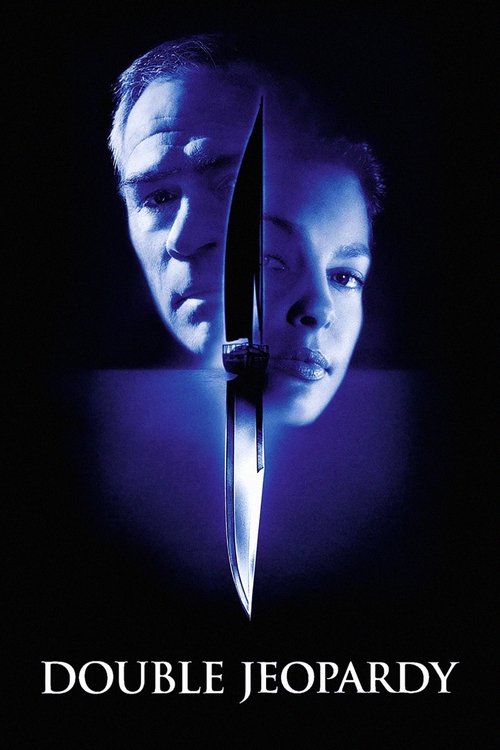
Double Jeopardy (1999)
Directed by Bruce Beresford
No — Double Jeopardy is not woke, scoring 7 out of 100 on our wokeness meter.
Double Jeopardy arrives from 1999 with the confidence of a film that knows exactly what it is and has no intention of being anything else.
Consciousness Markers
A woman is wronged, imprisoned, and fights to reclaim her son and her life, giving the film a strong female protagonist with agency. However, this is standard revenge-thriller machinery rather than a deliberate feminist thesis.
The cast is overwhelmingly white, led by Ashley Judd and Tommy Lee Jones, with no meaningful effort to diversify roles beyond the incidental. A female lead in a 1999 thriller is notable but not a representation-casting statement.
The villain is a wealthy embezzler who fakes his death over financial ruin, but the film treats this as personal villainy rather than systemic critique of wealth. No eat-the-rich messaging.
The film delivers no moralizing speeches or social messaging; it is a straightforward genre entertainment with minimal thematic instruction.
No LGBTQ+ characters, themes, or subtext appear anywhere in the film.
Race is never a subject of the film; the story unfolds entirely within a white, affluent Pacific Northwest and New Orleans milieu without racial commentary.
No environmental themes or climate content of any kind.
No body-positivity themes; the film's physical focus is on Judd's fitness regimen as a prison survival tactic, not body acceptance.
No neurodivergent characters or themes are present.
The film is a contemporary thriller with no historical revisionism; its only historical inaccuracy is a legal misreading of the Double Jeopardy Clause, which is a plot device, not an ideological rewrite.
Why it received this score
Double Jeopardy arrives from 1999 with the confidence of a film that knows exactly what it is and has no intention of being anything else. Ashley Judd plays Libby Parsons, a wealthy Whidbey Island wife framed for a murder her husband faked, then imprisoned, then paroled, then loose on a cross-country hunt for the son and the man who were taken from her. Bruce Beresford directs the proceedings with the efficiency of a man assembling flat-pack furniture. The sailboat, the bloody knife, the ferry plunge, the New Orleans hotel: each beat lands on schedule. It is competent, and it is content to be only that.
The film's cultural ledger is thin, and it does not pretend otherwise. A woman wronged by a man and driven to reclaim her life carries a certain charge, though the engine here is revenge-thriller convention, not a thesis about gender. The cast is uniformly white, moving through affluent Pacific Northwest waterfronts and a French Quarter boutique hotel without a single glance at race as a subject. The villain is a wealthy embezzler who fakes his own death over money troubles, which reads as personal villainy instead of an indictment of wealth itself. No LGBTQ characters appear. Nothing about climate, body image, or neurodivergence crosses the frame.
The result is a legal thriller that gets the law wrong on purpose. An inmate explains the Double Jeopardy Clause as a license to kill, which is not how the clause works, and the plot leans on this error for two hours. That is a screenwriting convenience, not an ideological rewrite of history. The film lectures nobody. It moralizes about nothing. It simply wants your ticket money, and in 1999 it got it.
Analysis generated by our Consciousness Algorithm
Part of


Synopsis
Libby Parsons, wrongly convicted of her husband Nick's murder, thinks he is still alive. She survives the long years in prison with two burning desires sustaining her -- finding her son and solving the mystery that destroyed her once-happy life. Standing between her and her quest, however, is her parole officer, Travis Lehman. Libby poses a challenge to the cynical officer, one that forces him to face up to his own failings while pitting him against his superior and law enforcement colleagues, as she plunges into a desperate fight for justice, survival, and revenge.
Questions about Double Jeopardy
Is Double Jeopardy woke?
No — Double Jeopardy is not woke, scoring 7 out of 100 on our wokeness meter. That earns it a verdict of Ultra Based.
Does Double Jeopardy have any woke elements?
Very few. None of the 10 markers reaches 30, the level where a marker counts as present; the highest is Feminist Agenda at 22.
How does Double Jeopardy compare to other 1999 movies?
It ranks #64 of the 103 films from 1999 we've scored; their average is 14. The wokest is Boys Don't Cry (60).
How is the Woke Score calculated?
An AI-assisted process researches the film and its reception, scores it 0–100 on ten markers, then combines those into one 0–100 Woke Score. It measures a specific set of 2020s cultural themes, not film quality.