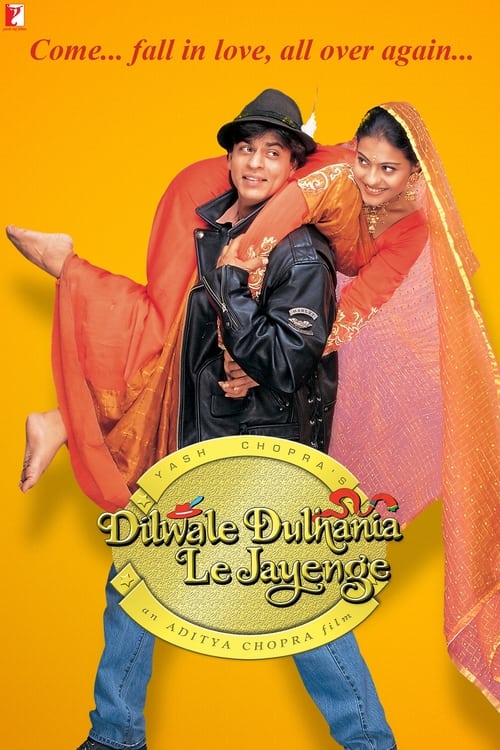
Dilwale Dulhania Le Jayenge (1995)
Directed by Aditya Chopra
No — Dilwale Dulhania Le Jayenge is not woke, scoring 6 out of 100 on our wokeness meter.
The modern cultural audit arrives at Dilwale Dulhania Le Jayenge with a clipboard and finds the door locked.
Consciousness Markers
The film explores NRI/diaspora identity and the portability of 'Indianness,' but this is a cultural-identity theme, not modern racial-justice consciousness.
The cast is entirely South Asian, but this reflects the natural composition of a Bollywood production rather than any deliberate diversity-casting agenda; no comment is made on representation.
The film carries moral themes about family values and respecting one's parents, but these are woven into the romance rather than delivered as modern social-justice sermonizing.
There are no LGBTQ+ characters, themes, or subtext anywhere in the film.
The film is deeply traditional, centering a woman's obedience to her patriarch father and a man's duty to protect her 'izzat' (honour/purity); it reinforces rather than challenges patriarchal norms.
No environmental or climate themes are present.
The hero is a wealthy, carefree heir who celebrates enjoying life; there is no critique of wealth or capitalism.
No body-positivity themes or messaging appear in the film.
No neurodivergent characters or themes are present.
The film is a contemporary fictional romance with no historical revisionism.
Why it received this score
The modern cultural audit arrives at Dilwale Dulhania Le Jayenge with a clipboard and finds the door locked. This is a 1995 Bollywood romance about non-resident Indians, family duty, and the portability of Indianness from London to Punjab. The cast is entirely South Asian, but that reflects the natural composition of the industry, not a deliberate diversity-casting agenda. The film does contemplate diaspora identity, the question of how to remain Indian abroad, yet it treats this as cultural inheritance, not modern racial consciousness. There are no LGBTQ characters or themes. No environmental crusade. No body-positivity messaging. No neurodivergent figures. No revisionist history. The checklist mostly sits untouched.
Gender politics are another matter, and they are resolutely traditional. Simran's life is governed by her patriarch father, Baldev, and the family's izzat. Raj's heroism lies in refusing to elope and instead seeking the father's blessing. The film reinforces patriarchal norms with conviction. Its wealthy, carefree heir celebrates pleasure and leisure, so there is no eat-the-rich critique. Moral instruction does appear, chiefly about respecting parents and honoring family, but it is folded into the romance. It never becomes a sermon. The film wants us to feel the tug between love and duty, then resolve it through paternal permission.
This remains a landmark of popular Hindi cinema that predates the current progressive vocabulary and operates on a different moral frequency. Its only faint signals are the all-South Asian ensemble, the diaspora theme, and a mild strain of family-values instruction. Those elements are real but modest. The result is a film that can be enjoyed as a romance, a Swiss tourism advertisement with a mandolin, and a case study in how thoroughly a beloved classic can fail a contemporary audit without ever noticing the audit existed.
Analysis generated by our Consciousness Algorithm


Synopsis
Raj is a rich, carefree, happy-go-lucky second generation NRI. Simran is the daughter of Chaudhary Baldev Singh, who in spite of being an NRI is very strict about adherence to Indian values. Simran has left for India to be married to her childhood fiancé. Raj leaves for India with a mission at his hands, to claim his lady love under the noses of her whole family. Thus begins a saga.
Questions about Dilwale Dulhania Le Jayenge
Is Dilwale Dulhania Le Jayenge woke?
No — Dilwale Dulhania Le Jayenge is not woke, scoring 6 out of 100 on our wokeness meter. That earns it a verdict of Ultra Based.
Does Dilwale Dulhania Le Jayenge have any woke elements?
Very few. None of the 10 markers reaches 30, the level where a marker counts as present; the highest is Racial Consciousness at 12.
How does Dilwale Dulhania Le Jayenge compare to other 1995 movies?
It ranks #60 of the 108 films from 1995 we've scored; their average is 12. The wokest is Total Eclipse (60).
How is the Woke Score calculated?
An AI-assisted process researches the film and its reception, scores it 0–100 on ten markers, then combines those into one 0–100 Woke Score. It measures a specific set of 2020s cultural themes, not film quality.