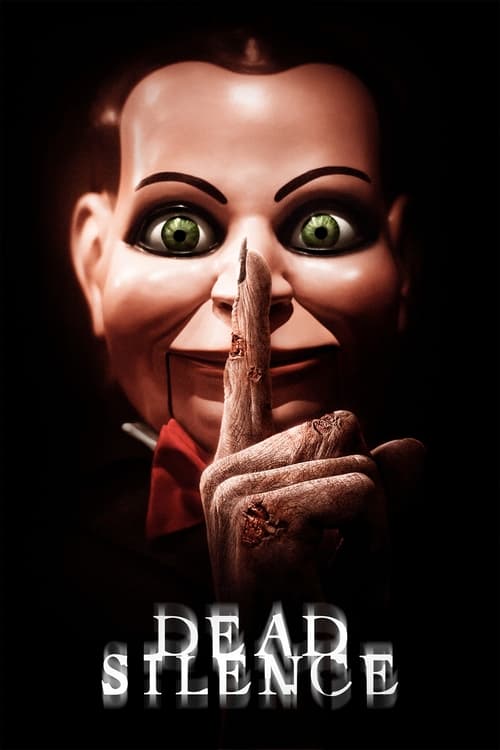
Dead Silence (2007)
Directed by James Wan
No — Dead Silence is not woke, scoring 0 out of 100 on our wokeness meter.
Dead Silence arrives from 2007, the work of James Wan between his breakthrough and his later institutional dominance.
Consciousness Markers
The cast is entirely white and able-bodied, with no meaningful racial, ethnic, or disability representation beyond a disabled character used as a horror prop.
No LGBTQ+ characters, relationships, or themes appear in the film.
The film features a female antagonist, Mary Shaw, but her revenge is not framed through feminist themes or gender critique.
Race is not addressed or thematized; the story is a white-cast supernatural revenge tale.
No environmental or climate-related themes are present.
No critique of capitalism, wealth inequality, or class structures appears in the film.
The film does not engage with body positivity or body-image themes.
A senile supporting character exists, but the film does not explore neurodivergence as a theme or advocate for neurodiverse representation.
The film is a fictional ghost story and does not revise or reinterpret historical events.
The film is a straightforward horror narrative with no preachy or didactic social messaging.
Why it received this score
Dead Silence arrives from 2007, the work of James Wan between his breakthrough and his later institutional dominance. It is a supernatural revenge tale about a widower, a ventriloquist dummy, a murdered wife, and a ghost with a taste for tongues. The cultural ledger here is austere. The cast is white, able-bodied, and largely untouched by any identity discourse. Disability and senility appear as atmosphere and plot mechanics, not as subjects deserving dignity. Race, sexuality, and gender critique are absent. The film has no thesis beyond the old bargain of the genre: scream, and die.
The moral universe is archaic and self-contained. Mary Shaw's vengeance is personal and familial, never systemic. There is no class anger, no environmental anxiety, no body politics, no neurodiversity advocacy, no reinterpretation of history. The film does not lecture. It wants us to fear a puppet, and it pursues that goal with the single-mindedness of a stage magician. That restraint is not a virtue. It is genre discipline. Dead Silence is a haunted house attraction, not a seminar, and it has no interest in being anything else.
For a modern viewer accustomed to films that arrive with a social checklist stapled to the press kit, Dead Silence feels like a period piece. Its only progressive gesture is allowing a woman to be monstrous, but that is old-fashioned ghost logic, not feminist critique. The disabled father and the senile wife are eerie set dressing. The result is lean, mean, and culturally inert. It scores nothing on the modern consciousness scale, not because it is hateful, but because it is indifferent. A sommelier would call it a dry vintage with no social tannins. It goes down like a dummy's stare.
Analysis generated by our Consciousness Algorithm
Part of


Synopsis
Jamie returns to his hometown in search of answers to his wife's murder, which occurred after receiving a weird package containing a ventriloquist dummy named Billy, which may be linked to the legend of ventriloquist Mary Shaw. Destined to find out the truth, Jamie goes to the town of Raven's Fair, where Shaw used to perform and is buried. But Jamie is in for more than he expected.
Questions about Dead Silence
Is Dead Silence woke?
No — Dead Silence is not woke, scoring 0 out of 100 on our wokeness meter. That earns it a verdict of Ultra Based.
Does Dead Silence have any woke elements?
No. All 10 markers score zero.
How does Dead Silence compare to other 2007 movies?
It ranks #174 of the 201 films from 2007 we've scored; their average is 12. The wokest is Like Stars on Earth (92).
How is the Woke Score calculated?
An AI-assisted process researches the film and its reception, scores it 0–100 on ten markers, then combines those into one 0–100 Woke Score. It measures a specific set of 2020s cultural themes, not film quality.