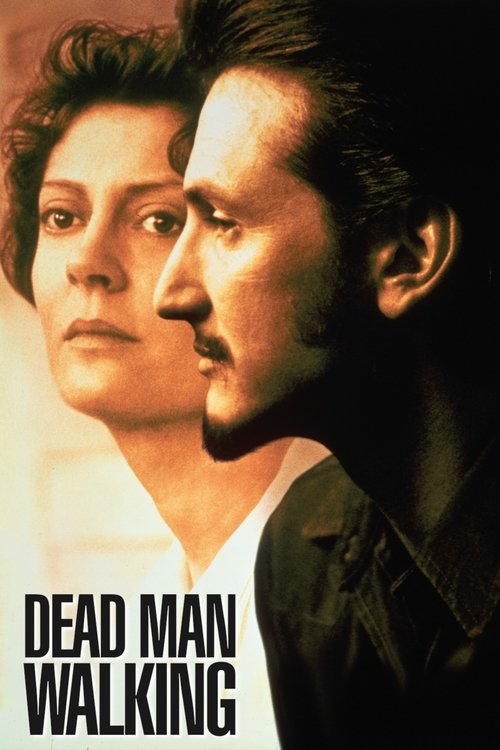
Dead Man Walking (1995)
Directed by Tim Robbins
No — Dead Man Walking is not woke, scoring 10 out of 100 on our wokeness meter.
Dead Man Walking arrives from 1995 with the bearing of a film that believes moral seriousness is its own reward.
Consciousness Markers
Sister Helen is a strong, compassionate woman who confronts a sexist prisoner, but the film's focus is on capital punishment and redemption, not feminist advocacy.
The film presents a moral argument against the death penalty but maintains balance and avoids overt preaching.
The cast is predominantly white, with a female lead in Susan Sarandon, but no deliberate diverse casting beyond the true-story basis.
No LGBTQ+ themes or characters are present in the film.
No explicit engagement with racial inequality or racial consciousness; the story centers on white characters and a white inmate.
No environmental or climate-related themes are present.
The film critiques the death penalty and prison system, but does not advance an anti-capitalist or economic-justice argument.
No body positivity themes or diverse body representations are present.
No neurodivergence themes or characters are present.
The film is a dramatization of real events and does not revise or reinterpret history through a modern ideological lens.
Why it received this score
Dead Man Walking arrives from 1995 with the bearing of a film that believes moral seriousness is its own reward. Tim Robbins directs, co-produces, and adapts Sister Helen Prejean's nonfiction account of her years as spiritual adviser to condemned men in Louisiana, and Susan Sarandon won an Academy Award for the performance. The subject is capital punishment, which is a political matter in the older sense, the kind argued in op-ed pages and courtrooms long before the culture learned to sort its grievances into tidy categories. There is no sorting here. There is a nun, a murderer, two grieving families, and a walk to a lethal injection chamber.
The cast is largely white, as the true story dictates. Sister Helen is a woman of conviction who sits across from a man who calls her names, and the film grants her authority without announcing it as an argument about gender. She confronts his racism and his contempt and keeps returning anyway. That counts for something. The film does not pursue questions of racial inequality, economic structure, environmental ruin, bodily autonomy, or neurological difference. It has no interest in them. When Poncelet finally admits his guilt in the closing minutes, the concern is a soul, not a social order.
Robbins has said the picture was aimed at morality, which crosses political lines, and the restraint shows. Both sides are permitted dignity. The audience is trusted to reach its own conclusion about a state taking a life in its own name. This is a work about mercy and responsibility, assembled with a steady hand, and it resists the urge to instruct. The result is sober, well acted, and nearly untouched by the modern markers we are obliged to catalogue. A sommelier might call it a clean vintage.
Analysis generated by our Consciousness Algorithm


Synopsis
A death row inmate turns for spiritual guidance to a local nun in the days leading up to his scheduled execution for the murders of a young couple.
Questions about Dead Man Walking
Is Dead Man Walking woke?
No — Dead Man Walking is not woke, scoring 10 out of 100 on our wokeness meter. That earns it a verdict of Ultra Based.
Does Dead Man Walking have any woke elements?
Very few. None of the 10 markers reaches 30, the level where a marker counts as present; the highest is Feminist Agenda at 20.
How does Dead Man Walking compare to other 1995 movies?
It ranks #41 of the 108 films from 1995 we've scored; their average is 12. The wokest is Total Eclipse (60).
How is the Woke Score calculated?
An AI-assisted process researches the film and its reception, scores it 0–100 on ten markers, then combines those into one 0–100 Woke Score. It measures a specific set of 2020s cultural themes, not film quality.