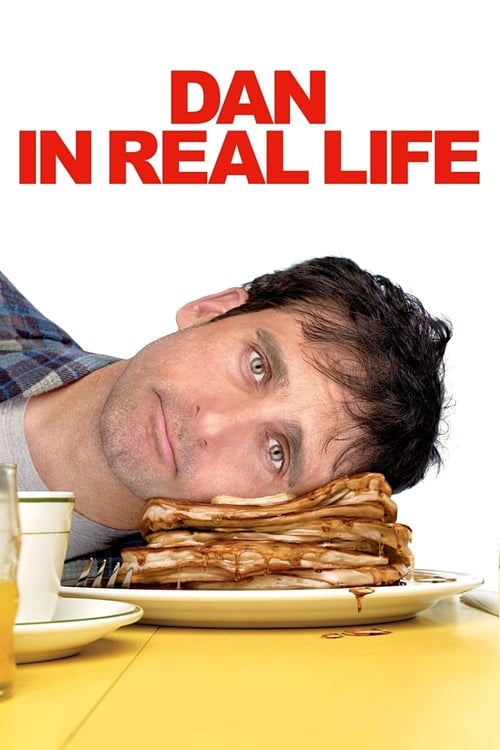
Dan in Real Life (2007)
Directed by Peter Hedges
No — Dan in Real Life is not woke, scoring 3 out of 100 on our wokeness meter.
Dan in Real Life arrives from 2007 with the quiet confidence of a film that has no argument to make and no intention of making one.
Consciousness Markers
The film features three daughters and a widowed single father, but the women exist as romantic and familial foils rather than vehicles for any feminist argument. No gender-politics thesis is advanced.
The advice-columnist voice-over delivers mild life-lesson aphorisms ('plan to be surprised'), but these are generic rom-com sentiment rather than any ideological sermon.
The cast is overwhelmingly white, with no meaningful representation casting choices made or commented upon. This is a standard 2007 studio rom-com ensemble.
There are no LGBTQ+ characters, themes, or subtext anywhere in the film.
No engagement with race, racial identity, or racial politics of any kind.
No environmental or climate themes present.
The film is a warm family comedy set among comfortable middle-class professionals; it offers no critique of wealth, class, or capitalism.
The running gag about Ruthie 'Pig Face' Draper, who was once unattractive and is now a beautiful physician, is in fact the opposite of body positivity — her former appearance is the punchline.
No neurodivergent characters or themes are depicted or discussed.
No historical events or figures are reinterpreted; the film is a contemporary original story.
Why it received this score
Dan in Real Life arrives from 2007 with the quiet confidence of a film that has no argument to make and no intention of making one. Steve Carell plays Dan Burns, an advice columnist and widower who takes his three daughters to his parents' Rhode Island home, meets a woman in a bookshop, and learns by dinner that she belongs to his brother. The premise is built for embarrassment and reconciliation, and it delivers both on schedule. We approach such a specimen the way a sommelier approaches a bottle with no vintage: carefully, and with lowered expectations.
The social inventory here is sparse to the point of austerity. The ensemble is white and comfortable, the professions are respectable, the politics are absent. No character encounters race, class, or the climate as a subject. The three daughters and the widowed father suggest a domestic arrangement, not a position on it. There is no queer presence, no neurodivergent presence, no critique of money. The nearest thing to a provocation is the running joke about Ruthie Draper, a childhood friend once known as Pig Face, now a beautiful physician. Her transformation is the punchline. The film invites us to laugh at the woman she used to be, which places it on the wrong side of any contemporary conversation about bodies and worth.
What remains is the voice-over. Dan writes a column, and the film borrows his aphorisms to close itself out: plan to be surprised, and so on. This is sentiment, not sermon. The film wants us to feel something about fathers and forgiveness, and it makes no demand that we reorganize our lives around a thesis. In another era that restraint would pass unnoticed. Seen from here, it reads as a curiosity, a studio romance that simply declines to participate.
Analysis generated by our Consciousness Algorithm
Part of


Synopsis
Advice columnist Dan Burns is an expert on relationships, but somehow struggles to succeed as a brother, a son and a single parent to three precocious daughters. Things get even more complicated when Dan finds out that the woman he falls in love with is actually his brother's new girlfriend.
Questions about Dan in Real Life
Is Dan in Real Life woke?
No — Dan in Real Life is not woke, scoring 3 out of 100 on our wokeness meter. That earns it a verdict of Ultra Based.
Does Dan in Real Life have any woke elements?
Very few. None of the 10 markers reaches 30, the level where a marker counts as present; the highest is Feminist Agenda at 5.
How does Dan in Real Life compare to other 2007 movies?
It ranks #161 of the 201 films from 2007 we've scored; their average is 12. The wokest is Like Stars on Earth (92).
How is the Woke Score calculated?
An AI-assisted process researches the film and its reception, scores it 0–100 on ten markers, then combines those into one 0–100 Woke Score. It measures a specific set of 2020s cultural themes, not film quality.