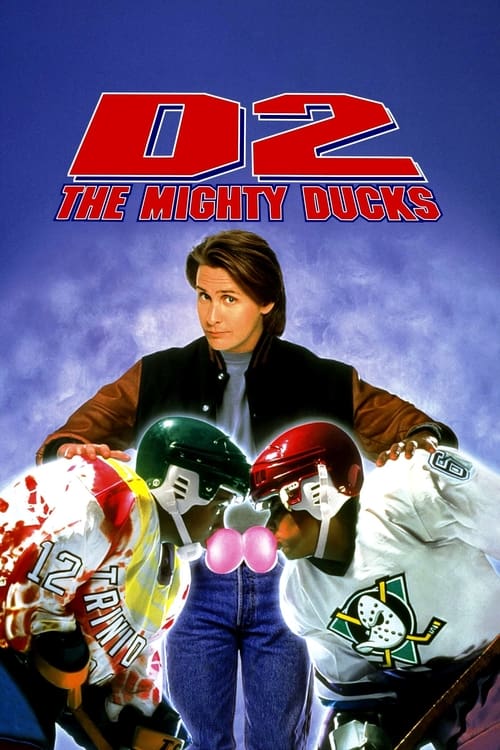
D2: The Mighty Ducks (1994)
Directed by Sam Weisman
No — D2: The Mighty Ducks is not woke, scoring 7 out of 100 on our wokeness meter.
D2: The Mighty Ducks arrives in 1994 as a Disney sequel, and it carries the confidence of a franchise that knows its audience will forgive anything so long as a puck finds the net.
Consciousness Markers
The film features a diverse cast for its time, but the representation is focused on generic athletic talent rather than specific modern social commentary or marginalized identity narratives.
The film delivers lessons on teamwork and discipline, but these are integrated into the plot rather than delivered through modern, high-intensity, didactic social commentary.
Michelle McKay serves as a competent foil to the male protagonist, but the overall narrative structure remains centered on traditional male mentorship and team dynamics.
Gordon Bombay's distraction by fame and luxury is a personal failing, not a systemic critique of corporate or global capitalism.
The cast includes characters of various backgrounds, but the film treats diversity as a matter of casting rather than engaging in deep racial critique or systemic analysis.
There are no discernible LGBTQ+ themes, characters, or subtext within the narrative or character development.
The film contains no environmental messaging or 'Climate Crusade' elements.
The film adheres to standard athletic body types and contains no commentary on body image or diverse physical forms.
There is no evidence of characters with neurodivergent traits or discussions of neurological differences.
The film is a fictional sports drama and does not attempt to challenge or revise any established historical facts.
Why it received this score
D2: The Mighty Ducks arrives in 1994 as a Disney sequel, and it carries the confidence of a franchise that knows its audience will forgive anything so long as a puck finds the net. Gordon Bombay, sidelined by a knee injury, is handed the coaching reins of Team USA for the Junior Goodwill Games. The film assembles young athletes from across the country, each with a distinct regional talent. A speedster from Miami. A cowboy puck handler from Austin. A figure skater from San Francisco. This is diversity as a casting spreadsheet. It earns a modest nod for effort while never troubling itself to say anything about the people it borrows.
The social conscience here is thin and entirely of its era. Michelle McKay, the team tutor, scolds Bombay for running the children ragged, and the film grants her a moment of righteous interruption before returning the story to its true center: a man learning to love the game again. That is a feminist gesture in the way a nod is a conversation. Characters of various backgrounds populate the bench, but their presence is texture, not argument. Nobody is asking a question about race, power, or the machinery of celebrity. Fame, when it appears, is a personal failing to be corrected by a good locker room speech, not a system worth examining.
The film's instruction concerns teamwork, sacrifice, and the value of showing up. Charlie surrenders his roster spot so a better player can compete. Bombay apologizes. Iceland, the villains, are simply large and Nordic and unfriendly. These lessons land softly, folded into slapstick and the Flying V, never rising to the pitch of a sermon. There is no environmental plea, no interrogation of physical form, no neurodivergent subplot, no rewriting of history. The result is a children's sports picture that waves a flag, sells a soundtrack, and asks nothing of its audience beyond a two-hour commitment. It is competent. It is weightless. By the standards of any cultural reckoning, it is simply not trying.
Analysis generated by our Consciousness Algorithm
Part of


Synopsis
After Gordon Bombay's hockey comeback is cut short he is named coach of Team USA Hockey for the Junior Goodwill Games. Bombay reunites the Mighty Ducks and introduces a few new players, however, he finds himself distracted by his newfound fame and must regather if the Ducks are to defeat tournament favourites Iceland.
Questions about D2: The Mighty Ducks
Is D2: The Mighty Ducks woke?
No — D2: The Mighty Ducks is not woke, scoring 7 out of 100 on our wokeness meter. That earns it a verdict of Ultra Based.
Does D2: The Mighty Ducks have any woke elements?
Very few. None of the 10 markers reaches 30, the level where a marker counts as present; the highest is Lecture Energy at 15.
How does D2: The Mighty Ducks compare to other 1994 movies?
It ranks #40 of the 86 films from 1994 we've scored; their average is 10. The wokest is On Deadly Ground (75).
How is the Woke Score calculated?
An AI-assisted process researches the film and its reception, scores it 0–100 on ten markers, then combines those into one 0–100 Woke Score. It measures a specific set of 2020s cultural themes, not film quality.