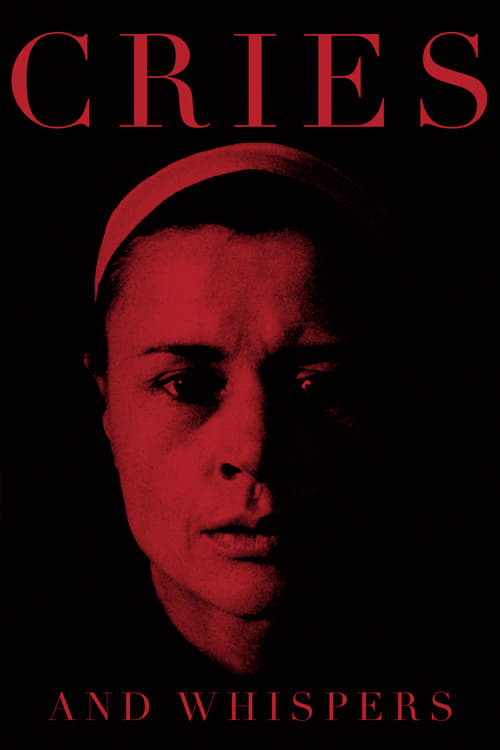
Cries and Whispers (1972)
Directed by Ingmar Bergman
No — Cries and Whispers is not woke, scoring 11 out of 100 on our wokeness meter.
Cries and Whispers arrives from 1972, a Swedish production in which Ingmar Bergman places four women inside a crimson mansion and lets terminal cancer do the rest.
Consciousness Markers
While the film explores the intense psychological suffering and repression of women, its critique of gender roles is delivered through fatalistic tragedy rather than modern, empowering feminist discourse.
The only hint of economic critique is the dismissal of the maid without severance, a minor subplot that does not constitute a systemic 'Eat the Rich' narrative.
The film features a classic, homogenous European cast, offering zero modern representation of diverse identities or backgrounds.
The complex emotional and sexual tensions between the sisters are framed within traditional, albeit fraught, heterosexual relationships, lacking any explicit or coded LGBTQ+ themes.
The narrative is entirely focused on a white, European aristocratic setting, showing no engagement with racial dynamics or systemic inequality.
The environmental conditions are purely aesthetic and atmospheric, serving the psychological drama rather than functioning as a 'Climate Crusade.'
The film focuses on the decay, illness, and repression of the female body, offering no celebration or positive reframing of physical forms.
There are no characters presented with modern understandings or diagnoses of neurodivergence.
The film is a fictional tragedy and does not attempt to challenge or rewrite established historical facts or narratives.
The film is a highly metaphorical and psychological study, not a didactic piece designed to lecture the audience on contemporary social issues.
Why it received this score
Cries and Whispers arrives from 1972, a Swedish production in which Ingmar Bergman places four women inside a crimson mansion and lets terminal cancer do the rest. Agnes wastes away upstairs. Her sisters, Karin and Maria, orbit the deathbed with a mixture of dread and indifference. The maid, Anna, holds her. Sven Nykvist's camera took an Academy Award for treating red as a moral condition, and the film has been canonized ever since. It is a serious work about suffering, faith, and the failure of touch. None of that makes it a document of contemporary social instruction, and we should be clear on the distinction.
The film does concern itself with women, their repression, and the violence they turn inward. Karin mutilates her genitals with broken glass to repel her husband. This is a critique of patriarchy in roughly the sense that a funeral is a critique of mortality. It offers no program, no uplift, no empowerment. The sisters are trapped by biology and circumstance, and Bergman regards them with pity and something colder underneath. There is no racial consciousness at work, and no engagement with class beyond the dismissal of a servant without severance, which registers as an afterthought. The charged physical intimacy between Anna and Agnes, set against the sisters' revulsion at any touch, sits inside a framework of marriages and affairs. We find no modern identity politics in the red room.
The body here is a site of decay, not celebration. Illness, blood, and revulsion dominate the frame. No climate allegory, no neurological diagnosis, no rewriting of the historical record. Bergman is not lecturing anyone. He is arranging a Pietà and letting us watch it happen. It remains a great film, and it is almost entirely innocent of the preoccupations that occupy our current discourse. We classify it accordingly, with respect and without much enthusiasm for its relevance.
Analysis generated by our Consciousness Algorithm


Synopsis
As Agnes slowly dies of cancer, her sisters are so immersed in their own psychic pains that they are unable to offer her the support she needs.
Questions about Cries and Whispers
Is Cries and Whispers woke?
No — Cries and Whispers is not woke, scoring 11 out of 100 on our wokeness meter. That earns it a verdict of Ultra Based.
Does Cries and Whispers have any woke elements?
1 of the 10 markers register at 30 or above, led by Feminist Agenda (30). On Feminist Agenda: While the film explores the intense psychological suffering and repression of women, its critique of gender roles is delivered through fatalistic tragedy rather than modern, empowering feminist discourse.
How does Cries and Whispers compare to other 1972 movies?
It ranks #9 of the 24 films from 1972 we've scored; their average is 14. The wokest is Silent Running (69).
How is the Woke Score calculated?
An AI-assisted process researches the film and its reception, scores it 0–100 on ten markers, then combines those into one 0–100 Woke Score. It measures a specific set of 2020s cultural themes, not film quality.