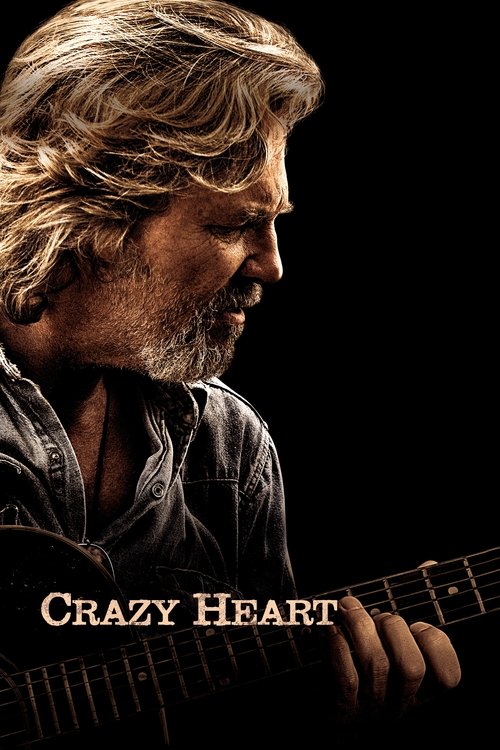
Crazy Heart (2009)
Directed by Scott Cooper
No — Crazy Heart is not woke, scoring 5 out of 100 on our wokeness meter.
There is a particular kind of American film that arrives carrying nothing but a hangover and a guitar, and Crazy Heart is its platonic form.
Consciousness Markers
Jean is a working journalist and single mother with some agency, but she functions primarily as the redemptive catalyst for a man's recovery arc rather than as a subject in her own right.
The cast is overwhelmingly white, with Maggie Gyllenhaal as the sole prominent female role; no meaningful racial or ethnic diversity is present in the ensemble.
There is a faint critique of the commercial country music industry and its record-company gatekeeping, but it is incidental texture rather than an economic argument.
The film is a quiet, character-driven drama that shows rather than preaches; any moralizing about sobriety is delivered through lived consequence, not sermon.
There are no LGBTQ+ characters, relationships, or themes anywhere in the film.
The film engages no racial themes, dynamics, or commentary whatsoever.
There is no environmental or climate-related content in the film.
A doctor explicitly instructs Blake to lose 25 pounds; the film treats his physical decline as a moral failing, the opposite of body-positivity messaging.
Alcoholism is depicted as addiction and self-destruction, not as neurodivergence, and no neurodivergent identity is explored.
The film is a fictional character study with no historical revisionism of any kind.
Why it received this score
There is a particular kind of American film that arrives carrying nothing but a hangover and a guitar, and Crazy Heart is its platonic form. Jeff Bridges plays Bad Blake, a country singer of diminished circumstance who drives a 1978 Suburban between bowling alleys and cheap motels, drinks with the commitment of a man who has run out of other hobbies, and eventually meets a journalist named Jean who is meant to save him. The film is well made. The songs are good. Bridges is genuinely excellent, which is the sort of observation that has been made so often it now functions as a greeting rather than a critique. Scott Cooper directs with patience and a fondness for long silences, and the whole enterprise settles into the comfortable groove of a story we have been told before, told well enough that we do not mind hearing it again.
Assessed against the cultural currents of its moment, the film keeps its head down. The cast is white to a degree that borders on the geological, and the only woman of consequence exists to furnish a man with a reason to stop drinking. Jean has a job and a child and a measure of spine, but the screenplay positions her as the instrument of another person's redemption, which is a job description, not a character. There is a faint grumble about record companies and the commercial machinery that chews up its legends, though it registers as atmosphere rather than argument. Racial dynamics, environmental concern, and any exploration of identity beyond the narrowly personal are simply absent. The film has no interest in them, and they have no purchase on it.
Where the picture does moralize, it does so through consequence. A doctor delivers a blunt verdict about weight and cigarettes and the arithmetic of an early grave, and the camera treats the body as evidence of failure. Sobriety arrives not through speeches but through a lost child in a shopping mall and a woman who says, kindly, that the best gift he can give her is his absence. It is a quiet film that trusts us to draw the lesson ourselves. That restraint is its finest quality, and in an era that increasingly prefers its virtues announced aloud, it feels almost antique.
Analysis generated by our Consciousness Algorithm


Synopsis
When reporter Jean Craddock interviews Bad Blake—an alcoholic, seen-better-days country music legend—they connect, and the hard-living crooner sees a possible saving grace in a life with Jean and her young son.
Questions about Crazy Heart
Is Crazy Heart woke?
No — Crazy Heart is not woke, scoring 5 out of 100 on our wokeness meter. That earns it a verdict of Ultra Based.
Does Crazy Heart have any woke elements?
Very few. None of the 10 markers reaches 30, the level where a marker counts as present; the highest is Feminist Agenda at 12.
How does Crazy Heart compare to other 2009 movies?
It ranks #154 of the 230 films from 2009 we've scored; their average is 14. The wokest is Home (79).
How is the Woke Score calculated?
An AI-assisted process researches the film and its reception, scores it 0–100 on ten markers, then combines those into one 0–100 Woke Score. It measures a specific set of 2020s cultural themes, not film quality.