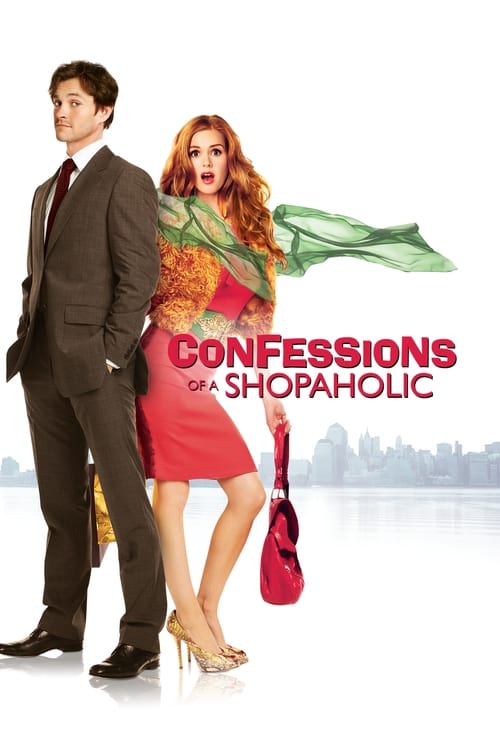
Confessions of a Shopaholic (2009)
Directed by P.J. Hogan
No — Confessions of a Shopaholic is not woke, scoring 7 out of 100 on our wokeness meter.
The film arrives in 2009, adapted from the first two of Sophie Kinsella's novels and transplanted from London to Manhattan.
Consciousness Markers
The film centers on a female protagonist with career ambitions, but it is a conventional romcom whose arc resolves through romance and a man's approval rather than any explicit feminist critique.
The film gestures at consumerism and debt addiction, but its message on materialism is muddled and it ultimately celebrates shopping and fashion brands, with reshoots deliberately softening the ending for recession-era audiences.
The cast is overwhelmingly white, led by Isla Fisher, Hugh Dancy, Krysten Ritter, Joan Cusack, John Goodman, and John Lithgow, with only incidental background diversity. No deliberate representation casting choices are evident.
The film offers a light moral about financial responsibility but delivers it through comedy and romance rather than any preachy or didactic register.
No LGBTQ+ characters, themes, or subtext appear anywhere in the film's plot or cast.
Race is never addressed or thematized; the story is set in a uniformly white Manhattan media world with no racial commentary.
No environmental or climate themes appear in the film whatsoever.
The film contains no body positivity themes; the fashion-magazine milieu reinforces conventional beauty standards rather than challenging them.
No neurodivergent characters or framing appear; the shopping addiction is treated as comedic character flaw rather than a neurological condition.
The film is a contemporary-set fiction with no historical subject matter to revise.
Why it received this score
The film arrives in 2009, adapted from the first two of Sophie Kinsella's novels and transplanted from London to Manhattan. It concerns Rebecca Bloomwood, a journalist who cannot stop buying things, and the financial magazine that hires her to write about the very debt she is drowning in. The Manhattan she inhabits is uniformly white, populated by Isla Fisher, Hugh Dancy, Krysten Ritter, Joan Cusack, John Goodman, John Lithgow, and Kristin Scott Thomas. Race is never raised. No LGBTQ presence registers. The environment does not exist as a topic. The moral universe of the picture is a credit card statement, and it is balanced to the penny.
On consumerism the film wants credit for a critique it declines to deliver. It gestures at debt addiction, stages a meeting of Shopaholics Anonymous, and then dresses its star in couture, name-checks Valentino, and treats a clothing auction as a triumph. Reshoots softened the ending for recession-era audiences, a production note that says more than any of the dialogue. Our heroine has career ambition, and the ambition is real, but the arc closes on a man's approval and a kiss. The critique dissolves the moment the closing credits music starts.
Body positivity is absent; the fashion-magazine milieu enforces conventional beauty at every turn. Neurodivergence is absent; the compulsion is a comic flaw with a punchline. There is no history here to revise. A light lesson about financial responsibility arrives through slapstick and a payment rendered in pennies, which is not a sermon, merely a gag with a moral attached. The result is a harmless artifact of its moment. Isla Fisher is charming throughout. The film scored a B from audiences and 26 percent from critics, and both verdicts are defensible.
Analysis generated by our Consciousness Algorithm


Synopsis
In the glamorous world of New York City, Rebecca Bloomwood is a fun-loving girl who is really good at shopping – a little too good, perhaps. She dreams of working for her favorite fashion magazine, but can't quite get her foot in the door – until ironically, she snags a job as an advice columnist for a financial magazine published by the same company.
Questions about Confessions of a Shopaholic
Is Confessions of a Shopaholic woke?
No — Confessions of a Shopaholic is not woke, scoring 7 out of 100 on our wokeness meter. That earns it a verdict of Ultra Based.
Does Confessions of a Shopaholic have any woke elements?
Very few. None of the 10 markers reaches 30, the level where a marker counts as present; the highest is Eat the Rich at 15.
How does Confessions of a Shopaholic compare to other 2009 movies?
It ranks #137 of the 230 films from 2009 we've scored; their average is 14. The wokest is Home (79).
How is the Woke Score calculated?
An AI-assisted process researches the film and its reception, scores it 0–100 on ten markers, then combines those into one 0–100 Woke Score. It measures a specific set of 2020s cultural themes, not film quality.