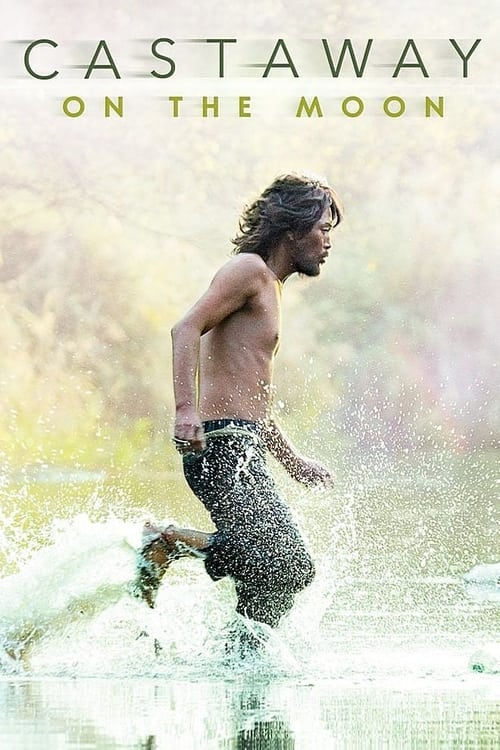
Castaway on the Moon (2009)
Directed by Lee Hae-jun
No — Castaway on the Moon is not woke, scoring 11 out of 100 on our wokeness meter.
Castaway on the Moon presents a decidedly minor meditation on modern societal pressure.
Consciousness Markers
The protagonist's initial state of being jobless and deep in debt serves as a critique of modern economic despair, making his island life a temporary rejection of the system.
The character of Kim Jung-yeon is portrayed as a hikikomori, touching upon themes of severe social isolation and anxiety, though not framed as a clinical discussion of neurodivergence.
The character of Kim Jung-yeon is presented as an isolated individual escaping societal norms, though this is framed as a personal crisis rather than a feminist critique of patriarchy.
The film features a standard Korean cast, offering no specific focus on marginalized groups or diverse representation beyond the central social issues.
The film is a romantic comedy-drama, and its social commentary is delivered through character action and plot rather than didactic monologues.
There are no discernible LGBTQ+ themes or characters present in the narrative or research summary.
The film is set in South Korea and does not engage with issues of race or racial injustice.
The storm is used as a plot device to disrupt the protagonist's survival, but there is no commentary on global climate change or environmental policy.
The film does not address body image, diverse body types, or related social commentary.
The film is a contemporary drama and does not challenge or reinterpret any established historical narratives.
Why it received this score
Castaway on the Moon presents a decidedly minor meditation on modern societal pressure. We are introduced to a man drowning in debt and existential dread, a common ailment of the contemporary economic landscape. His unplanned transit to a small, isolated island offers a brief, albeit performative, escape from the crushing gravity of city life. The film manages a slight lift in its social consciousness, using the protagonist's sudden lack of obligations to sketch a temporary rejection of the system. This anti-capitalist impulse is largely aesthetic rather than political, relying more on the visual contrast of the island's wildness against the backdrop of Seoul's dense, unforgiving infrastructure.
The film introduces specific elements regarding social isolation. The central figures, the adrift man and the sheltered woman, embody different forms of societal withdrawal. Her status as a hikikomori touches upon themes of extreme social anxiety and confinement, offering a modest acknowledgment of those who cannot navigate standard social expectations. This focus on individual crises, where personal autonomy supersedes systemic overhaul, frames the material more as a character study than a sweeping social indictment. We see glimpses of feminist intent in the female lead's deliberate isolation, yet this is framed as a private struggle against psychological barriers rather than a broad critique of patriarchal structures.
Ultimately, the film functions as a romantic comedy-drama that occasionally veers into the realm of the socially aware. Its critique of contemporary despair is delivered through the action of its protagonists, not via lengthy, sermonizing monologues. The experience is sentimental, a brief dip into the anxieties of modern life. It is a quiet, unassuming piece of work, perhaps too gentle for those seeking hard-hitting social commentary. We accept its small gestures toward representation and its fleeting moments of critical awareness.
Analysis generated by our Consciousness Algorithm
Synopsis
Mr. Kim is jobless, lost in debt and has been dumped by his girlfriend. He decides to end it all by jumping into the Han River – only to find himself washed up on a small, mid-river island. He soon abandons thoughts of suicide or rescue and begins a new life as a castaway. His antics catch the attention of a young woman whose apartment overlooks the river. Her discovery changes both their lives.
Questions about Castaway on the Moon
Is Castaway on the Moon woke?
No — Castaway on the Moon is not woke, scoring 11 out of 100 on our wokeness meter. That earns it a verdict of Ultra Based.
Does Castaway on the Moon have any woke elements?
1 of the 10 markers register at 30 or above, led by Eat the Rich (30). On Eat the Rich: The protagonist's initial state of being jobless and deep in debt serves as a critique of modern economic despair, making his island life a temporary rejection of the system.
How does Castaway on the Moon compare to other 2009 movies?
It ranks #94 of the 230 films from 2009 we've scored; their average is 14. The wokest is Home (79).
How is the Woke Score calculated?
An AI-assisted process researches the film and its reception, scores it 0–100 on ten markers, then combines those into one 0–100 Woke Score. It measures a specific set of 2020s cultural themes, not film quality.