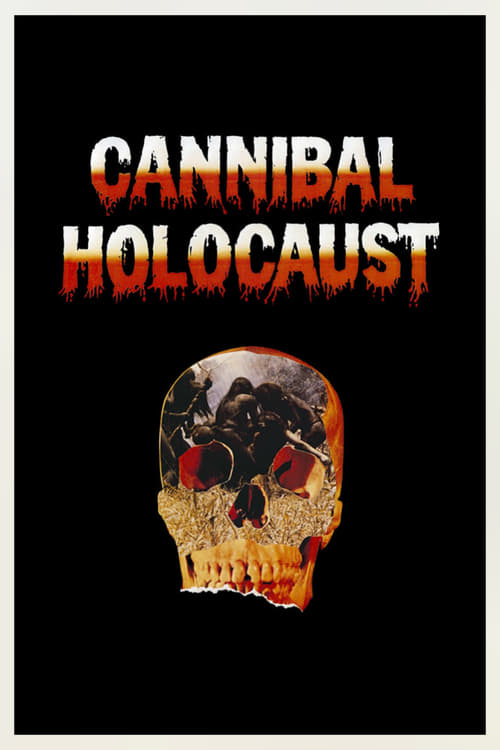
Cannibal Holocaust (1980)
Directed by Ruggero Deodato
No — Cannibal Holocaust is not woke, scoring 13 out of 100 on our wokeness meter.
Cannibal Holocaust arrives from 1980 with the weary confidence of a film that has already been banned in more countries than most directors will ever visit.
Consciousness Markers
The film critiques media executives who prioritize sensational footage and ratings over ethics, and the documentary crew exploits indigenous people for profit, though the focus is journalistic ethics rather than systemic capitalism.
The film ends with a moralizing question about who the real cannibals are, and Monroe's disgust at the executives delivers a message about media ethics, though it is not a sustained lecture.
The film gestures toward a critique of Western exploitation of indigenous peoples and ends with the question of who the real cannibals are, but its portrayal of tribes is exploitative and exoticized rather than racially conscious in a modern sense.
The cast is predominantly white Italian and American actors; indigenous Amazonian people appear as uncredited background figures rather than as deliberate inclusive representation.
No LGBTQ+ characters, themes, or subtext are present.
The film is notorious for its misogynistic violence, including gang rape and beheading of a female character, and offers no feminist perspective.
No environmental or climate-related themes are present.
No body positivity themes or messages are present.
No neurodivergent characters or themes are present.
The film is a fictional found-footage horror and does not revise or reinterpret historical events.
Why it received this score
Cannibal Holocaust arrives from 1980 with the weary confidence of a film that has already been banned in more countries than most directors will ever visit. Ruggero Deodato's account of a documentary crew devoured by the Amazon tribes they came to exploit remains a landmark of the found footage form, largely because the footage looks exactly like the genuine article, and because the production slaughtered real animals on camera to make certain we believed it. There is a commitment to authenticity here that borders on the prosecutable.
The film's defenders have spent four decades insisting it contains a moral. The broadcast executives who salivate over sensational footage are drawn as venal men in suits, which gestures toward a critique of the media economy, though the target is journalistic ethics and ratings, not capital itself. The tribes, meanwhile, are rendered as exotic backdrop and convenient instrument, filmed with the same ethnographic curiosity the film claims to indict. The closing question about who the real cannibals are lands as a rhetorical flourish, not a sustained argument. It is a sermon delivered in a single line, after ninety minutes of the very spectacle it condemns.
The misogyny is total and unexamined. A woman is gang-raped, beaten, and beheaded while the camera keeps rolling, and the film offers no perspective on this beyond its own appetite for the image. There is no feminist reading available here, no progressive current, nothing that anticipates the cultural conversations of a later decade. What remains is a nasty, technically gifted provocation that mistakes its own disgust for a thesis. We classify it, we note its historical importance, and we move on to the next entry.
Analysis generated by our Consciousness Algorithm


Synopsis
A New York University professor returns from a rescue mission to the Amazon rainforest with the footage shot by a lost team of documentarians who were making a film about the area's local cannibal tribes.
Questions about Cannibal Holocaust
Is Cannibal Holocaust woke?
No — Cannibal Holocaust is not woke, scoring 13 out of 100 on our wokeness meter. That earns it a verdict of Ultra Based.
Does Cannibal Holocaust have any woke elements?
Very few. None of the 10 markers reaches 30, the level where a marker counts as present; the highest is Eat the Rich at 25.
How does Cannibal Holocaust compare to other 1980 movies?
It ranks #11 of the 37 films from 1980 we've scored; their average is 10. The wokest is Nine to Five (42).
How is the Woke Score calculated?
An AI-assisted process researches the film and its reception, scores it 0–100 on ten markers, then combines those into one 0–100 Woke Score. It measures a specific set of 2020s cultural themes, not film quality.