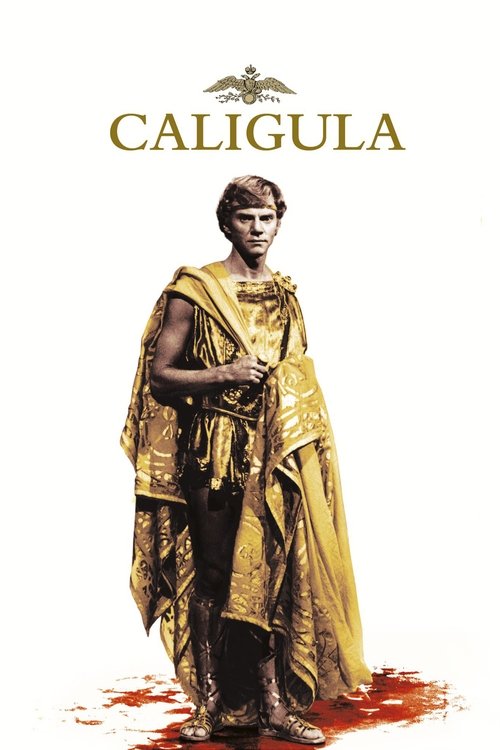
Caligula (1979)
Directed by Tinto Brass
No — Caligula is not woke, scoring 0 out of 100 on our wokeness meter.
Caligula arrives as a monument to a very specific kind of excess: the sort funded by Penthouse money, rewritten by feuding egos, and ultimately assembled from footage no one involved would claim.
Consciousness Markers
The cast is entirely white European actors in a historical Roman setting; no modern diversity casting or representation commentary.
Same-sex acts appear only as decadent spectacle, not as affirming or progressive LGBTQ+ themes.
Female characters are primarily sexualized, victimized, or manipulative; no feminist agenda is present.
The film is set in ancient Rome with an all-white cast and no racial consciousness or commentary.
No environmental or climate themes appear in the film.
The film critiques absolute power and tyranny, not capitalism or economic inequality.
Nudity is exploitative and sensational rather than body-positive or inclusive.
Caligula's madness is depicted as moral corruption from power, not as neurodivergence.
The film is a sensationalized historical drama, not a modern revisionist reinterpretation of history.
The film offers spectacle and excess rather than modern social or political lecturing.
Why it received this score
Caligula arrives as a monument to a very specific kind of excess: the sort funded by Penthouse money, rewritten by feuding egos, and ultimately assembled from footage no one involved would claim. Tinto Brass shot a historical drama about absolute power corrupting an already unstable heir. Bob Guccione then inserted hardcore scenes after the fact, turning the project into a hybrid of imperial intrigue and magazine spread. The result has the texture of a Roman orgy staged by a tax accountant. It is vulgar, expensive, and strangely joyless.
Malcolm McDowell plays the emperor as a spoiled boy with a knife, and the film treats his cruelty as a moral descent, not a diagnosis. Helen Mirren and Teresa Ann Savoy are given little to do beyond suffering, scheming, or disrobing. The same-sex encounters exist as sensational tableaux, not as affirmation. The cast is uniformly white European, which suits the ancient Roman setting and offers no modern commentary on representation. There is no environmental grievance, no economic critique of capital, no body-positive celebration of flesh, and no attempt to reinterpret history through a contemporary social lens. The film is too busy watching deformed performers and unsimulated acts to deliver a sermon.
The 2023 Ultimate Cut may have improved the film's reputation, but it cannot retrofit a progressive agenda onto a production that was always about power, money, and appetites. Caligula wants to shock, not instruct. Its political content is ancient and cynical. As a document of late-1970s tabloid ambition, it remains fascinating. As a vehicle for modern cultural awareness, it is a marble bust with nothing behind the eyes.
Analysis generated by our Consciousness Algorithm
Synopsis
After the death of the paranoid emperor Tiberius, Caligula, his heir, seizes power and plunges the empire into a bloody spiral of madness and depravity.
Questions about Caligula
Is Caligula woke?
No — Caligula is not woke, scoring 0 out of 100 on our wokeness meter. That earns it a verdict of Ultra Based.
Does Caligula have any woke elements?
No. All 10 markers score zero.
How does Caligula compare to other 1979 movies?
It ranks #26 of the 33 films from 1979 we've scored; their average is 6. The wokest is Hair (30).
How is the Woke Score calculated?
An AI-assisted process researches the film and its reception, scores it 0–100 on ten markers, then combines those into one 0–100 Woke Score. It measures a specific set of 2020s cultural themes, not film quality.