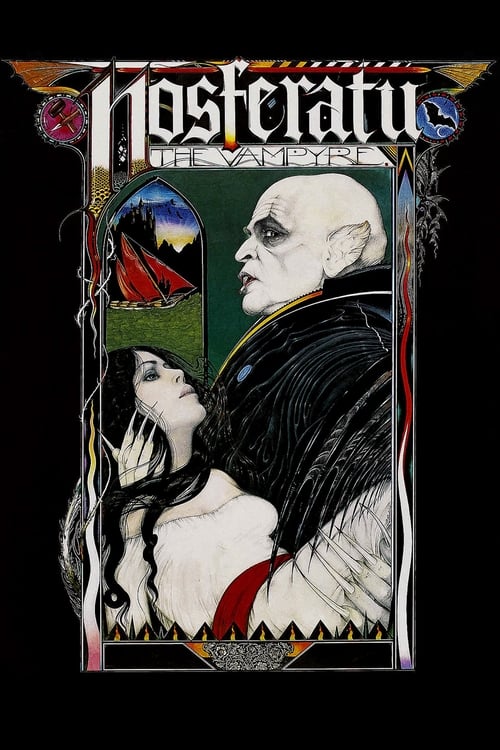
Nosferatu the Vampyre (1979)
Directed by Werner Herzog
No — Nosferatu the Vampyre is not woke, scoring 9 out of 100 on our wokeness meter.
The 1979 Nosferatu the Vampyre arrives with the weight of two inheritances: Murnau's silent expressionist landmark and Bram Stoker's novel, both of which Herzog treats as sacred texts to be handled with reverence and a certain German solemnity.
Consciousness Markers
Herzog framed the film as a parable about the fragility of bourgeois order, with townspeople discarding their property and trappings when plague strikes, but this is a philosophical observation rather than an economic polemic.
Lucy is given agency as the one who deduces Dracula's weakness and sacrifices herself to destroy him, but this is a narrative device of the source material rather than a modern feminist statement.
Herzog's film is slow, meditative, and imagistic rather than preachy; any thematic content is conveyed through mood and imagery, not direct messaging.
The cast is entirely white European, drawn from Herzog's regular collaborators and German/French talent; there is no deliberate diverse or inclusive casting agenda.
No LGBTQ+ characters, themes, or subtext are present in this 19th-century gothic vampire tale.
Romani villagers appear as atmospheric 'gypsies' in the Transylvanian sequences, but the film engages no racial themes or commentary.
The plague spread by rats is a gothic horror device, not an environmental or climate-crisis allegory.
No body-positivity themes; the film's bodies are emaciated, diseased, and mummified for gothic effect.
Renfield's madness is portrayed as gothic insanity, not as a modern neurodivergence narrative.
The film is a reinterpretation of a fictional novel and silent film, not a revision of historical events.
Why it received this score
The 1979 Nosferatu the Vampyre arrives with the weight of two inheritances: Murnau's silent expressionist landmark and Bram Stoker's novel, both of which Herzog treats as sacred texts to be handled with reverence and a certain German solemnity. Klaus Kinski's Count is a mummified, rat-toothed creature, and the film's palette is all grey skies and Delft canals. The cast is entirely white European, drawn from Herzog's regular collaborators and German and French talent, and no inclusive casting agenda announces itself. The Transylvanian villagers appear as atmospheric figures, and the film engages no racial themes.
Isabelle Adjani's Lucy deduces the vampire's weakness and sacrifices herself to destroy him, which gives her a measure of agency. This is a narrative device inherited from the source material, not a modern feminist statement. Renfield's madness is gothic insanity, played for dread, not a neurodivergence narrative. The rats that swarm Wismar carry plague, not an environmental allegory. Herzog described the film as a parable about the fragility of bourgeois order, with townspeople discarding their property when death arrives, but this is a philosophical observation rather than an economic polemic. The bodies on display are emaciated and mummified for gothic effect, and body positivity has no purchase here.
The film's thematic content is conveyed through mood and imagery, not direct messaging. Herzog is too busy arranging mummies in Guanajuato to lecture anyone. The result is slow, meditative, and imagistic, a film that trusts dread over sermonizing. As a cultural artifact it is a remake and a book adaptation, and it carries the weight of neither. This is a film that is serious, beautiful, and largely unconcerned with the progressive sensibilities of a later era.
Analysis generated by our Consciousness Algorithm


Synopsis
A real estate agent leaves behind his beautiful wife to go to Transylvania to visit the mysterious Count Dracula and formalize the purchase of a property in Wismar.
Questions about Nosferatu the Vampyre
Is Nosferatu the Vampyre woke?
No — Nosferatu the Vampyre is not woke, scoring 9 out of 100 on our wokeness meter. That earns it a verdict of Ultra Based.
Does Nosferatu the Vampyre have any woke elements?
Very few. None of the 10 markers reaches 30, the level where a marker counts as present; the highest is Eat the Rich at 20.
How does Nosferatu the Vampyre compare to other 1979 movies?
It ranks #7 of the 33 films from 1979 we've scored; their average is 6. The wokest is Hair (30).
How is the Woke Score calculated?
An AI-assisted process researches the film and its reception, scores it 0–100 on ten markers, then combines those into one 0–100 Woke Score. It measures a specific set of 2020s cultural themes, not film quality.