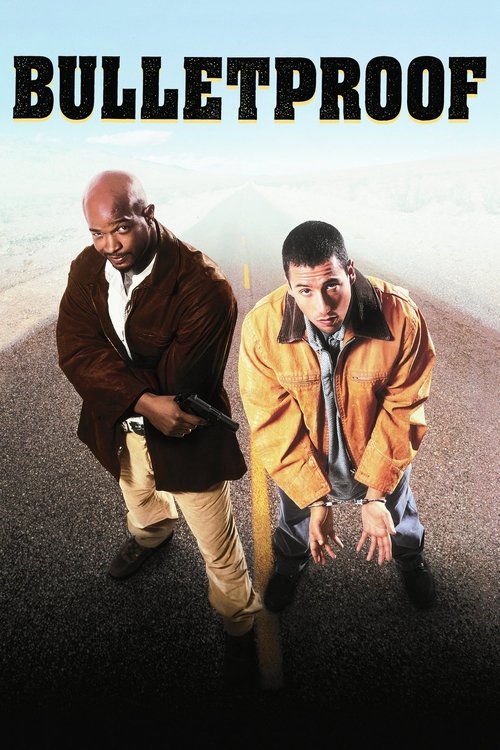
Bulletproof (1996)
Directed by Ernest R. Dickerson
No — Bulletproof is not woke, scoring 7 out of 100 on our wokeness meter.
Bulletproof arrives from 1996, a year when the buddy-cop comedy remained a reliable commercial engine and nobody expected it to carry a message.
Consciousness Markers
Damon Wayans and Bill Nunn headline a 1996 buddy-cop comedy, but their presence is standard genre casting rather than a self-conscious diversity statement.
Kristen Wilson's Dr. Flynn is a love interest who turns out to be a duplicitous villain; there is no feminist framing or commentary.
A Black lead and Black supporting cast exist naturally in the story with no engagement of racial themes or commentary.
No LGBTQ+ characters, themes, or subtext appear anywhere in the film.
No environmental or climate content whatsoever.
The drug lord's car-dealership money laundering is a plot device, not a critique of capitalism or wealth.
No body-positivity themes or messaging.
No neurodivergent characters or themes.
A contemporary fictional crime comedy with no historical subject matter to revise.
A broad action comedy that preaches nothing; it exists purely to entertain.
Why it received this score
Bulletproof arrives from 1996, a year when the buddy-cop comedy remained a reliable commercial engine and nobody expected it to carry a message. Damon Wayans plays an undercover officer and Adam Sandler plays the car thief he befriends and betrays, and the whole apparatus exists to produce shootouts and mismatched banter. The director, Ernest R. Dickerson, has since expressed regret about the experience. The film opened at number one and grossed twenty-two million dollars worldwide, while critics handed it an eight percent approval rating.
The cast is led by a Black performer and supported by Black actors who occupy their roles without the screenplay pausing to remark on it. That is ordinary genre casting, not a statement, and the film's cultural accounting should reflect the distinction. Kristen Wilson appears as a physical therapist who becomes a love interest and is later revealed to be on the drug lord's payroll, a twist that treats her as a plot mechanism and nothing more. There is no feminist architecture here, no commentary on race, no subtext beyond the familiar friction between partners who dislike each other before they learn to cooperate.
What the film offers is entertainment and little else. There are no environmental gestures, no critiques of wealth, no neurodivergent characters, no historical revision, and no moments where the narrative stops to instruct the audience on how to feel about society. The drug lord launders money through a car dealership because the plot requires a business to launder through, not because the filmmakers wish to indict late capitalism. This is a film with nothing on its mind, which in 1996 was not a liability. Viewed from the present, it registers as a document of a moment when a broad action comedy could simply be a broad action comedy, and the culture did not demand otherwise.
Analysis generated by our Consciousness Algorithm
Part of


Synopsis
An undercover police officer named Rock Keats befriends a drug dealer and car thief named Archie Moses in a bid to catch the villainous drug lord Frank Coltan. But the only problem is that Keats is a cop, his real name is Jack Carter, and he is working undercover with the LAPD to bust Moses and Colton at a sting operation the LAPD has set up.
Questions about Bulletproof
Is Bulletproof woke?
No — Bulletproof is not woke, scoring 7 out of 100 on our wokeness meter. That earns it a verdict of Ultra Based.
Does Bulletproof have any woke elements?
Very few. None of the 10 markers reaches 30, the level where a marker counts as present; the highest is Representation Casting at 15.
How does Bulletproof compare to other 1996 movies?
It ranks #46 of the 93 films from 1996 we've scored; their average is 11. The wokest is Bound (60).
How is the Woke Score calculated?
An AI-assisted process researches the film and its reception, scores it 0–100 on ten markers, then combines those into one 0–100 Woke Score. It measures a specific set of 2020s cultural themes, not film quality.