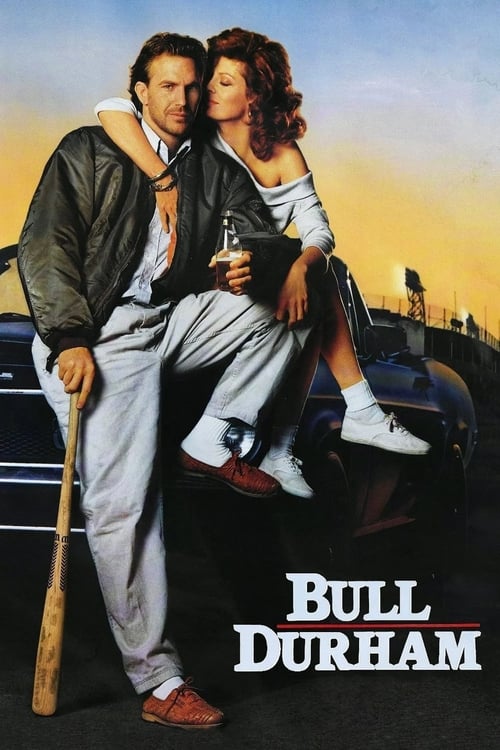
Bull Durham (1988)
Directed by Ron Shelton
No — Bull Durham is not woke, scoring 12 out of 100 on our wokeness meter.
Bull Durham arrives from 1988 with the confidence of a film that has never once been asked to justify its demographics.
Consciousness Markers
Annie Savoy is sexually autonomous and central to the story, but the film treats her mainly as a romantic mentor to male players rather than advancing explicit feminist politics.
The cast is almost entirely white, with no meaningful racial or ethnic diversity and no commentary on representation.
There are no LGBTQ+ characters, themes, or subtext.
The film does not engage with race, racism, or racial identity.
There is no environmental or climate-related content.
The minor-league baseball setting is not used for any critique of capitalism or economic inequality.
The film contains no body-positivity themes or messaging.
No character is framed through neurodivergence or mental-health identity.
The film is a fictional sports romance inspired by minor-league experience, not a revisionist historical narrative.
Its monologues are about baseball, romance, and life, not social-justice instruction.
Why it received this score
Bull Durham arrives from 1988 with the confidence of a film that has never once been asked to justify its demographics. The Durham Bulls are a collection of white men in tight pants, and the film treats this as neither a problem nor a subject. Annie Savoy reads poetry, selects a lover for the season, and holds forth on the Church of Baseball. Susan Sarandon gives her a lively self-possession, and the screenplay allows her desires without apology. That is the extent of the film's progressive weather. It is a character trait, not a program.
The rest of the cultural checklist goes largely untouched. Race does not enter the dugout. The environment does not enter the stadium. Money does not enter the conversation except as a reason to keep playing. No character arrives with a thesis attached. The film's idea of instruction is Crash Davis telling a rookie not to think, which is the opposite of a sermon. The monologues are about long slow kisses, life in the majors, and the correct way to hit a cutoff man. They are delivered with conviction and no civic obligation.
The remainder is a romance with a sharp tongue and a fondness for minor-league dust. The film is not a lecture. It is not a corrective history. It is not an economic parable. It is a comedy about a woman who knows what she wants and two men who take longer to figure it out. The moral seriousness here belongs to baseball, which the film treats as a calling, a grammar, and a place to fail. That is a modest faith. It is also enough for a film that never asks to be graded on its politics.
Analysis generated by our Consciousness Algorithm


Synopsis
Veteran catcher Crash Davis is brought to the minor league Durham Bulls to help their up and coming pitching prospect, "Nuke" Laloosh. Their relationship gets off to a rocky start and is further complicated when baseball groupie Annie Savoy sets her sights on the two men.
Questions about Bull Durham
Is Bull Durham woke?
No — Bull Durham is not woke, scoring 12 out of 100 on our wokeness meter. That earns it a verdict of Ultra Based.
Does Bull Durham have any woke elements?
Very few. None of the 10 markers reaches 30, the level where a marker counts as present; the highest is Feminist Agenda at 20.
How does Bull Durham compare to other 1988 movies?
It ranks #20 of the 73 films from 1988 we've scored; their average is 10. The wokest is Stand and Deliver (58).
How is the Woke Score calculated?
An AI-assisted process researches the film and its reception, scores it 0–100 on ten markers, then combines those into one 0–100 Woke Score. It measures a specific set of 2020s cultural themes, not film quality.