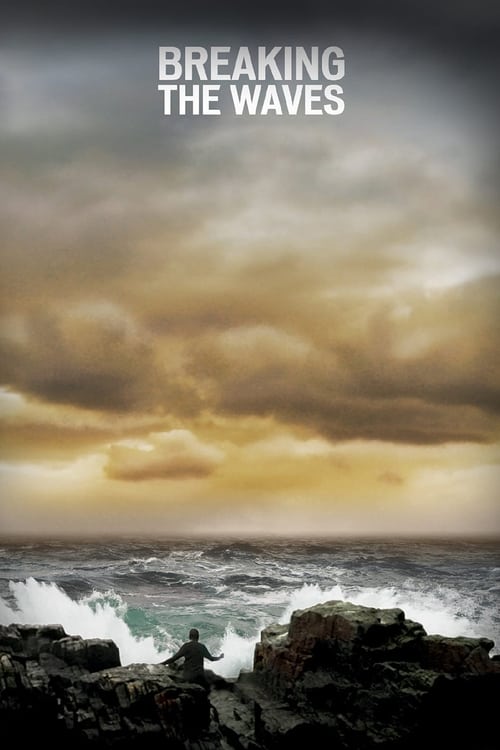
Breaking the Waves (1996)
Directed by Lars von Trier
No — Breaking the Waves is not woke, scoring 8 out of 100 on our wokeness meter.
Lars von Trier's Breaking the Waves arrives from 1996 with the grim confidence of a filmmaker who has already decided that grace and degradation share a bed.
Consciousness Markers
Bess is depicted as mentally fragile and childlike, with a past mental health condition, but the film does not engage with neurodivergence as a social identity.
The film centers on a female protagonist and critiques patriarchal religious authority, but its portrayal of female martyrdom and sexual debasement is not a modern feminist agenda.
The cast is entirely white European, with no racial or ethnic diversity; a disabled character is played by an able-bodied actor.
No LGBTQ+ characters or themes are present.
The film is set in an all-white Scottish village and does not engage with racial issues.
The oil rig setting is incidental and the film contains no environmental or climate messaging.
There is no critique of capitalism or wealth inequality.
The film's explicit sexuality is not framed around body positivity or self-acceptance.
The 1970s Scottish setting is not used to revise or reinterpret historical events.
The film is a melodrama that explores faith and sacrifice without delivering modern social or political lectures.
Why it received this score
Lars von Trier's Breaking the Waves arrives from 1996 with the grim confidence of a filmmaker who has already decided that grace and degradation share a bed. Emily Watson plays Bess, a childlike Calvinist bride in the Scottish Highlands whose oilman husband Jan is paralyzed in an accident and then, in a stroke of motivational cruelty, urges her to take lovers and report back. What follows is a long descent into self-appointed martyrdom, filmed in grainy handheld close-ups that never let us look away. The camera is devout. The theology is not.
We should be clear about what this film is and is not. It is a melodrama of faith, sacrifice, and a church that mistakes cruelty for order. It is not a tract. The village is uniformly white, the congregation uniformly censorious, and the film has no interest in racial or economic grievance. There is no climate sermon, no critique of wealth, no celebration of the body as a political site. Bess's fragility is treated as a spiritual condition, a wound rather than an identity, and the film declines to diagnose her in the language of our current wellness vocabulary. Her suffering is her own.
Where the film brushes against contemporary sensibilities, it does so sideways. Bess is a woman destroyed by a patriarchal institution, and the film lets her sister-in-law condemn that institution in the final reel. That is a critique of religious authority, not a manifesto. Von Trier's real subject is the eroticism of self-erasure, and he pursues it with a solemnity that borders on the liturgical. The result is harrowing, beautiful, and deeply unfashionable. It asks for our tears, not our agreement.
Analysis generated by our Consciousness Algorithm


Synopsis
In a small, conservative Scottish village, an oilman is paralyzed in an accident. His wife, who prayed for his return, feels guilty; even more, when he urges her to have sex with another.
Questions about Breaking the Waves
Is Breaking the Waves woke?
No — Breaking the Waves is not woke, scoring 8 out of 100 on our wokeness meter. That earns it a verdict of Ultra Based.
Does Breaking the Waves have any woke elements?
Very few. None of the 10 markers reaches 30, the level where a marker counts as present; the highest is Neurodivergence at 15.
How does Breaking the Waves compare to other 1996 movies?
It ranks #39 of the 93 films from 1996 we've scored; their average is 11. The wokest is Bound (60).
How is the Woke Score calculated?
An AI-assisted process researches the film and its reception, scores it 0–100 on ten markers, then combines those into one 0–100 Woke Score. It measures a specific set of 2020s cultural themes, not film quality.