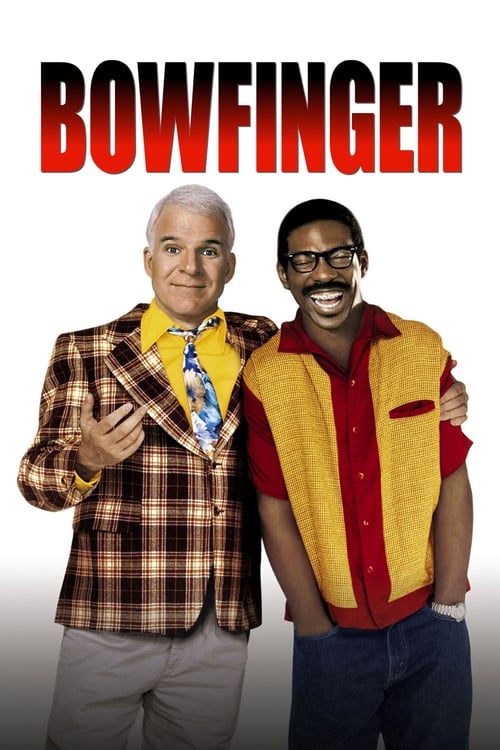
Bowfinger (1999)
Directed by Frank Oz
No — Bowfinger is not especially woke, scoring 25 out of 100 on our wokeness meter.
Bowfinger arrives from 1999 with the weary confidence of a studio comedy that knows exactly which sacred cows it wants to tip.
Consciousness Markers
The film is a sharp satire of Hollywood's corporate greed, the exploitation of talent, and the ruthless financial mechanisms of the studio system.
The central character, Kit Ramsey, is portrayed as highly neurotic and paranoid, using his mental state as a comedic and satirical device within the industry critique.
The female lead, Daisy, is portrayed as an ambitious but naive starlet, fitting a traditional comedic archetype rather than challenging gender norms.
While the film contains sharp satire, it maintains the pace of a comedy and does not adopt the didactic, earnest tone of a modern social justice lecture.
The film features a ragtag crew, including a group of illegal Mexican immigrants, used primarily as a plot device for low-budget labor rather than for meaningful representation.
The inclusion of an immigrant crew is a plot point related to budget and logistics, lacking any deeper social commentary or progressive racial exploration.
There is no discernible presence of LGBTQ+ themes or characters within the film's narrative or cast.
The film focuses entirely on the machinations of Hollywood and the film industry, with no reference to environmental issues.
There are no specific elements in the film that promote body positivity or diverse body types.
The film is a fictional satire of the movie business and does not attempt to revise any established historical narratives.
Why it received this score
Bowfinger arrives from 1999 with the weary confidence of a studio comedy that knows exactly which sacred cows it wants to tip. Frank Oz directs Steve Martin's script as a machine for exposing the movie business: the creative accounting, the desperate deal-making, the star worship, the casual exploitation of anyone without leverage. The film's sharpest bite is economic. Bobby Bowfinger's threadbare operation runs on favors, unpaid labor, and a camera crew of illegal Mexican immigrants treated as a line item. That detail registers as logistics, not as a plea for social awareness. The satire aims at the producers and executives who turn people into assets, and it lands with satisfying cruelty.
Kit Ramsey is the other engine. Eddie Murphy plays him as a paranoid, neurotic star whose mental weather is mined for laughs and for the movie's final blackmail scheme. The film has some interest in his instability, but it uses that instability as a comic resource, not as a case study in neurodivergence. Around him, Heather Graham's Daisy is a familiar ambitious ingenue, written to be naive and useful. The film does not spend time interrogating gender roles, nor does it show any interest in queer lives, environmental politics, or body-image discourse. These absences are not failures of nerve. They are simply outside the film's narrow target.
Where Bowfinger does carry a progressive charge, it is the old-fashioned kind: suspicion of corporate power and a fondness for scrappy outsiders. The Scientology-adjacent MindHead subplot adds another institution to the pile, and the finale's blackmail turns the joke back on the powerful. The tone stays comic. There is no sermon, no earnest lecture, no attempt to revise history. The result is a tart, efficient satire of Hollywood predation, light on modern social signaling and heavy on the pleasure of watching charming people behave badly.
Analysis generated by our Consciousness Algorithm
Part of


Synopsis
On the verge of bankruptcy and desperate for his big break, aspiring filmmaker Bobby Bowfinger concocts a crazy plan to make his ultimate dream movie. Rallying a ragtag team that includes a starry-eyed ingenue, a has-been diva and a film studio gofer, he sets out to shoot a blockbuster featuring the biggest star in Hollywood, Kit Ramsey -- only without letting Ramsey know he's in the picture.
Questions about Bowfinger
Is Bowfinger woke?
No — Bowfinger is not especially woke, scoring 25 out of 100 on our wokeness meter. That earns it a verdict of Based.
Does Bowfinger have any woke elements?
1 of the 10 markers register at 30 or above, led by Eat the Rich (70). On Eat the Rich: The film is a sharp satire of Hollywood's corporate greed, the exploitation of talent, and the ruthless financial mechanisms of the studio system.
How does Bowfinger compare to other 1999 movies?
It ranks #14 of the 103 films from 1999 we've scored; their average is 14. The wokest is Boys Don't Cry (60).
How is the Woke Score calculated?
An AI-assisted process researches the film and its reception, scores it 0–100 on ten markers, then combines those into one 0–100 Woke Score. It measures a specific set of 2020s cultural themes, not film quality.