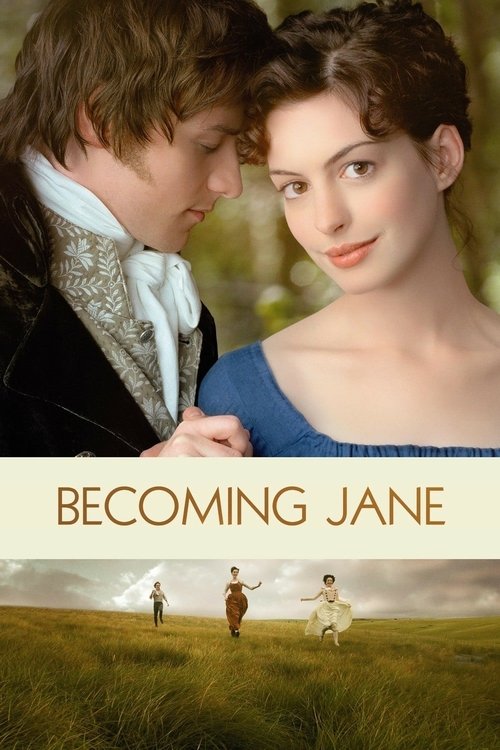
Becoming Jane (2007)
Directed by Julian Jarrold
No — Becoming Jane is not woke, scoring 18 out of 100 on our wokeness meter.
Becoming Jane arrives in 2007 with the modest ambition of explaining where Pride and Prejudice came from, and it pursues that goal through the reliable machinery of the British costume drama: a headstrong young woman, a charming scoundrel, a disapproving aunt with a title.
Consciousness Markers
The film centers on a woman refusing a financially advantageous marriage to preserve her creativity and self-worth, and choosing independence over the marriage market. This is a genuine proto-feminist theme, though framed in period-drama terms rather than modern activist language.
The film is a heavily fictionalized biography, piecing together sparse known facts into a speculative romance, but it does not reinterpret history through a modern ideological lens.
A romantic period drama that aims to entertain rather than preach; there is little overt moralizing or message-delivery.
The cast is almost entirely white British and Irish performers, with American Anne Hathaway in the lead; there is no racial diversity casting or commentary on representation.
No LGBTQ+ characters, themes, or subtext appear anywhere in the film.
No engagement with race or racial consciousness; the story is set in a uniformly white Georgian England.
No environmental or climate themes whatsoever.
Financial pressure and genteel poverty drive the plot, but the film treats wealth as a personal circumstance rather than mounting a class-warfare critique of the rich.
No body-positivity themes or commentary on body image.
No neurodivergent characters or themes are present.
Why it received this score
Becoming Jane arrives in 2007 with the modest ambition of explaining where Pride and Prejudice came from, and it pursues that goal through the reliable machinery of the British costume drama: a headstrong young woman, a charming scoundrel, a disapproving aunt with a title. Julian Jarrold directs Anne Hathaway as a twenty-year-old Austen who refuses the wealthy Mr. Wisley and instead falls for the penniless Irish lawyer Tom Lefroy. The film treats her refusal as an act of artistic self-preservation. This is a genuine proto-feminist gesture, arriving two centuries before the vocabulary existed to name it, and the screenplay handles it with restraint. She will not be purchased. She will write instead.
The surrounding texture is more conventional. The cast is white, British, and Irish, with an American in the lead, and the film offers no comment on any of it. There are no queer undertones, no engagement with race in Georgian England, no environmental conscience, no critique of the gentry's wealth. Money drives the plot as a private misfortune, not a system to be dismantled. The film is also a biography assembled from very little: a Christmas meeting, a few letters, and a great deal of invention. It speculates freely about Austen's heart, though it never tries to recruit her for a modern argument. The result is fiction wearing history's coat, which is honest enough about its own stitching.
What remains is a pleasant, well-dressed romance that preaches almost nothing. It wants us to feel the cost of a life chosen over a life arranged, and it succeeds on those narrow terms. No lectures are delivered. No lessons are assigned. For a film about a woman who invented modern romantic comedy, that restraint is its own small achievement.
Analysis generated by our Consciousness Algorithm


Synopsis
Though young Jane Austen's financially strapped parents expect her to marry the nephew of wealthy Lady Gresham, Jane herself knows that such a union will destroy her creativity and sense of self-worth. Instead, she becomes involved with Tom Lefroy, a charming but penniless apprentice lawyer who gives her the knowledge of the heart she needs for her future career as a novelist.
Questions about Becoming Jane
Is Becoming Jane woke?
No — Becoming Jane is not woke, scoring 18 out of 100 on our wokeness meter. That earns it a verdict of Ultra Based.
Does Becoming Jane have any woke elements?
1 of the 10 markers register at 30 or above, led by Feminist Agenda (35). On Feminist Agenda: The film centers on a woman refusing a financially advantageous marriage to preserve her creativity and self-worth, and choosing independence over the marriage market.
How does Becoming Jane compare to other 2007 movies?
It ranks #40 of the 201 films from 2007 we've scored; their average is 12. The wokest is Like Stars on Earth (92).
How is the Woke Score calculated?
An AI-assisted process researches the film and its reception, scores it 0–100 on ten markers, then combines those into one 0–100 Woke Score. It measures a specific set of 2020s cultural themes, not film quality.