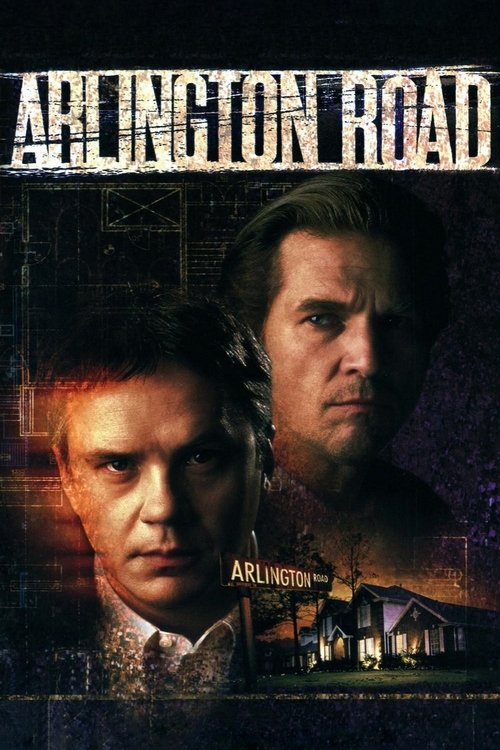
Arlington Road (1999)
Directed by Mark Pellington
No — Arlington Road is not woke, scoring 8 out of 100 on our wokeness meter.
Arlington Road emerges from 1999 with a nasty disposition and excellent posture.
Consciousness Markers
Michael is a history professor who lectures his class on American terrorism and delivers an impassioned speech at a standoff site, giving the film a moderate didactic streak about FBI overreach and domestic extremism.
The cast is overwhelmingly white, with Robert Gossett as the FBI partner Whit Carver being the only notable non-white presence, and his role carries no commentary on his identity.
Joan Cusack's Cheryl Lang is a capable female antagonist and Hope Davis's Brooke is a working professional, but the film offers no feminist argument or gendered critique.
The villains' grievance is anti-government militia ideology rooted in a farm's water being cut off, not a critique of capitalism or wealth; the film is suspicious of federal power, not of the rich.
A Black FBI agent appears in a supporting role, but race is never addressed or thematized in the narrative.
No LGBTQ+ characters, relationships, or themes appear anywhere in the film.
No environmental or climate themes are present.
No body-positivity themes or diverse body representation are present.
Michael's paranoia and obsession are framed as psychological trauma from his wife's death, not as neurodivergence or a neurodiversity theme.
The film draws on real 1990s events (Ruby Ridge, Waco, Oklahoma City) as inspiration but presents a wholly fictional story rather than revising historical record.
Why it received this score
Arlington Road emerges from 1999 with a nasty disposition and excellent posture. Jeff Bridges plays Michael Faraday, a George Washington University history professor who suspects the agreeable couple next door are building a bomb, and the film lets him be right in the worst possible way. He ends up dead in a blast he delivered himself, posthumously branded a lone-wolf terrorist, while the Langs drive off to a fresh suburb to do it all again. It is a bleak, well-engineered piece of paranoia, and it is not pretending otherwise.
The social consciousness on display is modest and mostly incidental. The cast is white to a man, with Robert Gossett's FBI agent Whit Carver the single notable exception, and the film has nothing to say about that fact. No LGBTQ presence registers at all. Joan Cusack's Cheryl Lang is a genuinely capable antagonist and Hope Davis's Brooke is a working professional with opinions, yet the film mounts no argument about gender. Michael's spiraling obsession is attributed to grief and professional fixation, framed as trauma, never as a condition to be understood or accommodated. On these fronts the film is simply a product of its moment, neither ahead of it nor guilty of anything.
Where the film does lean forward is in its lecture energy. Michael teaches a course on American terrorism, walks his students through a case study, and later delivers an impassioned speech at a standoff site about federal overreach. That is a moderate amount of sermonizing, delivered with a straight face through a character who is proven correct. The villains' grievance is anti-government militia rage over a farm's water being cut off, which is suspicion of federal power rather than of wealth, so the class resentment stays pointed at Washington and not at anyone's portfolio. There is no climate concern, no historical revision, no body politics. Arlington Road wants to unsettle us about the man next door, and it does.
Analysis generated by our Consciousness Algorithm


Synopsis
Bedraggled college professor Michael Faraday has been vexed — and increasingly paranoid — since his wife's accidental death in a botched FBI operation. When a seemingly all-American couple set up house next door, Michael begins to suspect there’s more to them than meets the eye.
Questions about Arlington Road
Is Arlington Road woke?
No — Arlington Road is not woke, scoring 8 out of 100 on our wokeness meter. That earns it a verdict of Ultra Based.
Does Arlington Road have any woke elements?
Very few. None of the 10 markers reaches 30, the level where a marker counts as present; the highest is Lecture Energy at 25.
How does Arlington Road compare to other 1999 movies?
It ranks #56 of the 103 films from 1999 we've scored; their average is 14. The wokest is Boys Don't Cry (60).
How is the Woke Score calculated?
An AI-assisted process researches the film and its reception, scores it 0–100 on ten markers, then combines those into one 0–100 Woke Score. It measures a specific set of 2020s cultural themes, not film quality.