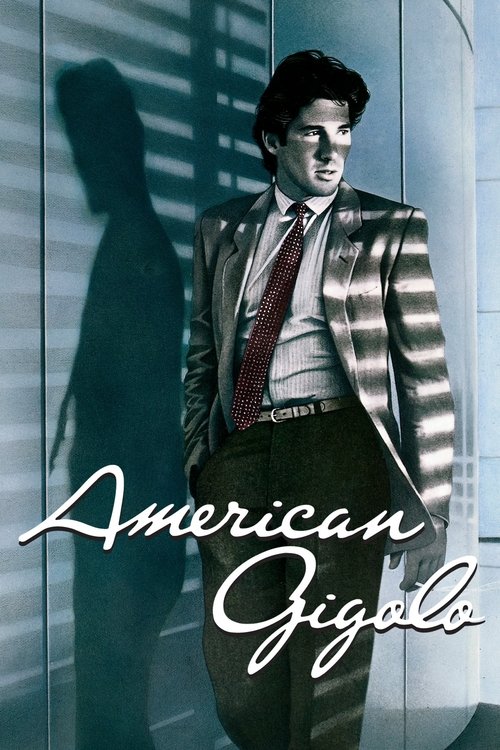
American Gigolo (1980)
Directed by Paul Schrader
No — American Gigolo is not woke, scoring 10 out of 100 on our wokeness meter.
Paul Schrader's American Gigolo arrives from 1980 with a wardrobe by Armani, a score by Giorgio Moroder, and a protagonist who treats his own body as a line item in a quarterly budget.
Consciousness Markers
The film carries a noted gay subtext — Richard Gere cited it as a reason for taking the role, and Julian pointedly refuses same-sex assignments — but this is atmospheric ambiguity rather than modern LGBTQ+ advocacy or identity celebration.
The film observes the emptiness of Julian's designer-consumerist lifestyle and the transactional nature of his world, but it offers melancholy observation rather than any eat-the-rich indictment.
Héctor Elizondo and Bill Duke appear in supporting roles, but they exist naturally within the story without any commentary or deliberate diversity framing, which is standard for 1980 ensemble casting.
The narrative is built around a male escort's gaze and the women are largely clients or a devoted wife who sacrifices her marriage for him; there is no feminist critique of power or gender roles.
Schrader's film is a moody character study that shows rather than tells; it carries no preachy sermonizing or moral instruction directed at the audience.
No engagement with race, racism, or racial identity appears anywhere in the film.
No environmental or climate themes are present.
The film's famous frontal male nudity is a boundary-pushing artistic choice, not a body-positivity statement about accepting diverse bodies.
No neurodivergent characters or themes are present.
The film is a contemporary fictional neo-noir with no historical revisionism.
Why it received this score
Paul Schrader's American Gigolo arrives from 1980 with a wardrobe by Armani, a score by Giorgio Moroder, and a protagonist who treats his own body as a line item in a quarterly budget. Julian Kaye, played by Richard Gere with the serene vacancy of a man who has optimized his life into a showroom, services wealthy older women in Los Angeles and pays for it in tailored linen and a Mercedes convertible. The murder plot is almost incidental. Roger Ebert found a winning sadness in it, and he was not wrong. This is a study in loneliness wearing a very good jacket.
The film's social consciousness is present but faint, the sort of thing detected only by holding it up to a strong light. Héctor Elizondo and Bill Duke appear in supporting roles and are permitted to simply exist, which was ordinary practice in 1980 and reads today as an absence of agenda. Gere has said he took the part partly because of the script's gay undercurrent, and Julian's flat refusal of same-sex assignments gives the character a defensive edge. That is atmosphere, not advocacy. The camera belongs to Julian throughout. Women arrive as clients, or as Michelle, the senator's wife who dismantles her marriage to supply him an alibi, and no argument is mounted on their behalf.
Elsewhere the ledger is nearly empty. The film has no interest in race as a subject, none in climate, none in neurodivergence, and its famous frontal nudity is a boundary pushed, not a body embraced. What it does offer is a low hum of contempt for the transactional world Julian inhabits, though Schrader observes the emptiness instead of indicting it. Nobody lectures. The film shows a man's possessions sold off and lets the silence do the work. For a picture that scandalized 1980, it is remarkably unwilling to tell anyone what to think, which is its own modest virtue and, by the standards of the current moment, a small relic.
Analysis generated by our Consciousness Algorithm
Part of


Synopsis
Julian makes a lucrative living as an escort to older women in the Los Angeles area. He begins a relationship with Michelle, a local politician's wife, without expecting any pay. One of his clients is murdered and Detective Sunday begins pumping him for details on his different clients, something he is reluctant to do considering the nature of his work. Julian begins to suspect he's being framed. Meanwhile Michelle begins to fall in love with him.
Questions about American Gigolo
Is American Gigolo woke?
No — American Gigolo is not woke, scoring 10 out of 100 on our wokeness meter. That earns it a verdict of Ultra Based.
Does American Gigolo have any woke elements?
Very few. None of the 10 markers reaches 30, the level where a marker counts as present; the highest is LGBTQ+ Themes at 28.
How does American Gigolo compare to other 1980 movies?
It ranks #12 of the 37 films from 1980 we've scored; their average is 10. The wokest is Nine to Five (42).
How is the Woke Score calculated?
An AI-assisted process researches the film and its reception, scores it 0–100 on ten markers, then combines those into one 0–100 Woke Score. It measures a specific set of 2020s cultural themes, not film quality.