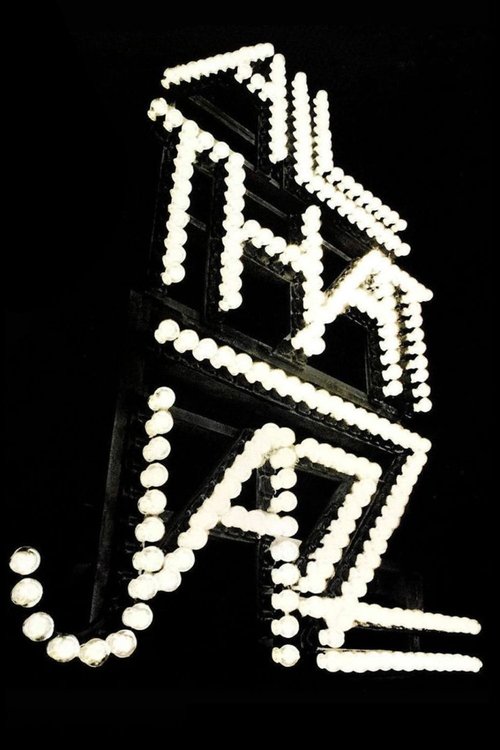
All That Jazz (1979)
Directed by Bob Fosse
No — All That Jazz is not woke, scoring 8 out of 100 on our wokeness meter.
Bob Fosse's All That Jazz arrives as a confession dressed in tap shoes, a semi-autobiographical fantasia in which a chain-smoking choreographer named Joe Gideon edits a film, stages a Broadway musical, and dies slowly while an angel in white gloves looks on.
Consciousness Markers
The backers of 'NY/LA' coldly bet on Gideon dying because the insurance payout yields a profit — a barbed show-biz satire of the money men. It is cynical Broadway backbiting more than ideological economics.
The ensemble is mostly white, but Ben Vereen's O'Connor is a major, sexually charismatic supporting presence and the Broadway cast is genuinely integrated. This is integrated-by-default 1979 casting rather than a color-conscious statement.
The female characters (Audrey, Katie, Michelle, Victoria) get flashes of personality and pointed criticisms of Gideon, and the 'Airotica' number and general choreography are openly sexualized rather than empowerment-oriented. Not a feminist text.
Fosse interrogates himself rather than the audience; the moralizing is inward-looking and esthetic. There is friction with a philandering protagonist, but it is confession, not sermon.
O'Connor's race is never remarked upon; the film treats him as just another Broadway collaborator. No racial commentary or thematic engagement.
No LGBTQ+ characters, themes, or subtext anywhere in the film.
No environmental content whatsoever.
Bodies are presented as sexualized, abundant, and professionally scrutinized, not affirmatively. No body-positivity content.
Pill dependency, chain-smoking, and workaholism are portrayed as self-destructive vices, not neurodivergence.
The film is semi-autobiographical but makes no revisionist claim about history.
Why it received this score
Bob Fosse's All That Jazz arrives as a confession dressed in tap shoes, a semi-autobiographical fantasia in which a chain-smoking choreographer named Joe Gideon edits a film, stages a Broadway musical, and dies slowly while an angel in white gloves looks on. The film is ambitious, occasionally brilliant, and entirely preoccupied with its own author's guilt. There is no crusade here, no attempt to instruct the audience on how to live. Gideon directs his contempt inward, which keeps the proceedings from turning into a sermon, though the self-laceration can wear on a viewer by the third act.
The sexual politics are of their era and unapologetically so. Women drift through Gideon's orbit as girlfriends, ex-wives, and daughters, granted brief moments of sharp criticism before the choreography pulls them back into formation. The dancers are photographed as bodies first, and the notorious Airotica sequence is staged for the male gaze with a leer that the film never bothers to interrogate. Audrey and Katie get their rebukes in, and the dream sequences allow them to berate Gideon at length, but the camera's loyalties remain with the man in the chair. Anyone hunting for empowerment will leave hungry.
The closest the film comes to a political statement is its contempt for money. The producers of NY/LA realize they turn a larger profit if their director dies, and the calculation is delivered with a shrug. It is show-business cynicism, not economic theory. Ben Vereen's O'Connor anchors the finale with charisma, his race unremarked and unremarkable, which is its own quiet achievement. The film interrogates nobody but its maker. That is either integrity or narcissism, and Fosse seems content to let us decide.
Analysis generated by our Consciousness Algorithm
Synopsis
Joe Gideon is at the top of the heap, one of the most successful directors and choreographers in musical theater. But he can feel his world slowly collapsing around him - his obsession with work has almost destroyed his personal life, and only his bottles of pills keep him going.
Questions about All That Jazz
Is All That Jazz woke?
No — All That Jazz is not woke, scoring 8 out of 100 on our wokeness meter. That earns it a verdict of Ultra Based.
Does All That Jazz have any woke elements?
Very few. None of the 10 markers reaches 30, the level where a marker counts as present; the highest is Eat the Rich at 20.
How does All That Jazz compare to other 1979 movies?
It ranks #9 of the 33 films from 1979 we've scored; their average is 6. The wokest is Hair (30).
How is the Woke Score calculated?
An AI-assisted process researches the film and its reception, scores it 0–100 on ten markers, then combines those into one 0–100 Woke Score. It measures a specific set of 2020s cultural themes, not film quality.